
Dwarf Umbrella Tree
Schefflera arboricola
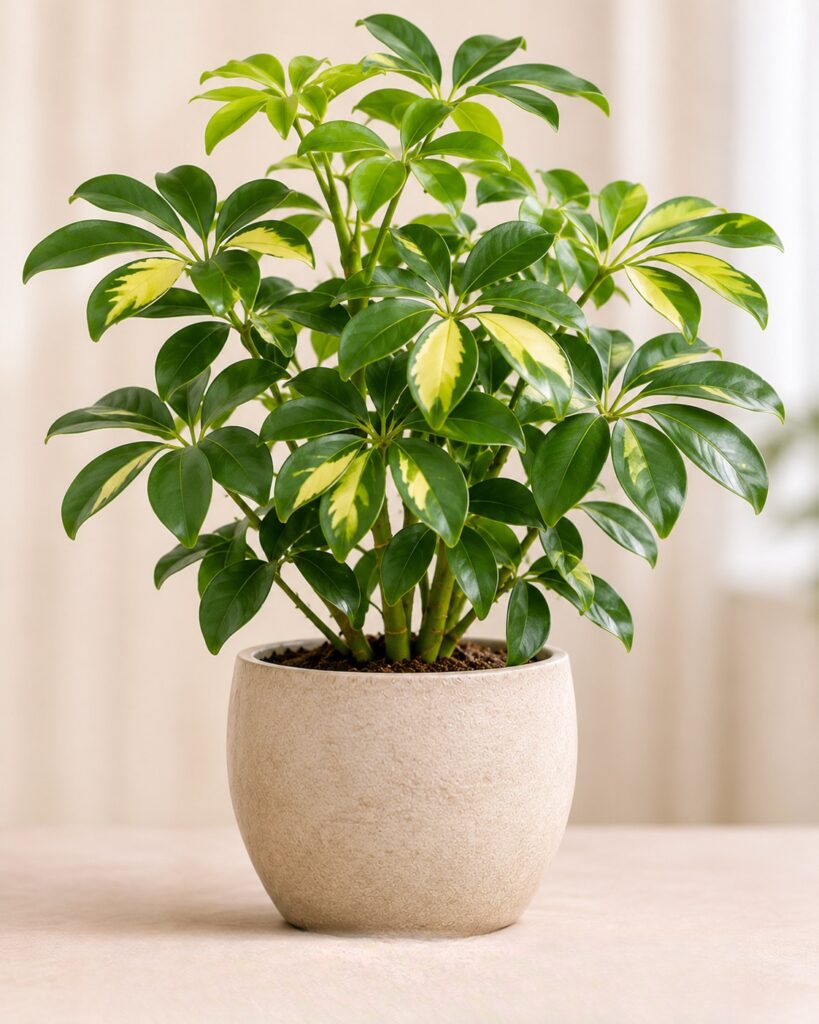
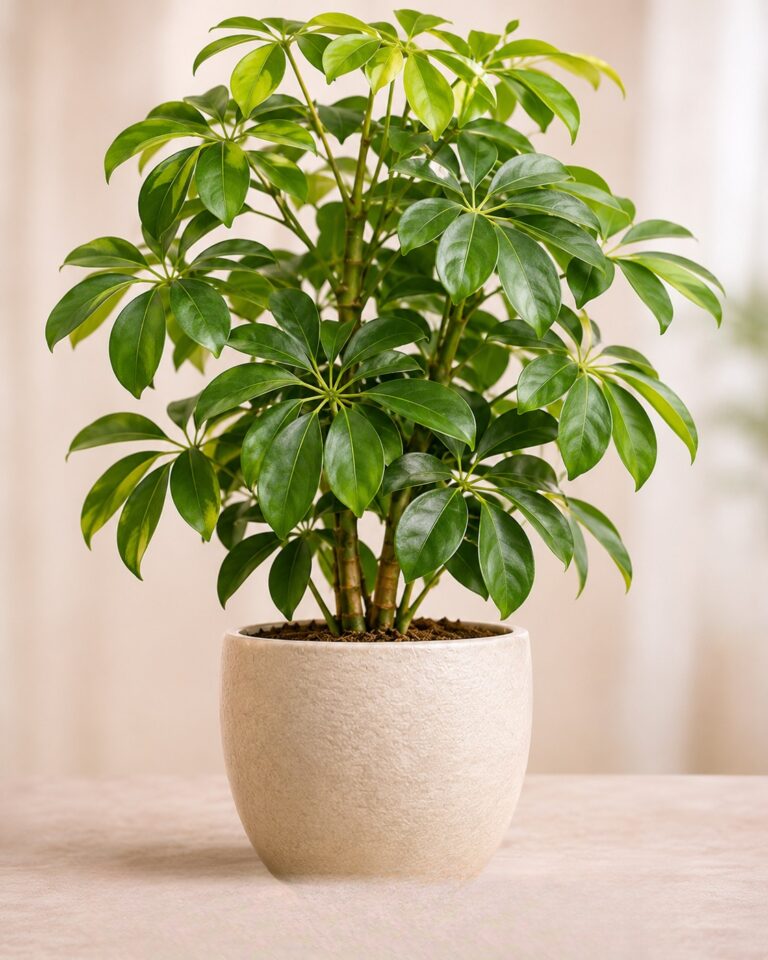
Glossy, hand-shaped leaves in green or splashed with gold make the Dwarf Umbrella Tree a tough, cheerful, easy-going houseplant.
About Dwarf Umbrella Tree
The Dwarf Umbrella Tree is one of the friendliest foliage plants you can bring home. Its glossy, hand-shaped leaflets radiate like the spokes of a tiny umbrella, and it bounces back from missed waterings and so-so light with very little complaint.
From Taiwan to Houseplant Favorite
This compact plant comes from the forests of Taiwan and southern China, where it grows as a shrub or small tree and sometimes climbs. As a houseplant it has been popular since the 1970s, valued for its resilience and its tidy, shrubby shape. It is much easier to keep indoors than its larger cousin, the Umbrella Tree, and fits comfortably on a floor, a shelf or a sunny desk.
The Secret Behind Its Umbrella Leaves
Each leaf is made of seven to nine oval leaflets that fan out from a central point on a slender stalk. On variegated forms the leaflets are marbled with cream or gold, which brightens a room instantly. The plant branches readily, especially if you pinch the tips, so it fills out into a full, rounded shape instead of staying a single spindly stem.
A World of Beautiful Varieties
Plain green forms are the toughest, but variegated cultivars are the most popular. ‘Gold Capella’ has bold yellow splashes, ‘Trinette’ has creamy-yellow centers, and ‘Janine’ offers softer green-and-cream marbling. Compact forms like ‘Compacta’ suit small spaces. Variegated plants need slightly brighter light to keep their color.
Bringing the Tropics Indoors
Place your plant in bright, indirect light, away from harsh midday sun. Water when the top inch or two of soil feels dry, and avoid leaving it in standing water. It tolerates average indoor humidity, but a little misting keeps the leaves glossy and discourages spider mites. Rotate the pot every few weeks so it grows evenly, and keep it away from pets, as the leaves are mildly poisonous if chewed.
Cheerful, glossy and truly forgiving, the Dwarf Umbrella Tree is a wonderful first houseplant or a reliable green companion for a busy household.
Care Guide
Everything you need to know to keep your Dwarf Umbrella Tree happy and healthy.
Bright, indirect light keeps the leaves glossy and the variegation strong. It tolerates medium light, but growth will be slower and leggier.
Water thoroughly, then allow the top 1–2 inches (2.5–5 cm) of soil to dry. Overwatering causes leaf drop and root rot, so err on the dry side, especially in winter.
Use a free-draining potting mix with a little perlite or bark. Choose a pot with drainage holes, and empty any saucer after watering.
Normal room humidity suits it. Mist now and then or wipe the leaves to deter spider mites, which love dry air.
Keep away from cold drafts and radiators. Temperature drops and drafts can cause sudden leaf drop.
Feed monthly in spring and summer with a balanced liquid fertilizer. Do not feed in winter.
Pinch or cut the tips of long stems to encourage branching, and cut back leggy growth in spring. A moss pole or stake can support taller plants.
Through the year
Spring
Repot if needed and start monthly feeding.
Summer
Water as the top inch dries and keep out of harsh sun.
Autumn
Slow down feeding and watering as light drops.
Winter
Water sparingly and avoid drafts and heaters.
Repotting
- Repot every
- 1–2 years
- Best time
- Spring
- Pot size step-up
- Go up 1–2 inches (2.5–5 cm) in pot diameter
- Soil mix
- Free-draining potting mix with a little perlite or bark
- Signs it needs repotting
- Roots circling the pot, water running straight through, or growth slowing despite good care.
Young plants grow quickly and may need repotting yearly. Mature plants can go two years or more.
Propagation
- Methods
- Stem cutting
- Difficulty
- Easy
- Best season
- Spring to summer
- Time to root
- 4–8 weeks
Take a stem cutting 4–6 inches (10–15 cm) long with a few leaves. Remove the lowest leaves, dip the cut end in rooting powder if you like, and place it in moist potting mix or water. Keep it warm and bright, and roots should form in a few weeks.
Common Problems
Dropping leaves
Symptoms: Leaves fall suddenly, often green
Likely cause: Overwatering, drafts or a sudden change in position
Check the soil is not waterlogged, avoid moving the plant, and keep it out of drafts.
Spider mites and scale
Symptoms: Fine webbing, sticky residue or small brown bumps
Likely cause: Dry air or stress
Wipe the leaves, rinse the plant, and treat with insecticidal soap, following the label.
Leggy growth
Symptoms: Long, bare stems with leaves at the tips
Likely cause: Not enough light
Move to a brighter spot and pinch the tips to encourage branching.
Companion Plants
Plants that grow happily alongside this one.
Download Care Guide
A printable one-page Dwarf Umbrella Tree care sheet: light, water, feeding and top tips.
You Might Also Like
View More Plants →
Rubber Plant
Ficus elastica
Umbrella Tree
Schefflera actinophylla
Ming Aralia
Polyscias fruticosa
Money Tree
Pachira aquatica