
Ming Aralia
Polyscias fruticosa
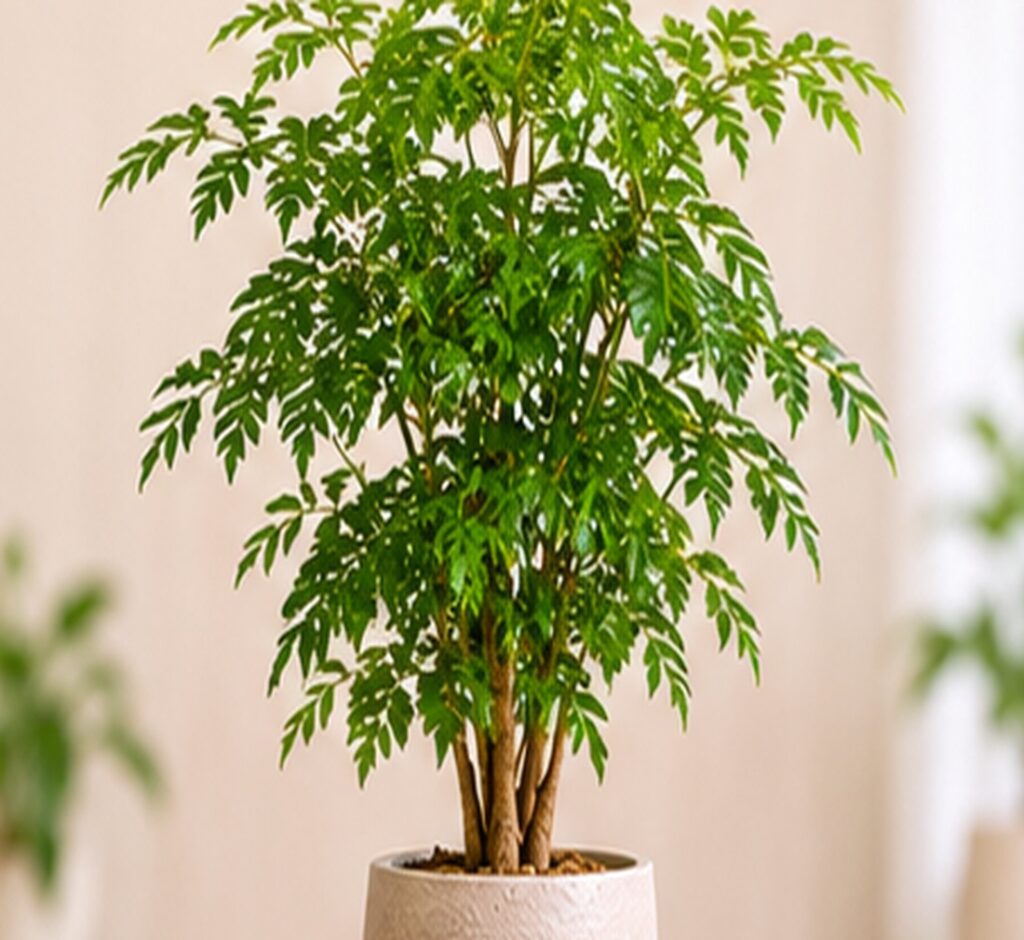
Lacy, finely divided leaves on twisting stems give the Ming Aralia the look of a living bonsai.
About Ming Aralia
The Ming Aralia is a living sculpture. Its fine, lacy, dark-green leaves are carried on twisting, woody stems, so the plant looks like a miniature tree from a Chinese painting, and it brings a delicate, almost architectural charm to a bright room.
From the Pacific Islands to Houseplant Favorite
Polyscias fruticosa is native to tropical areas of South East Asia and Polynesia, where it is grown as a hedge and a garden plant. As a houseplant, it became popular in the 20th century for its bonsai-like shape and delicate foliage.
The Secret Behind Its Lacy Leaves
The leaves are divided into many fine, toothed leaflets, giving a feathery, fern-like texture that looks surprisingly delicate on such a woody plant. Stems twist and branch naturally, and they can be pruned and trained into a bonsai shape. It is a slow, steady grower, so a shaped plant keeps its form for years.
A World of Beautiful Varieties
You will see several forms, with leaves that range from finely cut and almost parsley-like to broader and rounder. Variegated forms have cream-edged leaves. ‘Ming Aralia’ usually refers to the finely cut form, and plants are often trained as small trees or bonsai.
Bringing the Tropics Indoors
Ming Aralia is more demanding than some of its tough relatives, but it is rewarding. Give it bright, indirect light and keep the soil evenly moist but never soggy. It loves humidity, so mist, use a pebble tray or place it in a humid room. Keep it away from drafts and heating, as it may drop leaves in response to stress. It is toxic to pets if chewed.
Delicate, sculptural and quietly dramatic, the Ming Aralia is a fine choice for anyone who enjoys training a plant into a small tree.
Care Guide
Everything you need to know to keep your Ming Aralia happy and healthy.
Give it bright, indirect light, with a little morning sun if possible. Low light leads to leaf drop and leggy growth.
Water when the top inch of soil is dry and keep the soil lightly moist. Avoid both drying out completely and waterlogging, which both cause leaf drop.
Use a rich, well-draining mix with some perlite. Make sure the pot has drainage holes.
Mist often, use a pebble tray or humidifier. Dry air causes leaf drop and spider mites.
Keep above 60°F (16°C) and away from cold drafts and radiators. It is sensitive to cold.
Feed every 4 weeks in spring and summer with a half-strength balanced fertilizer. Stop in winter.
Prune in spring to shape it into a bonsai or small tree. New growth appears just below the cuts. Wear gloves if you have sensitive skin.
Through the year
Spring
Prune, repot if needed, and resume feeding.
Summer
Keep the soil evenly moist and the air humid.
Autumn
Slow feeding and watering as light drops.
Winter
Water sparingly, keep warm, and boost humidity.
Repotting
- Best time
- Spring
- Pot size step-up
- Go up 1–2 inches (2.5–5 cm) in pot diameter
- Soil mix
- Rich, free-draining potting mix with perlite
- Signs it needs repotting
- Roots circling the pot or coming out of drainage holes.
It dislikes root disturbance, so repot carefully and keep it in the same place afterwards.
Propagation
- Methods
- Stem cutting
- Difficulty
- Moderate
- Best season
- Spring to summer
- Time to root
- 4–8 weeks
Take 4–6 inch (10–15 cm) stem cuttings, dip in rooting hormone, and plant in moist potting mix. Keep warm and humid under a clear bag until roots form.
Common Problems
Leaf drop
Symptoms: Leaves fall suddenly
Likely cause: Cold drafts, dry air, or overwatering
Move away from drafts, raise humidity and check the soil moisture.
Spider mites and scale
Symptoms: Webbing, stippling or bumps
Likely cause: Dry air
Wipe leaves, increase humidity, and treat with insecticidal soap.
Brown leaf edges
Symptoms: Brown, crisp edges
Likely cause: Low humidity
Raise humidity and water more consistently.
Companion Plants
Plants that grow happily alongside this one.
Download Care Guide
A printable one-page Ming Aralia care sheet: light, water, feeding and top tips.
You Might Also Like
View More Plants →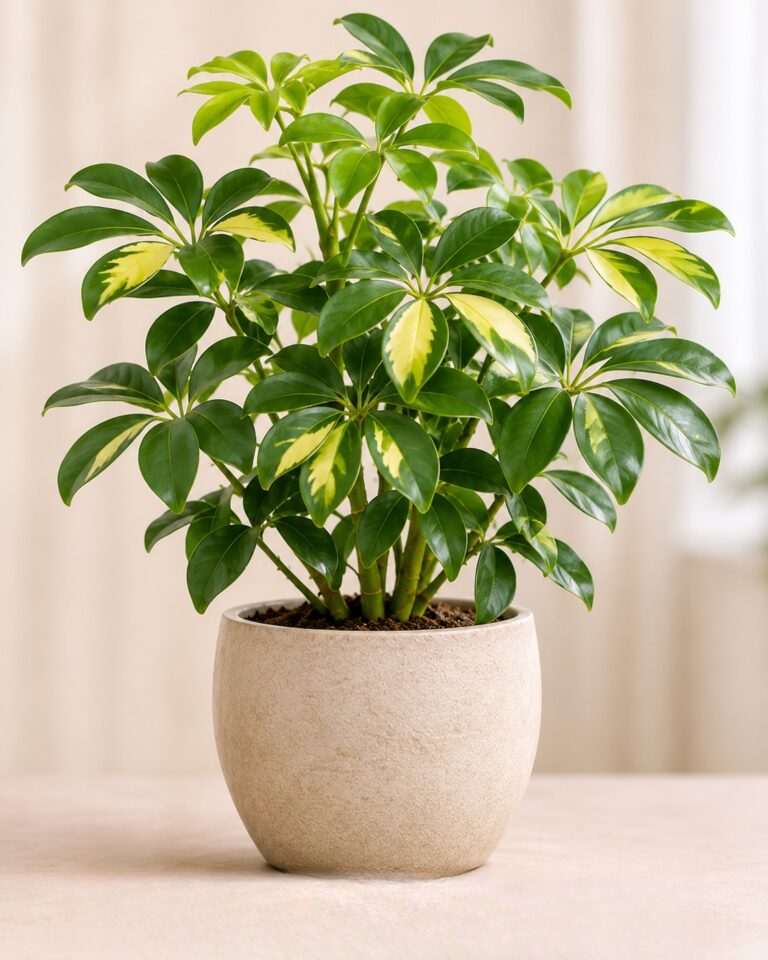
Dwarf Umbrella Tree
Schefflera arboricola
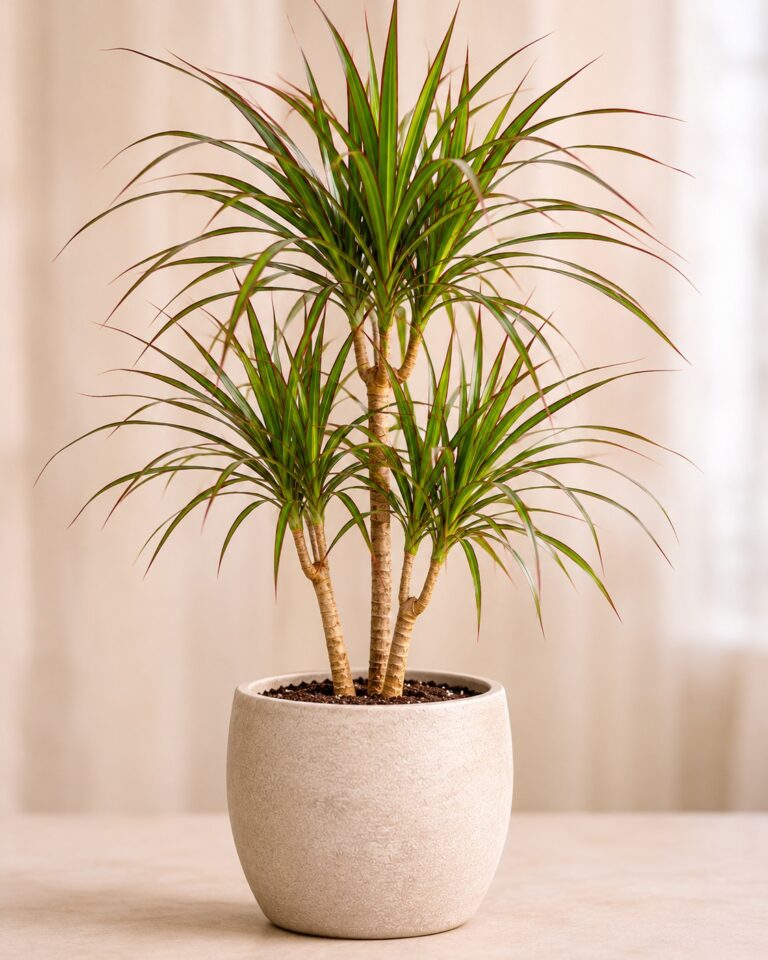
Dragon Tree
Dracaena marginata
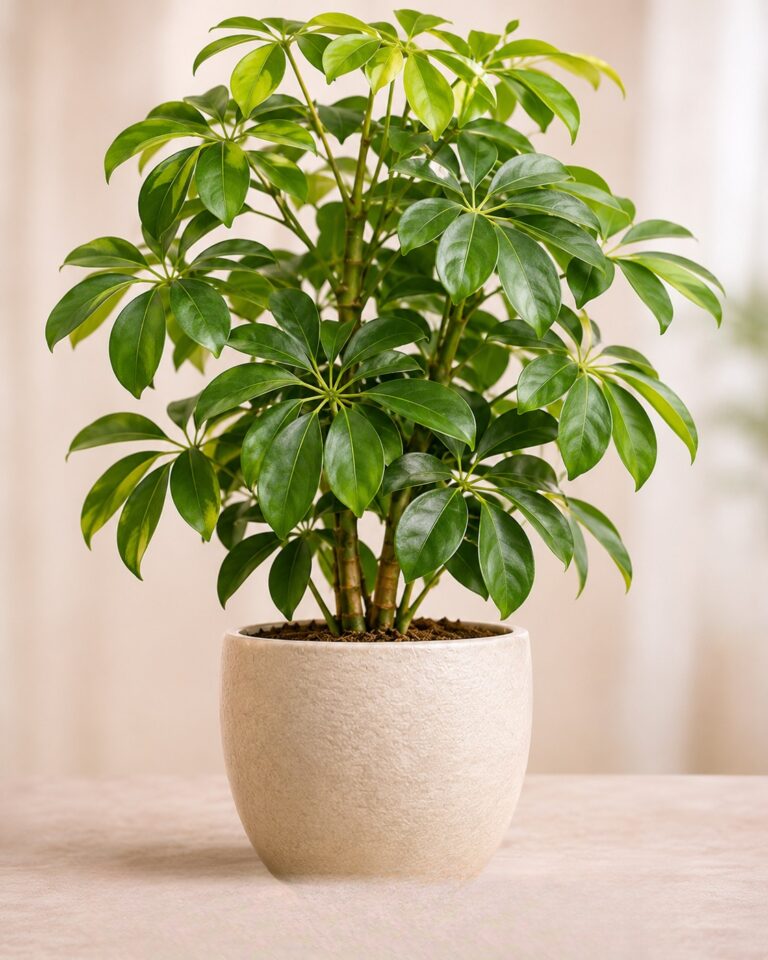
Umbrella Tree
Schefflera actinophylla
Money Tree
Pachira aquatica