

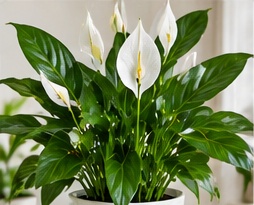
Peace Lily
Spathiphyllum wallisii
Glossy dark leaves and elegant white blooms, and a plant that tells you clearly when it is thirsty.
About Peace Lily
With its glossy, deep green leaves and elegant white blooms, the Peace Lily is one of the best-loved flowering houseplants in the world. It is graceful, gently dramatic and refreshingly clear about what it needs: when it is thirsty the whole plant droops, then springs back within hours of a drink. That honesty makes it a friendly choice for anyone still learning how much water their plants like.
From Rainforest Floor to Living Room Favorite
Peace Lilies are native to the tropical rainforests of Central and South America, with a few relatives found in Southeast Asia. In the wild they grow on the shady forest floor, where they catch dappled light under the canopy and enjoy constant warmth and humidity. That explains why they cope so well with the low light of ordinary rooms. Although the common name says lily, the plant is actually a member of the arum family, Araceae, alongside Monstera and pothos.
The Secret Behind That White “Flower”
The big white petal-like shape is not a petal at all. It is a modified leaf called a spathe, which wraps around the true flowers: the tiny, closely packed blooms on the central spike, known as the spadix. Spathes can stay fresh and white for several weeks, then slowly turn green and fade. A healthy, mature plant in good light may bloom in spring and summer, and sometimes at other times of year.
A World of Beautiful Varieties
Peace Lilies range from tabletop plants about a foot tall to floor-standing giants that can reach four feet. Domino has leaves splashed with white, Sensation is a large, bold plant with ribbed leaves and big spathes, and Sweet Chico is a compact, bushy option that suits smaller spaces. Picasso takes the variegation further, with leaves marbled in cream. All share the same easy, shade-loving care.
Bringing the Rainforest Indoors
Peace Lilies do best in medium to bright, indirect light, though they tolerate low light, where they simply bloom less. Water when the top inch of soil has dried or when the leaves begin to droop, and use a pot with drainage holes. Average household warmth suits them, and a little extra humidity keeps the leaf tips from browning. All parts of the plant are toxic to cats and dogs if chewed, so keep it out of reach.
Calm, glossy and quietly beautiful, the Peace Lily is a rewarding plant to grow. Give it a bright-ish spot out of direct sun, a steady watering routine and a wipe of the leaves now and then, and it will keep your rooms looking fresh for years.
Care Guide
Everything you need to know to keep your Peace Lily happy and healthy.
Bright, filtered light produces the most flowers. In a dim room the plant stays healthy but blooms less. Keep it out of direct sun, which scorches the leaves.
Water thoroughly until it runs out of the bottom, then empty the saucer. A drooping plant is thirsty, but soggy soil can also cause drooping, so check the soil before you water.
A peat- or coir-based mix with a handful of perlite holds some moisture while still draining. Use a pot with drainage holes.
Brown leaf tips are the usual sign of dry air. Group it with other plants, use a pebble tray, or place it in a bright bathroom.
Keep it above 55°F (13°C) and away from cold drafts and heating vents.
Use a balanced liquid fertilizer at half strength. Too much fertilizer causes brown tips.
Through the year
Spring
Best time to repot and divide. Flowering often begins as the days lengthen.
Summer
Water more often and mist or group plants for humidity. Keep out of direct sun.
Autumn
Reduce watering as growth slows and feed less.
Winter
Water a little less often, keep away from cold windows and drafts, and do not feed.
Repotting
- Repot every
- 1–2 years
- Best time
- Spring
- Pot size step-up
- Go up 1–2 inches (2.5–5 cm) in pot diameter
- Soil mix
- Peat- or coir-based potting mix with a little perlite for drainage
- Signs it needs repotting
- Roots coming out of the drainage holes, soil that dries out within a few days, or a crowded clump of leaves with few flowers.
Peace Lilies flower best when slightly root-bound, so only go up one pot size when it is clearly crowded.
Propagation
- Methods
- Division
- Difficulty
- Easy
- Best season
- Spring
- Time to root
- Divisions settle in within 2–4 weeks
Water the plant the day before, slide it out of the pot and gently tease the clump apart where it naturally divides into sections, each with several leaves and a good set of roots. Pot each section at the same depth as before in fresh mix, water well and keep it out of direct sun until new growth appears.
Common Problems
Drooping leaves
Symptoms: The whole plant sags suddenly
Likely cause: Usually thirst; sometimes waterlogged roots
Check the soil. If it is dry, water thoroughly and the plant should perk up within hours. If the soil is wet and the roots are mushy, treat it for root rot.
Brown leaf tips
Symptoms: Tips and edges turn brown and crisp
Likely cause: Dry air, fluoride or chlorine in tap water, or too much fertilizer
Use filtered or rainwater if possible, raise the humidity and flush the pot with plain water every few months. Trim the brown tips.
No flowers
Symptoms: Healthy leaves but no white spathes
Likely cause: Too little light, or a young plant
Move it to a brighter spot out of direct sun and feed in spring and summer. A mature plant should bloom with enough light.
Yellowing leaves
Symptoms: Leaves turn yellow and soft, often the lower ones first; the soil stays wet
Likely cause: Overwatering or a pot without drainage
Let the top 2 inches (5 cm) of soil dry out between waterings and empty any saucer after watering. If the soil smells sour, slide the plant out and check the roots: healthy roots are firm and pale, rotten ones are brown and mushy. Trim the bad ones and repot in fresh, free-draining mix.
Companion Plants
Plants that grow happily alongside this one.
Download Care Guide
A printable one-page Peace Lily care sheet: light, water, feeding and top tips.
You Might Also Like
View More Plants →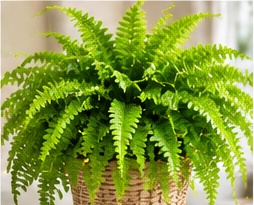
Boston Fern
Nephrolepis exaltata 'Bostoniensis'
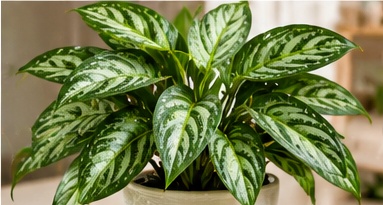
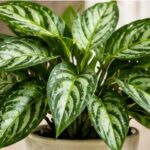
Chinese Evergreen
Aglaonema