
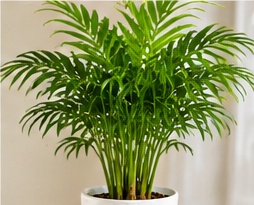
Parlor Palm
Chamaedorea elegans
A graceful, compact palm with feathery fronds, a Victorian favorite that thrives in low light.
About Parlor Palm
Soft, graceful and unfussy, the Parlor Palm is the palm for people who think palms are hard. Its slender, arching fronds are made up of narrow, glossy leaflets, and the whole plant has a gentle, tropical look that suits almost any room. It is compact, slow-growing and happy in low light, which has made it a houseplant favorite for more than a century.
From Mexican Rainforest to Victorian Parlor
Chamaedorea elegans is native to the rainforests of southern Mexico and Guatemala, where it grows as a small palm in the shade of taller trees. It belongs to the palm family, Arecaceae. It became hugely popular in the Victorian era, when it was one of the few palms that could survive the dim, gas-lit parlors of the time, which gave it its name.
The Secret Behind That Shade Tolerance
Because it grows on the forest floor, the Parlor Palm is adapted to low light and steady warmth. It grows slowly, often only a few new fronds a year, and rarely outgrows its space. Mature plants can produce sprays of tiny yellow flowers and small, round black fruits, though this is not common indoors.
A World of Beautiful Varieties
The classic Parlor Palm is usually sold in multiples, with several stems in a pot to make a full plant. Related Chamaedorea palms include the Bamboo Palm and the Cat Palm, which are larger and better suited to bigger spaces. All of them are non-toxic to cats and dogs.
Bringing the Rainforest Indoors
Parlor Palms thrive in low to medium, indirect light, and direct sun scorches the fronds. Water when the top inch or two of soil has dried, then drain well. They like moderate humidity and normal room temperatures. Brown tips are common in dry air, so a pebble tray or humidifier helps. It is non-toxic to cats and dogs.
Elegant, compact and wonderfully calm, the Parlor Palm adds a soft tropical touch without taking up much room. Give it shade, steady moisture and a little patience, and it will thrive.
Care Guide
Everything you need to know to keep your Parlor Palm happy and healthy.
A shaded spot or a bright room out of direct sun is ideal. Direct sun scorches the fronds.
Water thoroughly and drain well. Never let it stand in water, but do not let it dry out completely.
Use potting soil with perlite, in a pot with drainage holes.
Mist or use a humidifier in dry rooms to prevent brown tips.
Keep it away from cold drafts and heaters.
Use a diluted balanced fertilizer.
Through the year
Spring
Repot if needed. Growth picks up.
Summer
Water more often and keep out of direct sun.
Autumn
Water less as growth slows.
Winter
Water sparingly and keep warm, away from cold drafts.
Repotting
- Repot every
- 2–3 years
- Best time
- Spring
- Pot size step-up
- Go up 1–2 inches (2.5–5 cm) in pot diameter
- Soil mix
- Well-draining potting mix with perlite
- Signs it needs repotting
- Roots coming from the drainage holes, soil that dries within days, or very crowded stems.
Palms dislike root disturbance, so repot only when necessary and handle the roots gently.
Propagation
- Methods
- Division, Seed
- Difficulty
- Tricky
- Best season
- Spring
- Time to root
- Divisions settle in 3–6 weeks; seed takes months
Parlor Palms are best divided rather than cut. When repotting in spring, gently separate a clump of stems with their own roots and pot them separately. Avoid cutting the main stem, as the palm cannot regrow from the cut. Growing from seed is possible but very slow.
Common Problems
Brown frond tips
Symptoms: Tips turn brown and crisp
Likely cause: Dry air, tap water minerals or irregular watering
Use filtered water, raise humidity and trim the tips.
Spider mites
Symptoms: Fine webbing and speckled fronds
Likely cause: Dry air
Rinse the fronds in the shower and wipe with insecticidal soap weekly.
Yellow fronds
Symptoms: Fronds yellow and droop
Likely cause: Overwatering, or very low light
Let the soil dry out and move to a brighter spot.
Root rot
Symptoms: Soft, mushy base or stems, a sour smell from the soil, and leaves that yellow and collapse
Likely cause: Soil that stays wet, often from overwatering or a pot with no drainage
Unpot the plant and cut away any brown, mushy roots with clean scissors. Repot in fresh, dry, free-draining mix in a pot with drainage holes and wait a week before watering. If most of the plant is soft, take healthy cuttings or offsets and start again.
Companion Plants
Plants that grow happily alongside this one.
Download Care Guide
A printable one-page Parlor Palm care sheet: light, water, feeding and top tips.
You Might Also Like
View More Plants →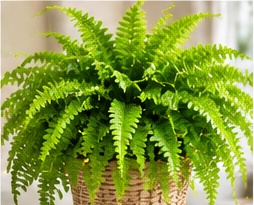
Boston Fern
Nephrolepis exaltata 'Bostoniensis'
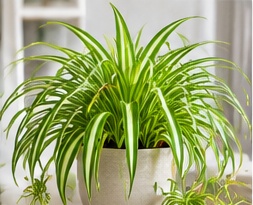
Spider Plant
Chlorophytum comosum