

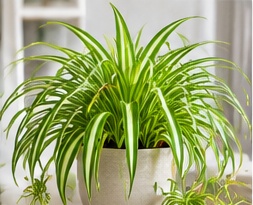
Spider Plant
Chlorophytum comosum
Fountains of arching, striped leaves that send out baby plantlets, and a safe choice for pet households.
About Spider Plant
Cheerful, arching and wonderfully easy, the Spider Plant is a classic houseplant that has been brightening homes for generations. Its long, striped leaves fan out in a fountain, and mature plants send out long stems with baby plantlets dangling like tiny spiders on threads. It is quick to grow, easy to share and, better still, non-toxic to cats and dogs.
From African Woodland to Hanging Basket
The Spider Plant is native to tropical and southern Africa, where it grows in the dappled light at the edge of woodlands. It belongs to the asparagus family, Asparagaceae, and has thick, fleshy roots that store water, which is why it copes well with occasional drought. Indoors, it is at its best in a hanging basket or on a high shelf, where its trailing plantlets can arch down freely.
The Secret Behind Those Baby Plantlets
Once a plant is mature and snug in its pot, it sends out long, slender stems, each carrying small white flowers and then a tuft of plantlets, or spiderettes, at the tip. Those babies grow tiny roots while still attached, so they are ready to root as soon as they touch soil. A single Spider Plant can quickly turn into a whole collection.
A World of Beautiful Varieties
The most familiar form has a broad white stripe down the center of each leaf (called Vittatum), while others have white edges instead. Bonnie has curled, ringlet-like leaves, and Hawaiian types are more compact. A plain green form is also common and grows slightly larger and tougher than the variegated ones.
Bringing Africa Indoors
Spider Plants prefer bright, indirect light, though they tolerate lower light. Water when the top inch or two of soil has dried, and use a pot with drainage holes. Average room temperatures and ordinary humidity are fine. Brown leaf tips are common, and are often caused by fluoride and salts in tap water, so use filtered or rainwater if you can.
Friendly, fast and generous, the Spider Plant is a plant that gives back. Pot up a few plantlets, give them to friends, and enjoy the way its leaves cascade from a basket or a shelf.
Care Guide
Everything you need to know to keep your Spider Plant happy and healthy.
Variegated types keep stronger stripes in good light. Direct afternoon sun can scorch the leaves.
Water thoroughly and let the excess drain. The thick roots tolerate a little drought, but constant dryness browns the tips.
Add a handful of perlite. Use a pot with drainage holes.
Dry air can brown the tips, so avoid placing it by radiators.
Keep above 50°F (10°C) and away from cold drafts.
Too much fertilizer builds up salts and browns the leaf tips.
Through the year
Spring
Repot if root-bound, and take plantlets. New growth is quick.
Summer
Water more often and keep out of hot direct sun. Plants produce the most plantlets now.
Autumn
Reduce watering and feeding as growth slows.
Winter
Water a little less, and keep away from cold windows.
Repotting
- Repot every
- 1–2 years
- Best time
- Spring
- Pot size step-up
- Go up 1–2 inches (2.5–5 cm) in pot diameter
- Soil mix
- General-purpose potting mix with a little perlite
- Signs it needs repotting
- Thick white roots pushing out of the drainage holes, or a pot that bulges or cracks.
Spider Plants like to be a little snug and often bloom and make plantlets when root-bound. Repot every two years or when the roots have filled the pot.
Propagation
- Methods
- Division, Offsets / pups
- Difficulty
- Easy
- Best season
- Spring to summer
- Time to root
- 2–4 weeks
Pin a plantlet, still attached to its stem, into a small pot of moist mix and, once it has rooted in a few weeks, cut the stem. Or snip off a plantlet and stand its base in water until roots appear, then pot it. Larger plants can also be divided at repotting.
Common Problems
Brown leaf tips
Symptoms: Tips turn brown and dry
Likely cause: Fluoride or salts in tap water, dry air or irregular watering
Use filtered or rainwater, flush the soil occasionally and keep watering steady. Trim brown tips.
Plain green leaves
Symptoms: Variegated leaves turn greener
Likely cause: Low light
Move to brighter light. New growth should show more stripes.
No plantlets
Symptoms: Plenty of leaves but no flowering stems
Likely cause: A young plant, or a pot much larger than the root ball
Be patient, keep it a little snug in its pot and give it bright light.
Mealybugs and spider mites
Symptoms: White cottony clusters in the leaf joints, or fine webbing and pale speckling on the leaves
Likely cause: Sap-sucking insects, more common on stressed plants and in dry, warm rooms
Isolate the plant. Wipe visible bugs away with a cotton swab dipped in rubbing alcohol, then spray or wipe all leaf surfaces with insecticidal soap. Repeat weekly for at least a month, and rinse the plant in the shower first if the infestation is heavy.
Companion Plants
Plants that grow happily alongside this one.
Download Care Guide
A printable one-page Spider Plant care sheet: light, water, feeding and top tips.
You Might Also Like
View More Plants →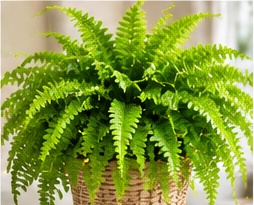
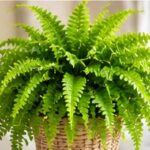
Boston Fern
Nephrolepis exaltata 'Bostoniensis'
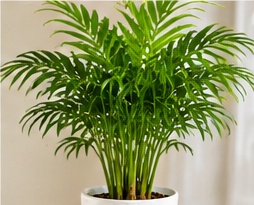
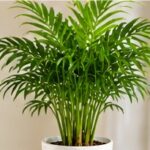
Parlor Palm
Chamaedorea elegans