

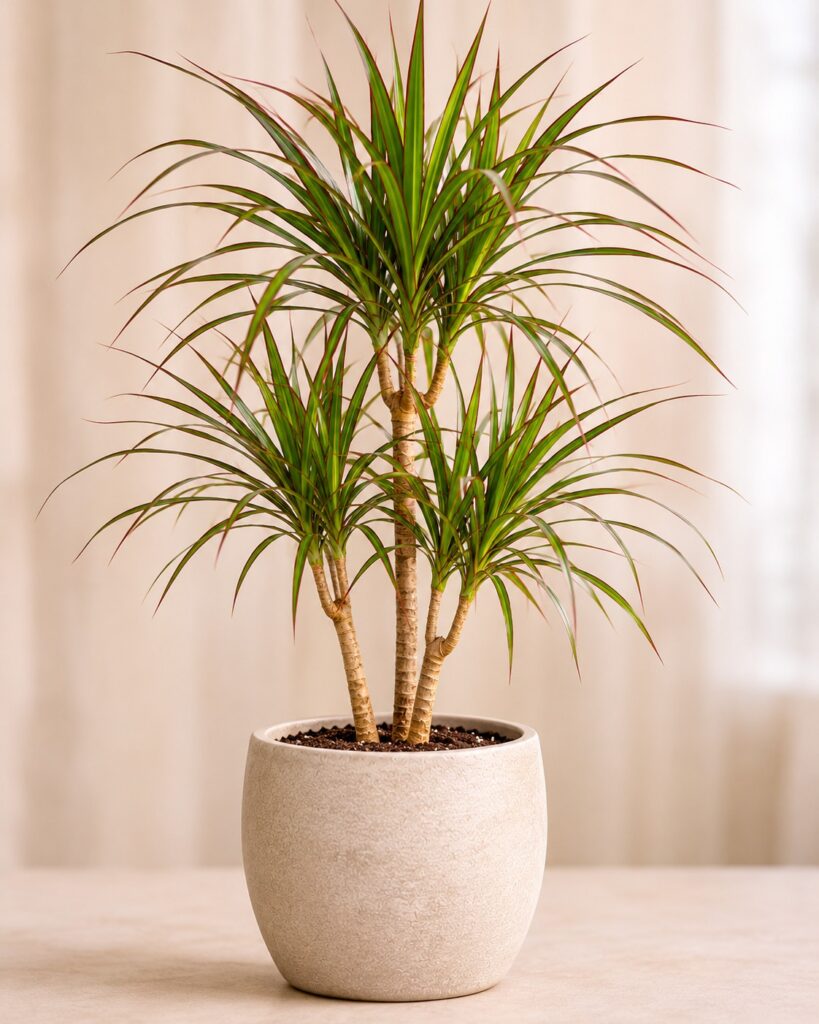
Dragon Tree
Dracaena marginata
Slim, twisting trunks topped with spiky fountains of red-edged leaves make the Dragon Tree a bold, architectural, easy-care plant.
About Dragon Tree
The Dragon Tree is the plant that looks far more difficult than it is. Its slim, sinuous trunks carry bursts of narrow, arching leaves edged in red, and it is almost indifferent to neglect, which is why it has been a favorite in homes and offices for decades.
From Madagascar to Houseplant Favorite
Native to Madagascar, the Dragon Tree grows into a slender tree in the wild, with branching stems and tufted crowns of leaves. Indoors it stays much smaller and grows slowly, so a plant bought at 3 feet tall (0.9 m) can happily live for years without outgrowing its spot. It became a classic of modern interiors thanks to its clean lines and its tolerance of average indoor conditions.
The Secret Behind Its Twisting Trunks
Every leaf that falls leaves behind a neat diamond-shaped scar on the stem, which builds up into a patterned, sculptural trunk. Growers often train several stems at different heights, or bend them, so the plant develops a graceful, wandering shape. The long, narrow leaves are green with a fine red-purple edge, and they grow in tight rosettes at the tips of the stems.
A World of Beautiful Varieties
The classic green-and-red form is joined by colorful cultivars such as ‘Tricolor’, with cream, green and pink stripes, and ‘Colorama’, which has bolder pink and red banding. The brighter the leaf color, the more light the plant needs to keep it, so give the variegated forms a spot close to a window.
Bringing the Tropics Indoors
Place your Dragon Tree in bright, indirect light, though it will tolerate lower light with slower growth. Let the soil dry out a little between waterings, because it is much more likely to be harmed by too much water than too little. Brown leaf tips are the usual complaint, and they are most often caused by fluoride in tap water or very dry air, so filtered water helps. Keep it away from curious pets, as the leaves are toxic if chewed.
Slow, sculptural and wonderfully tolerant, the Dragon Tree is the ideal plant for anyone who wants height and style with minimal effort.
Care Guide
Everything you need to know to keep your Dragon Tree happy and healthy.
Bright, indirect light gives the best color and growth, though it copes with medium light. Avoid strong direct sun, which can scorch the leaves.
Water thoroughly, then wait until the top 2 inches (5 cm) of soil are dry. Overwatering is the main cause of problems. Cut back further in winter.
Use a free-draining mix, such as standard potting soil with extra perlite or sand. Always use a pot with drainage holes.
It tolerates average humidity, but dry air can brown the leaf tips. Occasional misting or a humidifier helps in winter.
Keep it away from cold drafts and sudden temperature swings. Temperatures below 55°F (13°C) can damage the leaves.
Feed every 6–8 weeks in spring and summer with a balanced liquid fertilizer at half strength. Do not feed in winter.
Cut leggy stems with clean pruners just above a leaf scar. New growth appears below the cut. Remove lower leaves that have naturally yellowed and dropped.
Through the year
Spring
Resume feeding and repot if needed.
Summer
Water as the top 2 inches dry out; protect from hot, direct sun.
Autumn
Slow down watering and stop feeding.
Winter
Water sparingly and keep away from cold drafts.
Repotting
- Repot every
- 2–3 years
- Best time
- Spring
- Pot size step-up
- Go up 1–2 inches (2.5–5 cm) in pot diameter
- Soil mix
- Free-draining potting mix with extra perlite or sand
- Signs it needs repotting
- Roots coming through drainage holes, the plant becoming top-heavy, or water draining straight through.
Dragon Trees are slow growers and do well slightly pot-bound. Use a heavy pot for tall plants to stop them tipping.
Propagation
- Methods
- Stem cutting
- Difficulty
- Easy
- Best season
- Spring to summer
- Time to root
- 4–8 weeks
Cut a stem section 4–6 inches (10–15 cm) long, or the leafy top of a leggy plant. Let it dry for a few hours, then root it in moist potting mix or in a jar of water. Keep it warm and in bright, indirect light until new roots form.
Common Problems
Brown leaf tips
Symptoms: Dry, brown tips on the leaves
Likely cause: Fluoride in tap water, or dry air
Use filtered or rainwater and raise humidity. Trim brown tips, following the natural leaf shape.
Yellowing and dropping leaves
Symptoms: Lower leaves yellow and fall
Likely cause: Overwatering, or natural aging of old leaves
If only the lowest leaves are dropping, this is normal. If many leaves yellow, check the soil is not waterlogged.
Spider mites
Symptoms: Fine webbing and speckled leaves
Likely cause: Hot, dry air
Wipe leaves with a damp cloth, rinse in the shower, and raise humidity. Repeat weekly until clear.
Companion Plants
Plants that grow happily alongside this one.
Download Care Guide
A printable one-page Dragon Tree care sheet: light, water, feeding and top tips.
You Might Also Like
View More Plants →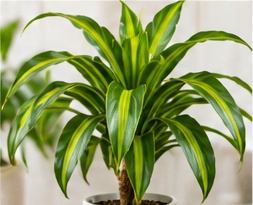
Corn Plant
Dracaena fragrans
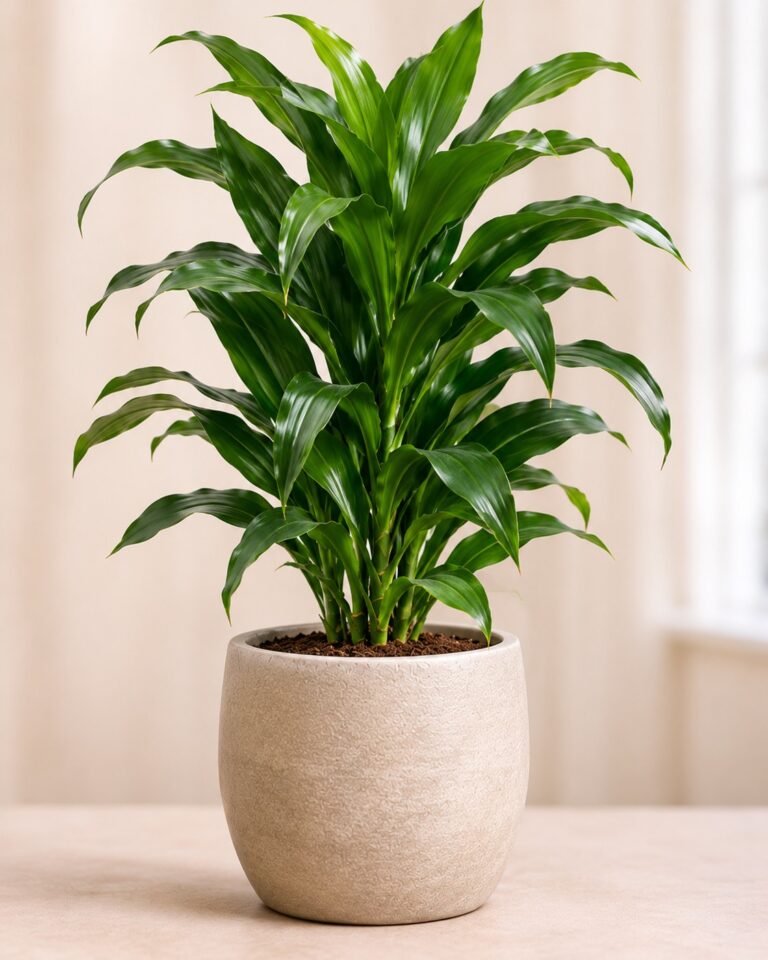
Janet Craig Dracaena
Dracaena fragrans 'Janet Craig'
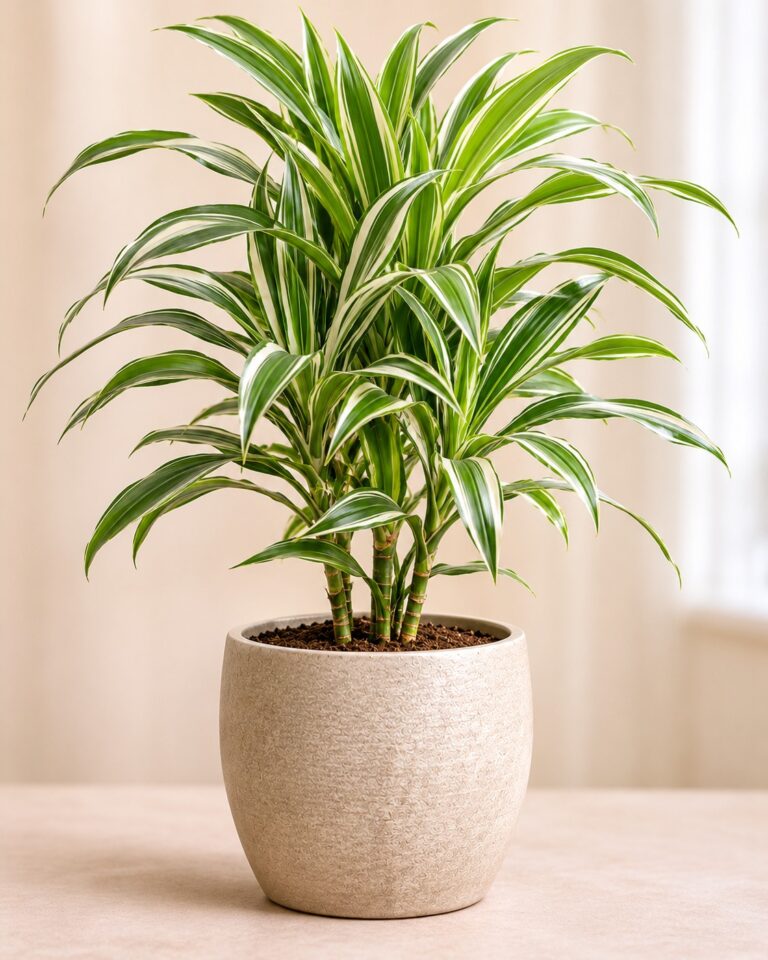
Warneckii Dracaena
Dracaena fragrans 'Warneckii'
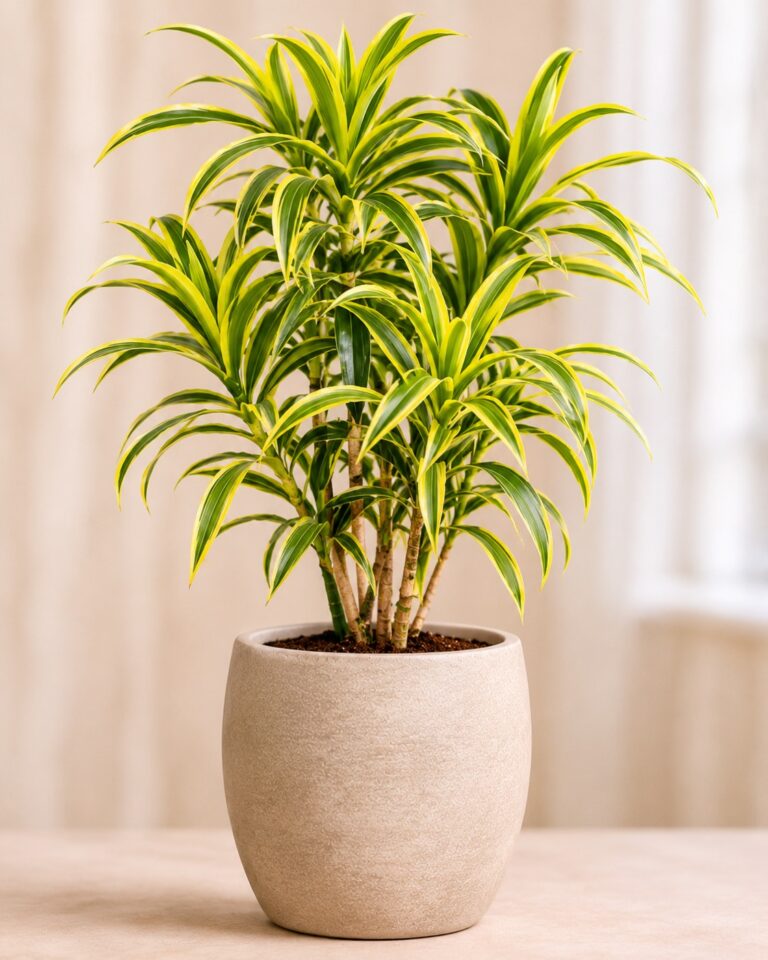
Song of India
Dracaena reflexa 'Song of India'