

Snake Plant
Dracaena trifasciata
Stiff, sword-shaped leaves with striking bands, and a plant that thrives on neglect.
About Snake Plant
Tall, architectural and nearly indestructible, the Snake Plant is the houseplant for people who think they cannot keep a plant alive. Its stiff, upright leaves stand like green swords in a pot, adding a clean, modern shape to any room. It tolerates low light, dry air and long gaps between waterings, which has made it one of the most popular houseplants anywhere.
From West African Scrubland to Shelf Favorite
The Snake Plant is native to tropical West Africa, from Nigeria to the Congo, where it grows in dry, rocky and scrubby places. It spreads by underground rhizomes, which store water and send up new leaves, and its thick, tough leaves also hold moisture. For decades it was classified as Sansevieria trifasciata, and you will still see that name on plant labels. Botanists later moved Sansevieria into the genus Dracaena, so the current name is Dracaena trifasciata.
The Secret Behind That Banded Foliage
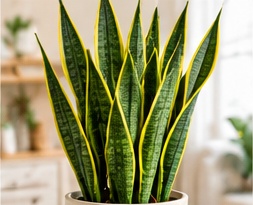
The leaves are firm and slightly leathery, patterned with horizontal bands of darker and lighter green, and in the best-known form edged in bright yellow. That tough structure lets the plant store water and survive dry spells. Like many succulents, it takes in carbon dioxide at night through a process called CAM photosynthesis, which helps it lose less water in hot, dry conditions.
A World of Beautiful Varieties
The plant in the picture has yellow-edged leaves, a form called Laurentii that is the most common type sold. Other varieties include dark, dense Black Coral, the short, rosette-shaped Bird’s Nest, the silvery Moonshine, and the cylindrical, spear-like forms with round, tubular leaves. Care is nearly the same for all of them.
Bringing the Desert Indoors
Give a Snake Plant bright, indirect light if you can, though it tolerates quite dim spots. Water only when the soil has dried out completely, usually every two to three weeks, and less in winter. It needs a well-draining potting mix and a pot with drainage, as soggy soil is the quickest way to harm it. It is mildly toxic to cats and dogs if chewed, so keep it out of reach.
Tough, tidy and almost impossible to overcare for, the Snake Plant is a plant you can leave alone. A bright spot, a gritty mix and a light touch with the watering can will keep it standing tall for years.
Care Guide
Everything you need to know to keep your Snake Plant happy and healthy.
The plant grows slowly in dim light but stays healthy. Bright light brings out stronger color and encourages new leaves. Direct sun is fine if it is introduced gradually.
Water thoroughly, then wait until the pot is dry all the way through, often two to three weeks. Overwatering is the commonest way to lose a Snake Plant. In winter, water roughly once a month.
Use a cactus or succulent mix, or add perlite or coarse sand to ordinary potting soil. A terracotta pot helps the soil dry quickly.
Snake Plants cope well with dry indoor air, so there is no need for misting.
Keep it above 50°F (10°C) and away from cold drafts, especially if the soil is damp.
A diluted houseplant fertilizer is plenty. Skip it in autumn and winter.
Through the year
Spring
Repot if the plant is cracking its pot. Water a little more often as growth picks up.
Summer
Water every two to three weeks; the plant tolerates heat and bright light.
Autumn
Water less as light fades.
Winter
Water just once a month or less, and keep the plant away from cold windows.
Repotting
- Repot every
- 1–2 years
- Best time
- Spring
- Pot size step-up
- Go up 1–2 inches (2.5–5 cm) in pot diameter
- Soil mix
- Cactus or succulent mix, or potting mix with about a third perlite or coarse sand
- Signs it needs repotting
- Leaves bulging against the pot, a cracked or distorted pot, or roots coming out of the drainage holes.
Snake Plants grow well when snug, so repot only every few years. Use a heavy pot for tall plants, which can tip over.
Propagation
- Methods
- Leaf cutting, Division
- Difficulty
- Easy
- Best season
- Spring to summer
- Time to root
- Leaf cuttings take 1–3 months to root
Division is the most reliable method and keeps variegation: cut or tease a section of the plant with roots and leaves away from the clump and pot it separately. For leaf cuttings, cut a healthy leaf into 3-inch (8 cm) sections, let them callus for a day, stand them upright (right way up) in gritty mix and keep them barely damp. Plants with yellow leaf edges lose the yellow when grown from leaf cuttings, so use division for those.
Common Problems
Root rot
Symptoms: Soft, mushy base or stems, a sour smell from the soil, and leaves that yellow and collapse
Likely cause: Soil that stays wet, often from overwatering or a pot with no drainage
Unpot the plant and cut away any brown, mushy roots with clean scissors. Repot in fresh, dry, free-draining mix in a pot with drainage holes and wait a week before watering. If most of the plant is soft, take healthy cuttings or offsets and start again. Snake Plants rot from the base first, so a soft, collapsing leaf often means the roots are already affected.
Wrinkled or curling leaves
Symptoms: Leaves look thin, wrinkled or curl inward
Likely cause: Underwatering for a long time, or damaged roots
Water deeply, letting the soil soak, then return to a steady routine. Check the roots if it does not recover.
Leaves flop or bend over
Symptoms: Tall leaves lean or fall outward
Likely cause: Low light, overwatering or a pot that is too small and light
Move the plant to brighter light, let the soil dry and use a heavier pot. Floppy leaves do not stand up again; trim them at the base.
Mealybugs and spider mites
Symptoms: White cottony clusters in the leaf joints, or fine webbing and pale speckling on the leaves
Likely cause: Sap-sucking insects, more common on stressed plants and in dry, warm rooms
Isolate the plant. Wipe visible bugs away with a cotton swab dipped in rubbing alcohol, then spray or wipe all leaf surfaces with insecticidal soap. Repeat weekly for at least a month, and rinse the plant in the shower first if the infestation is heavy.
Companion Plants
Plants that grow happily alongside this one.

Download Care Guide
A printable one-page Snake Plant care sheet: light, water, feeding and top tips.
You Might Also Like
View More Plants →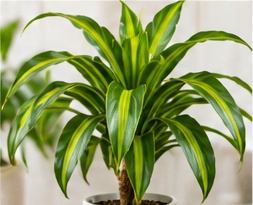
Corn Plant
Dracaena fragrans
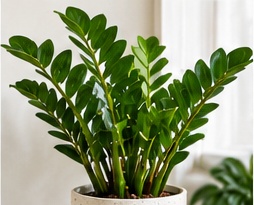
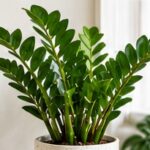
ZZ Plant
Zamioculcas zamiifolia