
Kentia Palm
Howea forsteriana
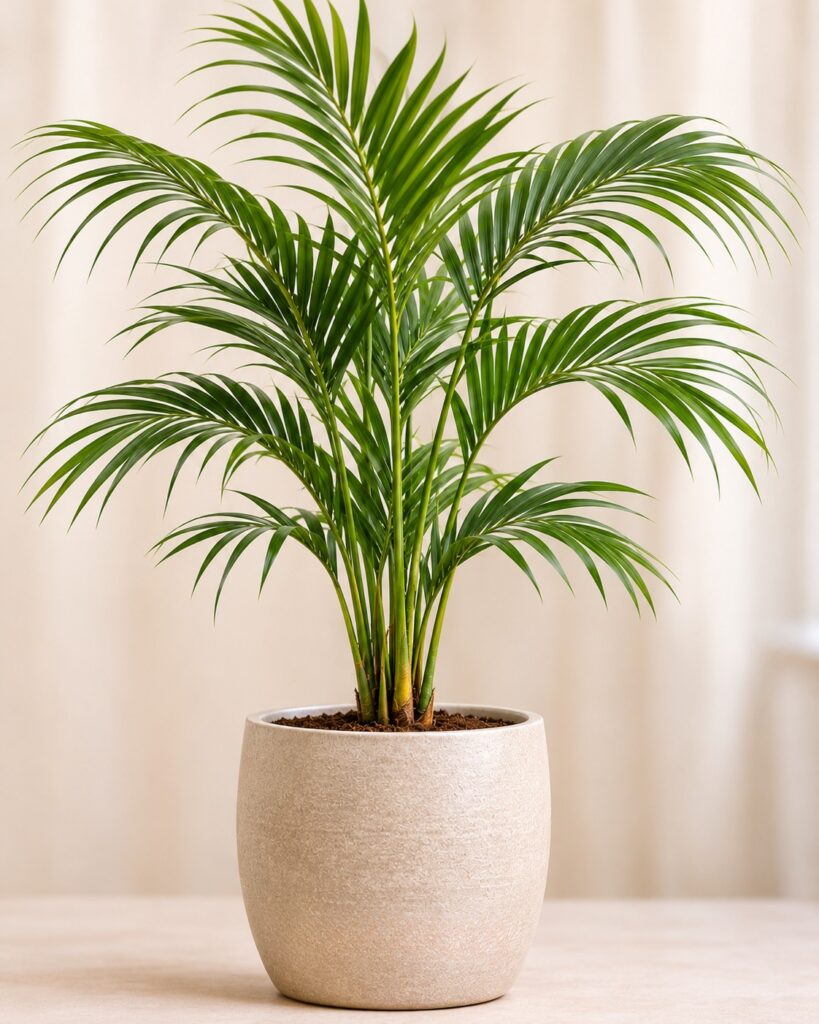
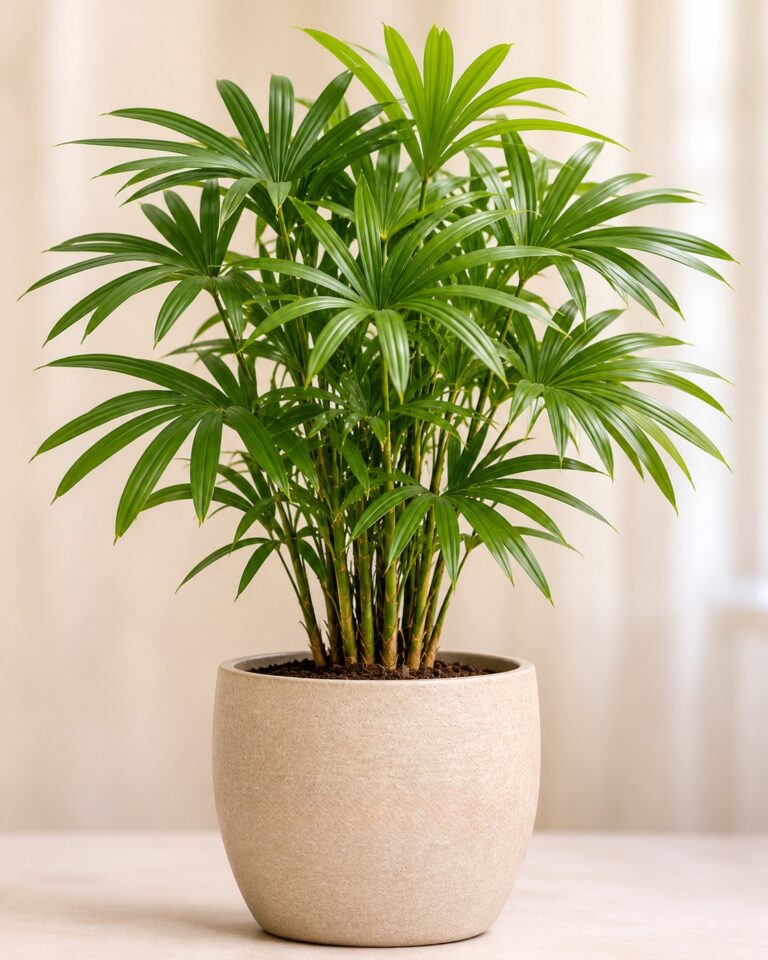
Arching, graceful fronds and a calm, upright shape make the Kentia Palm the classic elegant palm for shaded rooms.
About Kentia Palm
The Kentia Palm is the palm that has graced grand hotels and drawing rooms for well over a century. Its arching, dark-green fronds hang in a graceful canopy, and unlike most palms it copes with low light and dry indoor air without complaint.
From Lord Howe Island to Houseplant Favorite
The Kentia Palm comes from tiny Lord Howe Island, off the east coast of Australia, where it grows in forests and on hillsides. Seeds were shipped to Britain in the Victorian era, and the palm became the must-have plant for parlors and conservatories. It is still grown on Lord Howe Island, where harvesting seed is an important local industry.
The Secret Behind Its Arching Fronds
The fronds are long and gently curved, made of narrow, dark-green leaflets that hang at an angle and create a layered, graceful shape. Unlike the Areca, the Kentia grows from a single trunk and keeps a tidy, upright habit for years. It grows slowly, producing only a few new fronds each year, which is why mature plants are valued and not cheap.
A World of Beautiful Varieties
The most common form is Howea forsteriana, but you may see Howea belmoreana, known as the Curly Palm, which has more upright, arching fronds and a slightly more compact shape. Both are sold as Kentia palms and have the same easy care. Smaller plants suit tables and shelves, while mature specimens make impressive floor plants.
Bringing the Tropics Indoors
Kentia Palms like bright to medium, indirect light but cope in lower light, which is why they have been loved in dim Victorian rooms. Water when the top inch or two of soil is dry, and never leave the pot sitting in water. Use a free-draining mix and a pot with drainage holes. Wipe the fronds with a damp cloth now and then, and turn the pot occasionally so the plant grows evenly.
Slow, stately and safe for pets, the Kentia Palm is a long-term companion for anyone who wants lasting elegance.
Care Guide
Everything you need to know to keep your Kentia Palm happy and healthy.
Thrives in medium to bright, indirect light and tolerates low light. Keep out of direct sun, which scorches the fronds.
Water thoroughly, then allow the top 1–2 inches (2.5–5 cm) to dry. Reduce watering in winter. Overwatering is the main cause of decline.
Use a peat-based mix with added perlite or sand for good drainage. A pot with drainage holes is essential.
Coping with dry air better than most palms, but misting occasionally prevents brown tips.
It tolerates cooler rooms than most tropical plants. Keep above 45°F (7°C) and away from cold drafts.
Feed every 6–8 weeks in spring and summer with a half-strength palm or balanced fertilizer. Do not feed in winter.
Cut away fronds that have turned fully brown, close to the trunk. Do not cut green fronds or the growing tip.
Through the year
Spring
Repot if truly needed and begin light feeding.
Summer
Water as the top inch dries; keep out of direct sun.
Autumn
Reduce watering and stop feeding.
Winter
Water sparingly; Kentias tolerate cooler rooms.
Repotting
- Best time
- Spring
- Pot size step-up
- Go up 2 inches (5 cm) in pot diameter
- Soil mix
- Free-draining peat-based palm mix with perlite
- Signs it needs repotting
- Roots circling the pot, coming out of drainage holes, or water running straight through.
Kentias dislike root disturbance and grow slowly, so repot as infrequently as possible.
Propagation
- Methods
- Seed
- Best season
- Spring to summer
- Time to root
- Several months
Kentia Palms are grown from seed, and germination can take months or more than a year. It is not a practical home project, so buying a plant is the easy route.
Common Problems
Brown frond tips
Symptoms: Dry, brown tips on fronds
Likely cause: Dry air or fluoride in water
Use filtered water, raise humidity and trim tips.
Yellowing fronds
Symptoms: Fronds yellow and wilt
Likely cause: Overwatering
Let the soil dry between waterings and check drainage.
Spider mites and scale
Symptoms: Webbing, sticky residue or bumps
Likely cause: Dry air
Wipe fronds and treat with insecticidal soap, following the label.
Companion Plants
Plants that grow happily alongside this one.
Download Care Guide
A printable one-page Kentia Palm care sheet: light, water, feeding and top tips.
You Might Also Like
View More Plants →
Areca Palm
Dypsis lutescens
Bamboo Palm
Chamaedorea seifrizii
Parlor Palm
Chamaedorea elegans
Lady Palm
Rhapis excelsa