

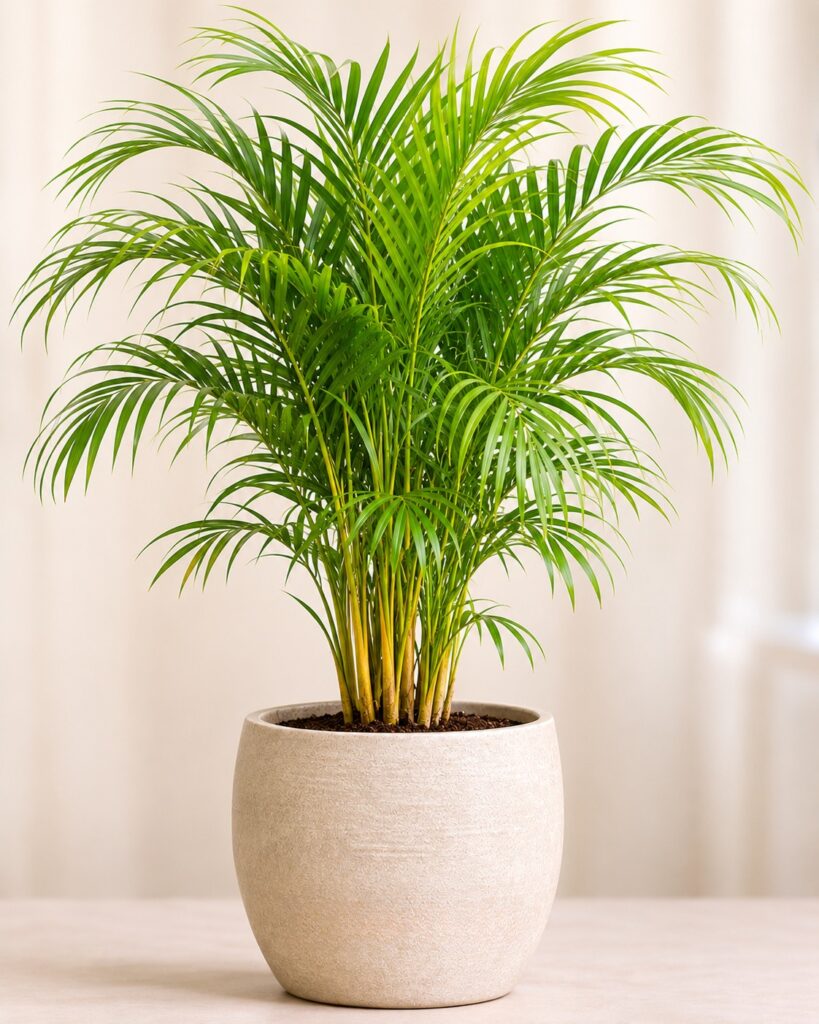
Areca Palm
Dypsis lutescens
A graceful clump of arching, feathery fronds on golden-yellow stems, the Areca Palm brings a lush, tropical look to bright rooms.
About Areca Palm
Few houseplants fill a corner as generously as the Areca Palm. Its dozens of arching, feathery fronds spring from golden-yellow canes in a fountain of fresh green, creating an instant resort-style feel in any bright living room, sunroom or hallway.
From Madagascar to Houseplant Favorite
The Areca Palm is native to the rainforests of Madagascar, where it grows in dense clumps along stream banks and in damp, open woodland. Today it is almost extinct in the wild, yet it thrives in cultivation around the world. Its popularity indoors began with the Victorian craze for palms and has never faded, thanks to its fast, easy-going growth and sculptural good looks.
The Secret Behind Its Golden Canes
Look closely and you will see that the plant is not one palm but many. Each slender cane is a separate stem, and together they form a dense clump that gives the Areca its full, bushy shape. The yellow-gold tint of the canes, and the faint ridges where old fronds have fallen away, are what earned it the name Golden Cane Palm. The leaflets sit in neat pairs along each frond, which arches outward like a feather and moves gently in a draft.
A World of Beautiful Varieties
The species itself is the one you will find almost everywhere, but you may see it sold as Butterfly Palm, Yellow Palm or simply Areca. Garden centers often offer pots in a range of sizes, from tabletop plants a foot tall to floor-standing specimens taller than a person. Mixed pots containing several seedlings give a fuller look quickly, though over time they will compete for space.
Bringing the Tropics Indoors
Give your Areca Palm bright, filtered light and it will reward you with steady growth. Water when the top inch of soil feels dry, using filtered or rainwater if you can, because the leaf tips are sensitive to fluoride and salts in tap water. Regular misting, a pebble tray or a nearby humidifier helps keep the fronds from crisping. Feed lightly through spring and summer, and remove only the fronds that have turned fully brown.
Elegant, generous and surprisingly forgiving once it has found its spot, the Areca Palm is a classic for anyone who wants a little rainforest atmosphere at home.
Care Guide
Everything you need to know to keep your Areca Palm happy and healthy.
Place it in bright, indirect light, such as a few feet back from an east or south-facing window. Direct afternoon sun scorches the fronds and turns them yellow, while dim corners make growth thin.
Water when the top inch of soil feels dry, then drain fully. Use filtered or rainwater if you can, as fluoride and salts cause brown tips. Never leave the pot standing in water.
Use a peat-based potting mix with added perlite or sand so excess water drains away quickly. A pot with drainage holes is essential.
Dry air leads to crispy frond tips. Mist now and then, group it with other plants, or use a pebble tray or humidifier, especially in winter when the heating is on.
Keep it away from cold drafts and radiators, and do not let temperatures fall below 50°F (10°C). Sudden chills cause yellowing and leaf drop.
Feed monthly from spring to late summer with a balanced liquid fertilizer at half strength, or use a slow-release palm fertilizer. Skip feeding in winter, and never feed a dry plant.
Cut only fronds that have turned completely brown, close to the base. Never cut green fronds or the canes, as they will not regrow from the cut. Wipe leaves occasionally to keep them glossy.
Through the year
Spring
Start feeding as growth picks up and repot if the roots are crowded.
Summer
Keep soil evenly moist and the air humid. Protect from hot afternoon sun.
Autumn
Reduce feeding as growth slows, and move away from drafty windows.
Winter
Water less often, keep it away from heaters, and boost humidity to protect the fronds.
Repotting
- Repot every
- 2–3 years
- Best time
- Spring, as new growth starts
- Pot size step-up
- Go up 1–2 inches (2.5–5 cm) in pot diameter
- Soil mix
- Peat-based potting mix with perlite or sand for drainage
- Signs it needs repotting
- Roots coming through the drainage holes, water running straight through the pot, or growth slowing in spring and summer.
Areca Palms dislike root disturbance, so handle the root ball gently and avoid splitting it. A slightly snug pot is fine, and often better than one that is too large.
Propagation
- Methods
- Division, Seed
- Difficulty
- Tricky
- Best season
- Spring
- Time to root
- Several weeks to establish
Division is the practical method. In spring, ease a clump out of its pot and gently separate a section with several canes and a healthy share of roots. Pot it into fresh mix, water well, and keep it warm and humid while it recovers. Seed is slow and rarely used at home.
Common Problems
Brown frond tips
Symptoms: Dry, crispy brown tips on the fronds
Likely cause: Low humidity, or fluoride and salts in tap water
Switch to filtered or rainwater, raise humidity, and flush the soil with plain water every few months. Trim the brown tips with clean scissors.
Yellowing fronds
Symptoms: Lower fronds turn yellow, then brown
Likely cause: Overwatering, or too much direct sun
Check that the pot drains well and let the top inch dry between waterings. Move the plant out of harsh direct sun.
Spider mites
Symptoms: Fine webbing and speckled, dull fronds
Likely cause: Hot, dry air
Wipe the fronds with a damp cloth, rinse the plant in the shower, and increase humidity. Repeat treatment weekly until clear.
Companion Plants
Plants that grow happily alongside this one.
Download Care Guide
A printable one-page Areca Palm care sheet: light, water, feeding and top tips.
You Might Also Like
View More Plants →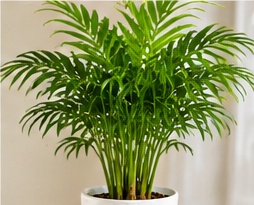
Parlor Palm
Chamaedorea elegans
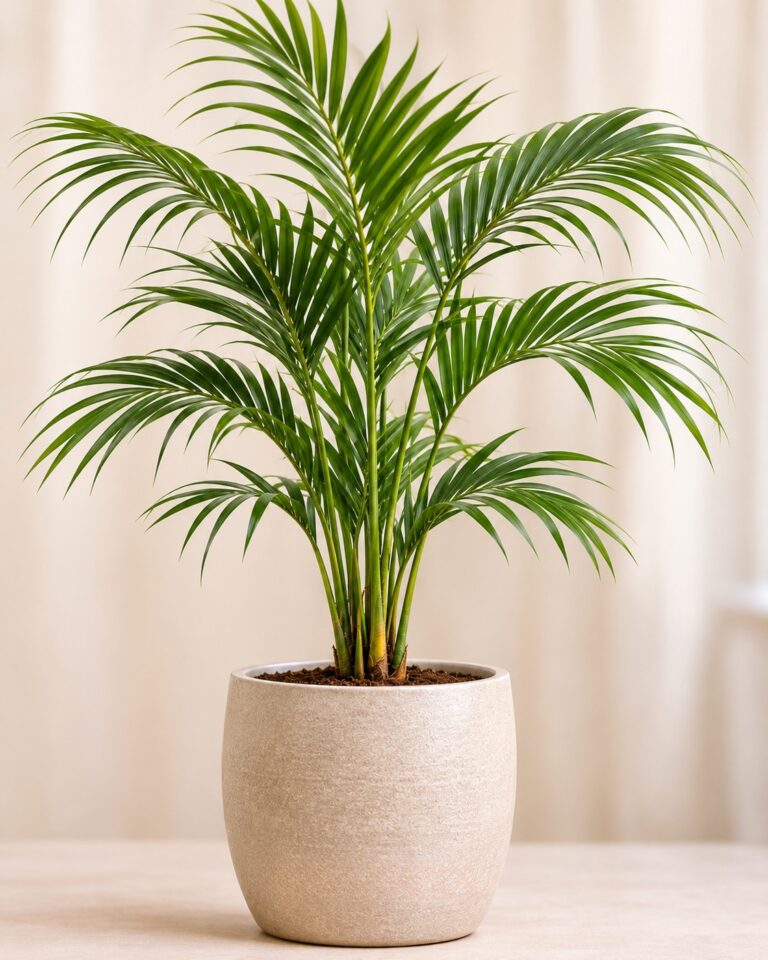
Kentia Palm
Howea forsteriana
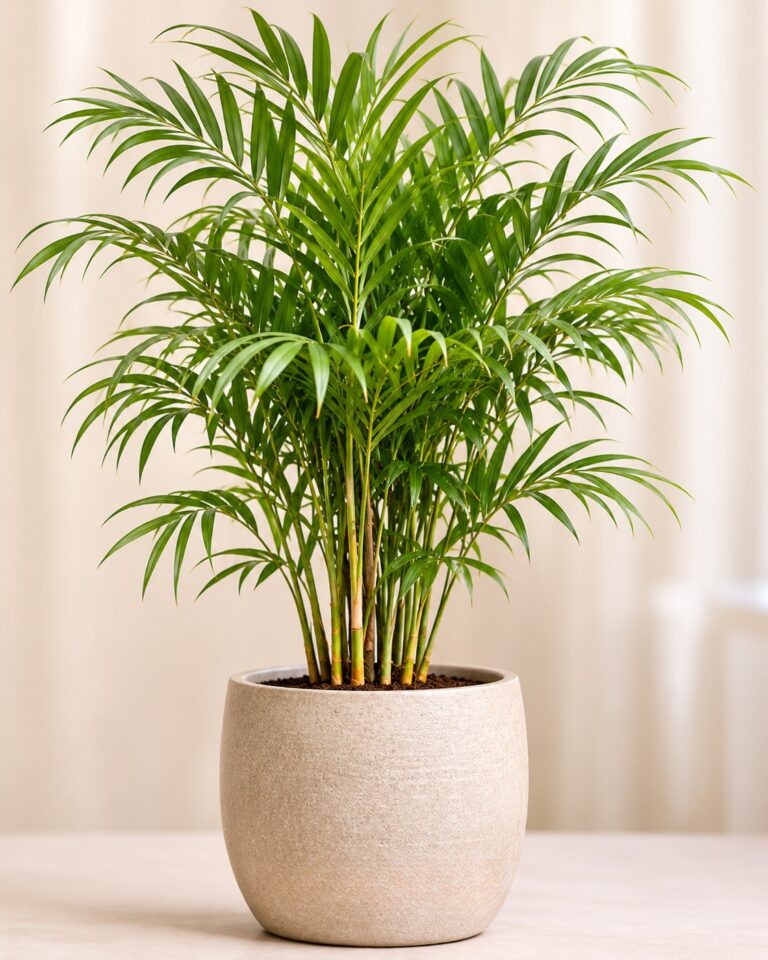
Bamboo Palm
Chamaedorea seifrizii
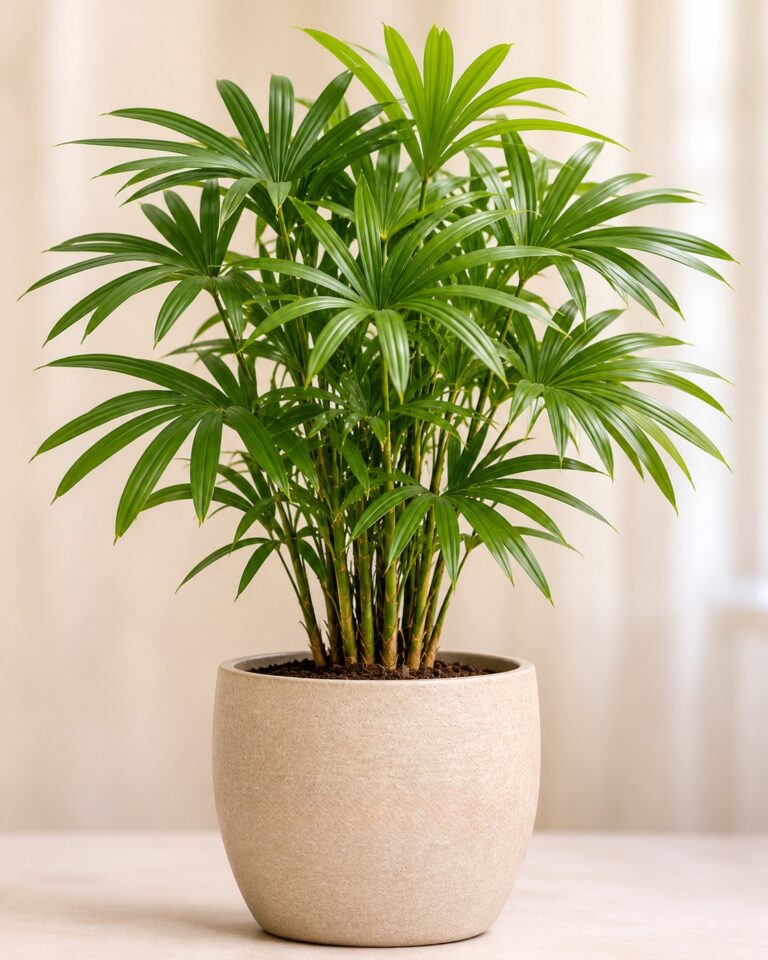
Lady Palm
Rhapis excelsa