Umbrella Tree
Schefflera actinophylla
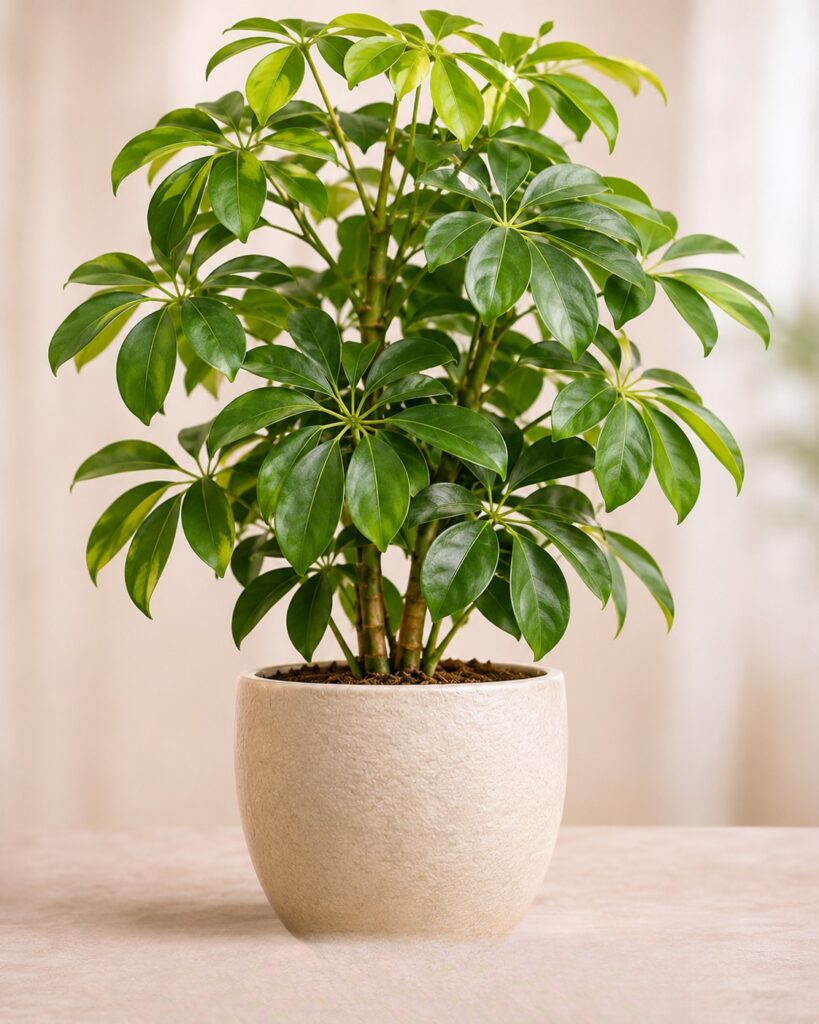
Large, glossy leaves radiating like umbrella spokes make this fast grower a bold, easy-going tree for bright rooms.
About Umbrella Tree
The Umbrella Tree is a big, glossy statement. Its large leaves are made of seven to sixteen leaflets that radiate from a central stalk like the spokes of an umbrella, and the plant grows fast enough to fill a corner within a couple of years.
From Australia and New Guinea to Houseplant Favorite
Schefflera actinophylla is native to the rainforests of northern Australia, New Guinea and Java, where it grows as a large tree and produces dramatic red flower spikes that resemble octopus tentacles. In cultivation, it became a favorite houseplant in the 1960s and 70s, when it was commonly seen in homes and offices.
The Secret Behind Its Radiating Leaves
Each leaf is a hand of large, glossy leaflets, some more than 10 inches (25 cm) long, carried on a long, slender stalk. Indoors, plants usually grow as a single upright stem and become a tall tree with a canopy. In the wild, the crown of red flower spikes gives it the common name Octopus Tree.
A World of Beautiful Varieties
Larger than its cousin, the Dwarf Umbrella Tree, this species has bigger leaves and a much more tree-like habit. Variegated forms exist, with cream-edged leaflets. It can be trained to a single stem or encouraged to branch with pruning.
Bringing the Tropics Indoors
Give your Umbrella Tree bright, indirect light and water when the top inch or two of soil is dry. It grows fast in warm conditions and may need staking when tall. Wipe the large leaves regularly to keep them glossy and healthy. Be wary of overwatering, which is the main cause of leaf drop. Keep it away from pets, as the leaves are toxic if chewed.
Tall, glossy and fast-growing, the Umbrella Tree is a generous way to fill a bright corner with tropical greenery.
Care Guide
Everything you need to know to keep your Umbrella Tree happy and healthy.
Bright, indirect light gives the best growth. It tolerates medium light, but growth will be slower and leggy.
Water thoroughly, then allow the top 1–2 inches (2.5–5 cm) to dry. Overwatering causes leaf drop and root rot.
Use a rich, free-draining mix with a little perlite. A pot with drainage holes is essential.
Tolerates normal household air. Misting occasionally helps keep spider mites away.
Keep above 50°F (10°C) and away from cold drafts and radiators.
Feed every 4 weeks in spring and summer with a balanced liquid fertilizer. Stop in winter.
Cut back tall or leggy stems in spring, just above a leaf node. A stake may help support tall plants.
Through the year
Spring
Repot if needed and begin monthly feeding.
Summer
Water as the top soil dries; keep in bright light.
Autumn
Slow feeding and water less.
Winter
Water sparingly and avoid drafts.
Repotting
- Best time
- Spring
- Pot size step-up
- Go up 2 inches (5 cm) in pot diameter
- Soil mix
- Rich, free-draining potting mix
- Signs it needs repotting
- Roots at the drainage holes, or the plant drying out quickly.
Young plants grow fast and may need annual repotting. Use a heavy pot for tall plants.
Propagation
- Methods
- Stem cutting, Seed
- Difficulty
- Moderate
- Best season
- Spring to summer
- Time to root
- 4–8 weeks
Take a 6-inch (15 cm) stem cutting with a few leaves, dip in rooting hormone, and plant in moist mix. Keep warm and humid until it roots.
Common Problems
Dropping leaves
Symptoms: Leaves fall suddenly
Likely cause: Overwatering, drafts or a change of position
Check the soil, avoid drafts and keep it in one spot.
Spider mites and scale
Symptoms: Webbing or sticky bumps
Likely cause: Dry air
Wipe leaves and treat with insecticidal soap.
Leggy growth
Symptoms: Long, bare stems
Likely cause: Not enough light
Move to a brighter spot and prune.
Companion Plants
Plants that grow happily alongside this one.
Download Care Guide
A printable one-page Umbrella Tree care sheet: light, water, feeding and top tips.
You Might Also Like
View More Plants →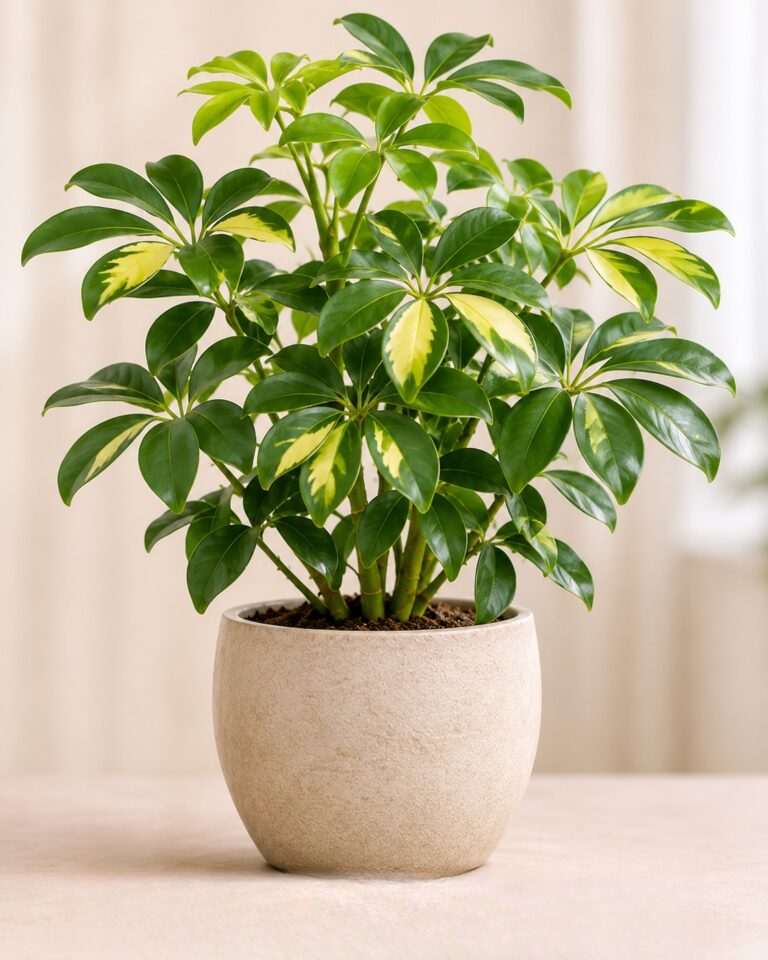
Dwarf Umbrella Tree
Schefflera arboricola
Ming Aralia
Polyscias fruticosa
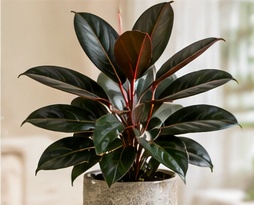
Rubber Plant
Ficus elastica
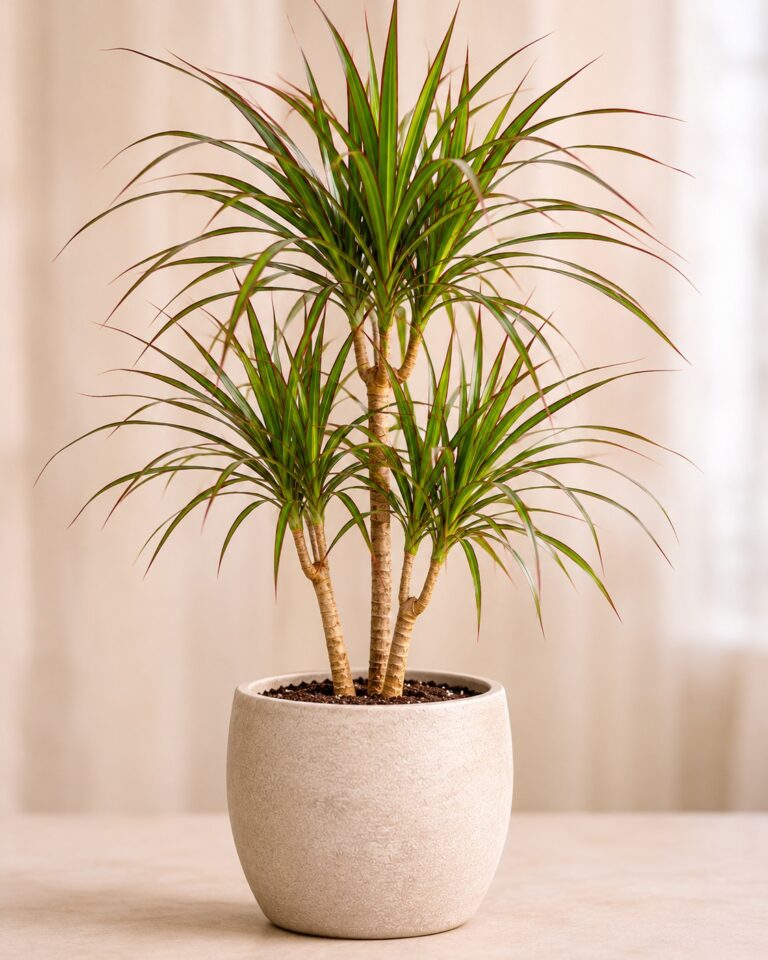
Dragon Tree
Dracaena marginata