Norfolk Island Pine
Araucaria heterophylla
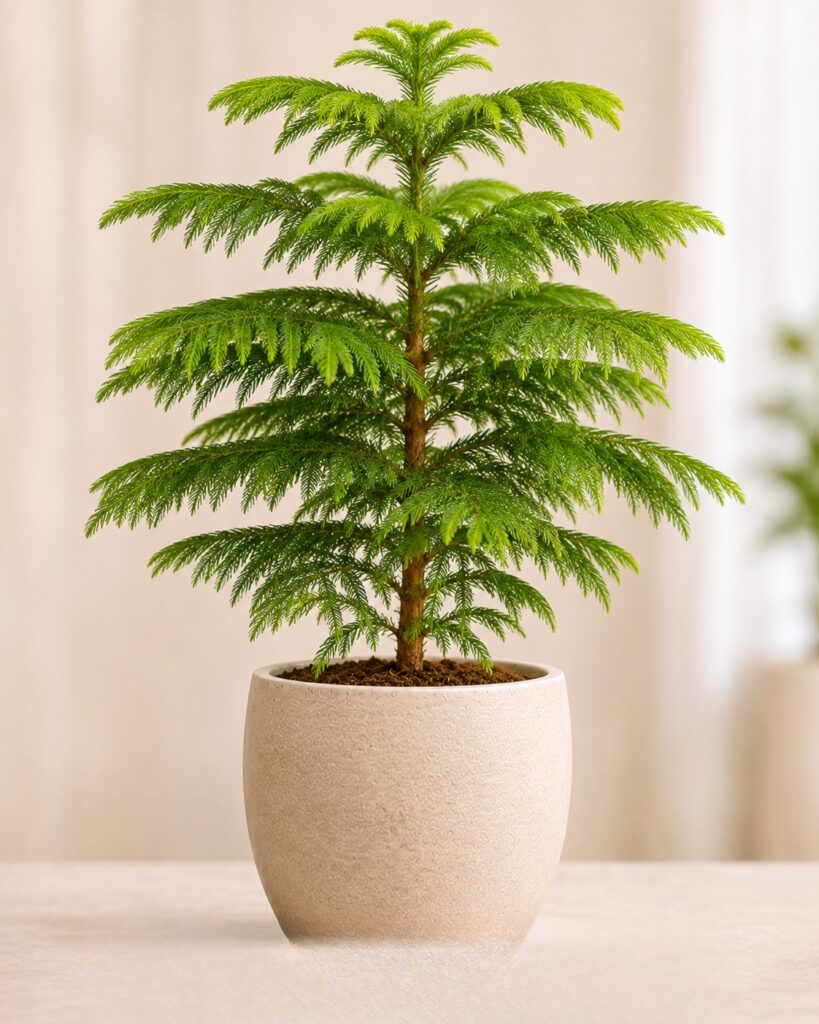
Tiers of soft, feathery branches make the Norfolk Island Pine a symmetrical, living Christmas tree for the whole year.
About Norfolk Island Pine
The Norfolk Island Pine looks as if it has been designed by a geometer. Its soft, feathery branches grow in perfect tiers around a straight central trunk, creating a neat, symmetrical shape that is a favorite as a living Christmas tree.
From Norfolk Island to Houseplant Favorite
This is not a true pine at all, but a tree from a family found mostly in the Southern Hemisphere. It comes from Norfolk Island, a speck in the Pacific between Australia and New Zealand, where it grows into towering trees up to 200 feet (60 m) tall. Captain James Cook noted its tall, straight trunks in 1774, and it was once considered as masts for ships.
The Secret Behind Its Perfect Tiers
New branches appear in whorls of four to six around the trunk, one level at a time, giving the plant its architectural tiers. The needles are soft and curved, not sharp, so it is gentle to touch. Indoors it grows very slowly, adding perhaps one tier each year, which is why a mature plant is valuable.
A World of Beautiful Varieties
The species is the only form you will usually find, though pots range in size from tiny tabletop plants to floor-standing trees. Garden centers sell them at Christmas, decorated with small ornaments, but the plant will happily live for many years afterwards.
Bringing the Tropics Indoors
Give your Norfolk Island Pine bright light, ideally near a south or west window, and turn the pot regularly so it grows evenly. Keep the soil lightly moist and mist the branches in dry air. It prefers cooler rooms than most tropical plants. Do not cut off the central growing tip, as this ruins its shape and cannot be repaired.
Neat, soft and celebratory, the Norfolk Island Pine is a lovely tree that can sit in your home all year and look festive in December.
Care Guide
Everything you need to know to keep your Norfolk Island Pine happy and healthy.
Give it bright light with a few hours of direct sun if possible. Rotate the pot weekly to prevent leaning.
Water thoroughly, then let the top inch (2.5 cm) of soil dry. Never let it dry out completely, as dropped lower branches will not regrow.
Use a light, well-draining mix with some peat or bark. A pot with drainage holes is essential.
Mist the branches often or use a humidifier, especially in winter with the heating on.
It prefers cooler rooms than most tropical plants and should be kept away from radiators and drafts.
Feed every 4 weeks in spring and summer with a half-strength balanced fertilizer. Do not feed in winter.
Never cut off the central leader, as this ruins the shape. Remove only dead, brown lower branches.
Through the year
Spring
Repot if needed and start feeding.
Summer
Water as the top inch dries; give bright light.
Autumn
Slow feeding and water less.
Winter
Keep cool and humid, away from heaters.
Repotting
- Repot every
- 2–3 years
- Best time
- Spring
- Pot size step-up
- Go up 2 inches (5 cm) in pot diameter
- Soil mix
- Free-draining potting mix with peat or bark
- Signs it needs repotting
- Roots circling the pot or coming out of drainage holes.
Norfolk Island Pines dislike root disturbance. Use a heavy pot for stability.
Propagation
- Methods
- Seed
- Best season
- Spring
- Time to root
- Several months
Propagation is by seed or specialized cuttings from the leader, which are difficult and not practical at home. Buying a plant is the easy route.
Common Problems
Brown, dropping lower branches
Symptoms: Lower branches turn brown and drop
Likely cause: Dry soil or dry air
Water evenly and raise humidity. Lost branches do not regrow.
Spider mites and mealybugs
Symptoms: Webbing or white fluff
Likely cause: Dry air
Wipe branches and treat with insecticidal soap.
Leaning trunk
Symptoms: Trunk grows to one side
Likely cause: Light from one direction
Rotate the pot weekly.
Companion Plants
Plants that grow happily alongside this one.
Download Care Guide
A printable one-page Norfolk Island Pine care sheet: light, water, feeding and top tips.
You Might Also Like
View More Plants →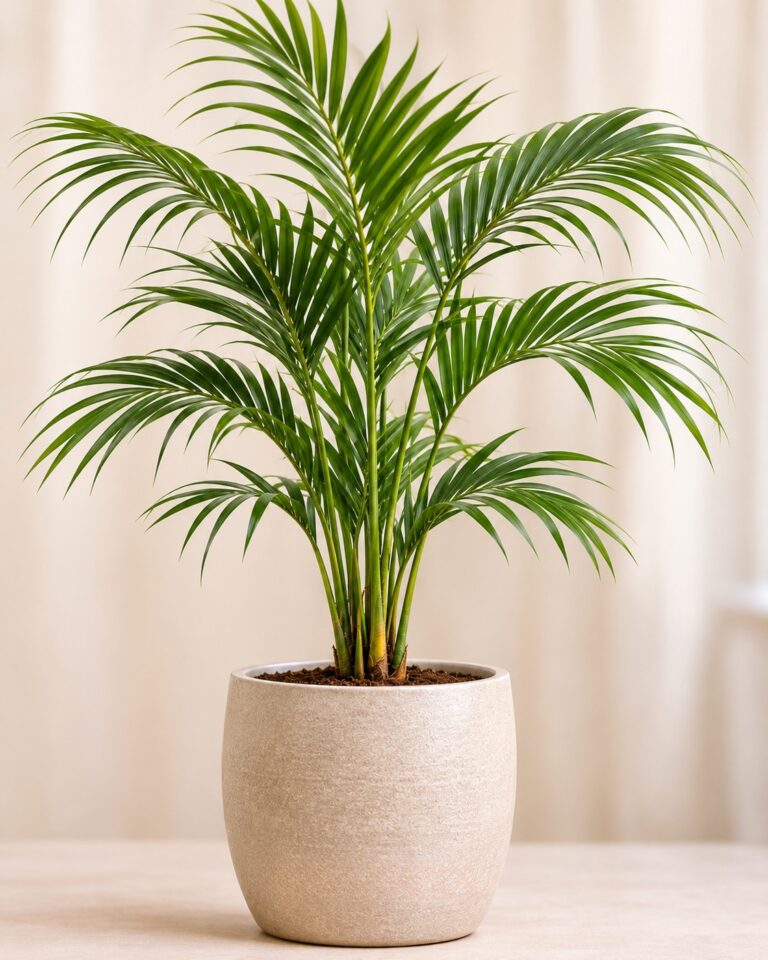
Kentia Palm
Howea forsteriana
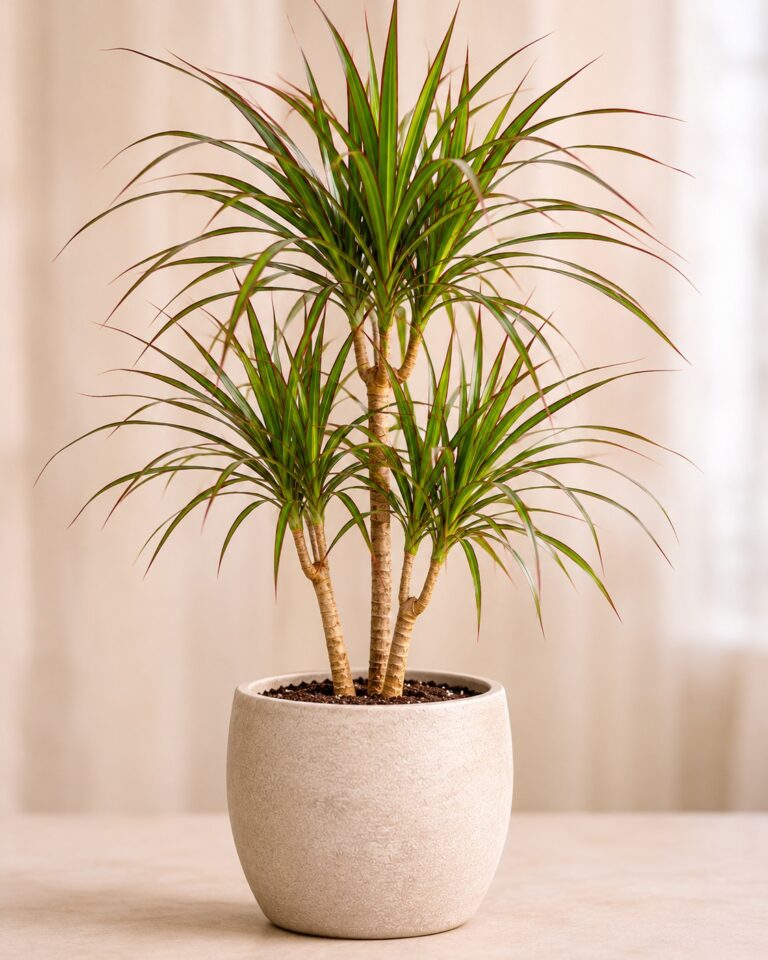
Dragon Tree
Dracaena marginata
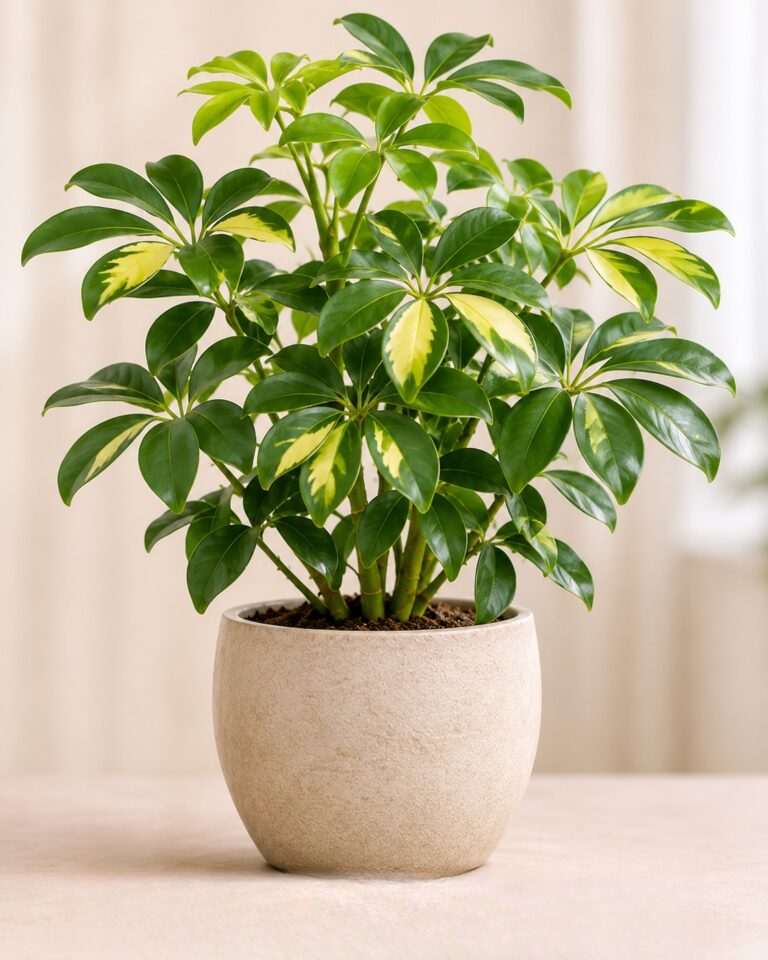
Dwarf Umbrella Tree
Schefflera arboricola
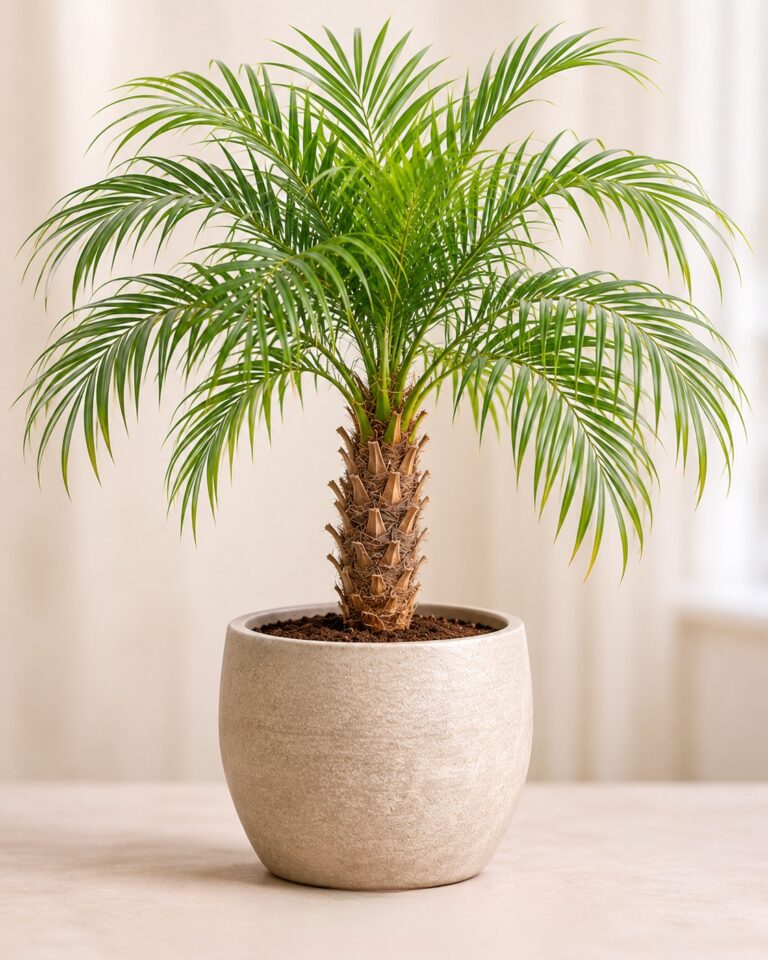
Pygmy Date Palm
Phoenix roebelenii