
Ficus Alii
Ficus maclellandii 'Alii'
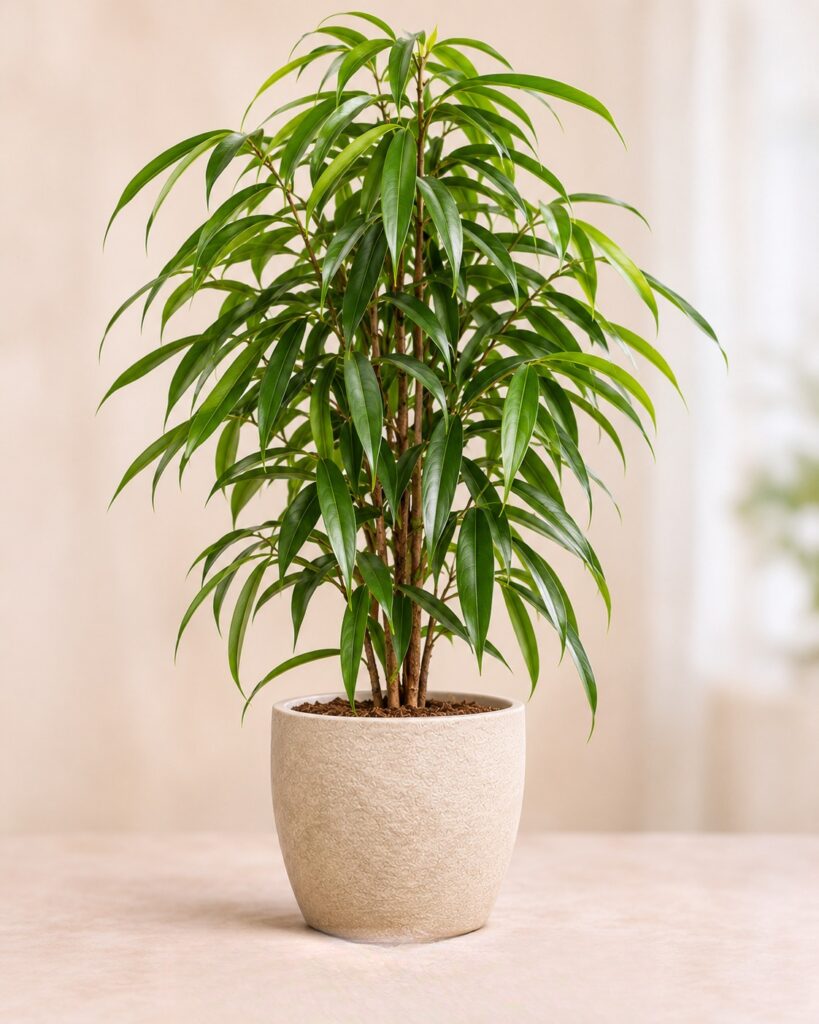
Long, slender leaves on an upright, tree-like frame give the Ficus Alii the elegance of a weeping fig with far less fuss.
About Ficus Alii
The Ficus Alii is the tall, willowy cousin of the rubber plant. Its long, narrow leaves hang gracefully from upright stems, and it brings height and a relaxed, leafy elegance to any bright room without demanding fiddly care.
From South East Asia to Houseplant Favorite
Ficus maclellandii is native to the tropical forests of South East Asia, where it grows as a spreading tree. The ‘Alii’ form was selected for its slender, banana-like leaves and has become one of the most popular tree-sized houseplants. It is often sold as a single trunk or as several braided stems.
The Secret Behind Its Banana-Shaped Leaves
The leaves are long, narrow and gently pointed, a little like a banana leaf or a willow, and they are glossy dark green with a pale midrib. They grow in an alternating pattern along the stems, which gives the plant its airy, layered shape. Unlike the fiddle-leaf fig, the leaves are slim and flexible, so the plant looks light and graceful even at full height.
A World of Beautiful Varieties
Ficus Alii is sometimes sold as Ficus ‘Amstel King’, and the two are very close in appearance. Other ficus relatives, such as the Rubber Plant, the Weeping Fig and the Fiddle-Leaf Fig, share similar care but have broader or more delicate leaves. You can choose a bushy shrub shape, a single-stem tree or a braided trunk.
Bringing the Tropics Indoors
Choose a spot with bright, indirect light and try not to move the plant once it is settled, because ficus are famous for dropping leaves after a change of scene. Water when the top 2 inches of soil are dry, and keep it away from drafts and radiators. Wipe the leaves with a damp cloth to keep them glossy and to help them photosynthesize. If a few leaves fall after a move, do not panic, as new growth will follow.
Tall, graceful and forgiving once it has settled in, the Ficus Alii is a stylish way to add height and greenery to a bright room.
Care Guide
Everything you need to know to keep your Ficus Alii happy and healthy.
Give it bright, indirect light, with a little gentle direct sun in the morning if possible. Low light causes leaf drop and leggy growth.
Water deeply, then let the top 2 inches (5 cm) of soil dry before watering again. Overwatering is the main cause of leaf drop and root rot.
Use a rich but free-draining potting mix, with extra perlite or bark. Always use a pot with drainage holes.
It copes with average household air. A little extra humidity helps in winter when heating dries the air.
Avoid cold drafts, air conditioning and radiators. Temperatures below 55°F (13°C) cause leaf drop.
Feed every 4 weeks in spring and summer with a balanced liquid fertilizer. Stop in winter.
Cut back leggy stems in spring just above a leaf node. Wear gloves, as the sap can irritate skin, and wipe leaves clean regularly.
Through the year
Spring
Repot if needed and resume feeding.
Summer
Water as the top 2 inches dry; protect from hot, direct sun.
Autumn
Slow down feeding and watering.
Winter
Water sparingly and keep away from drafts and radiators.
Repotting
- Best time
- Spring
- Pot size step-up
- Go up 2 inches (5 cm) in pot diameter
- Soil mix
- Free-draining potting mix with perlite or bark
- Signs it needs repotting
- Roots at the drainage holes, water running straight through, or slowing growth in the growing season.
Ficus dislike root disturbance and being moved. Repot gently and keep it in the same spot afterwards.
Propagation
- Methods
- Stem cutting
- Difficulty
- Moderate
- Best season
- Spring to summer
- Time to root
- 4–8 weeks
Take a 6-inch (15 cm) cutting with a few leaves, wearing gloves. Let the sap dry, dip in rooting hormone, and plant in moist potting mix. Keep it warm and humid under a clear bag until it roots.
Common Problems
Leaf drop
Symptoms: Green leaves fall suddenly
Likely cause: Moving the plant, drafts, over- or underwatering
Keep it in one spot, check the soil moisture, and avoid cold drafts. New leaves will grow back.
Scale and mealybugs
Symptoms: Sticky leaves, brown bumps or white fluff
Likely cause: Stress and dry air
Wipe leaves with soapy water or rubbing alcohol on a cloth, and repeat weekly.
Brown leaf edges
Symptoms: Brown, crisp edges
Likely cause: Dry air or inconsistent watering
Water more evenly and raise humidity.
Companion Plants
Plants that grow happily alongside this one.
Download Care Guide
A printable one-page Ficus Alii care sheet: light, water, feeding and top tips.
You Might Also Like
View More Plants →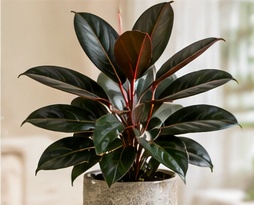
Rubber Plant
Ficus elastica
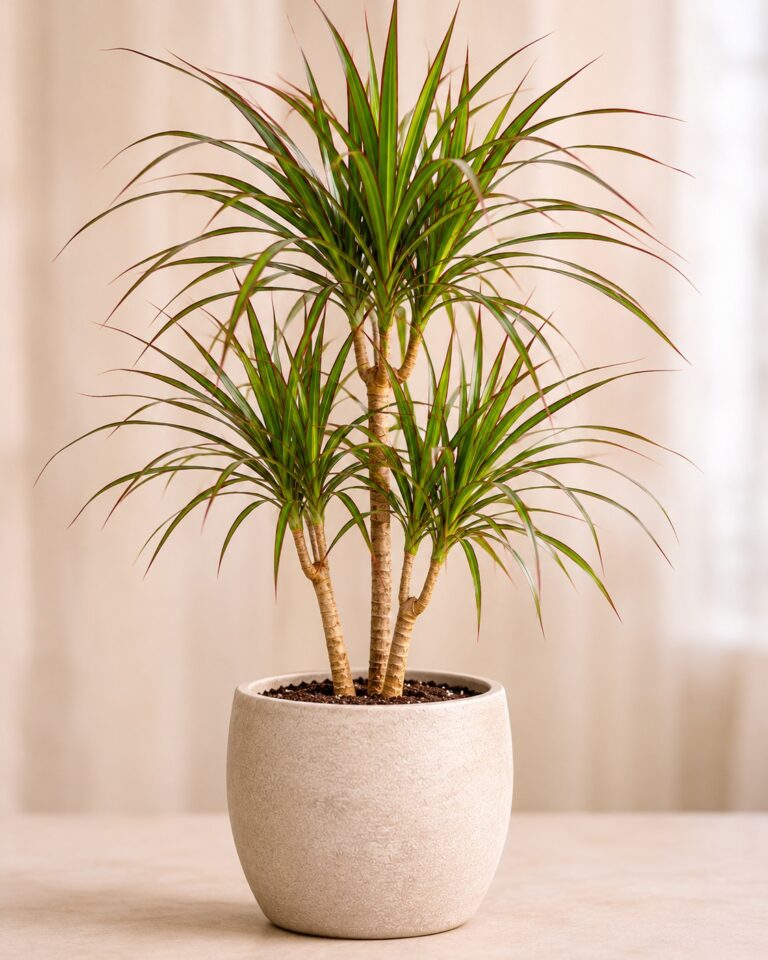
Dragon Tree
Dracaena marginata
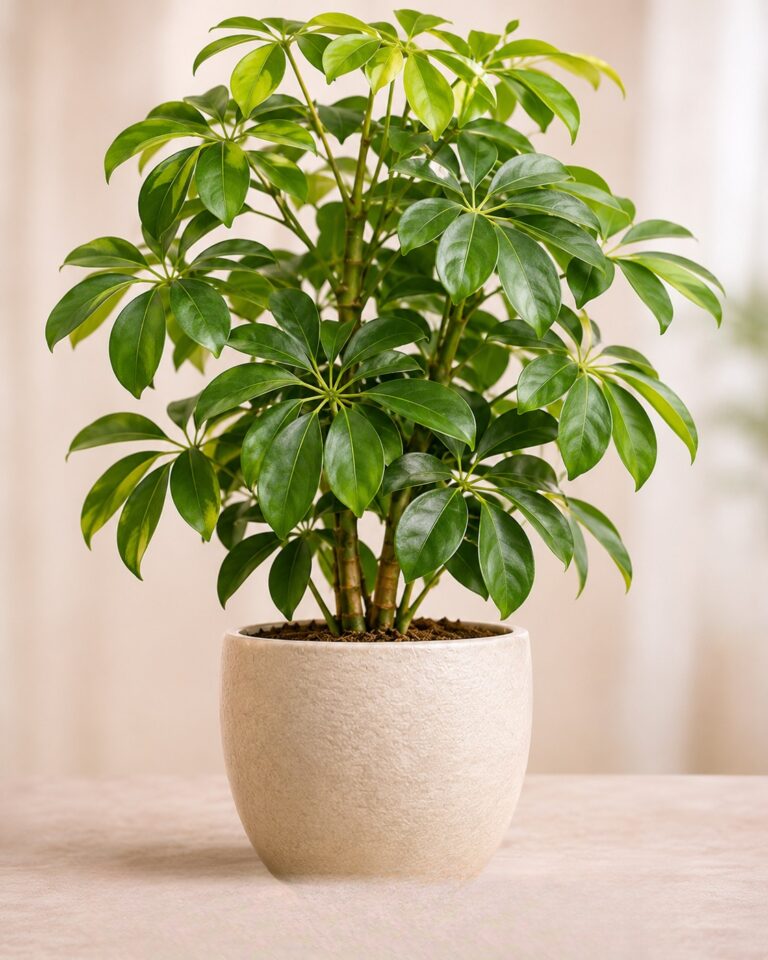
Umbrella Tree
Schefflera actinophylla
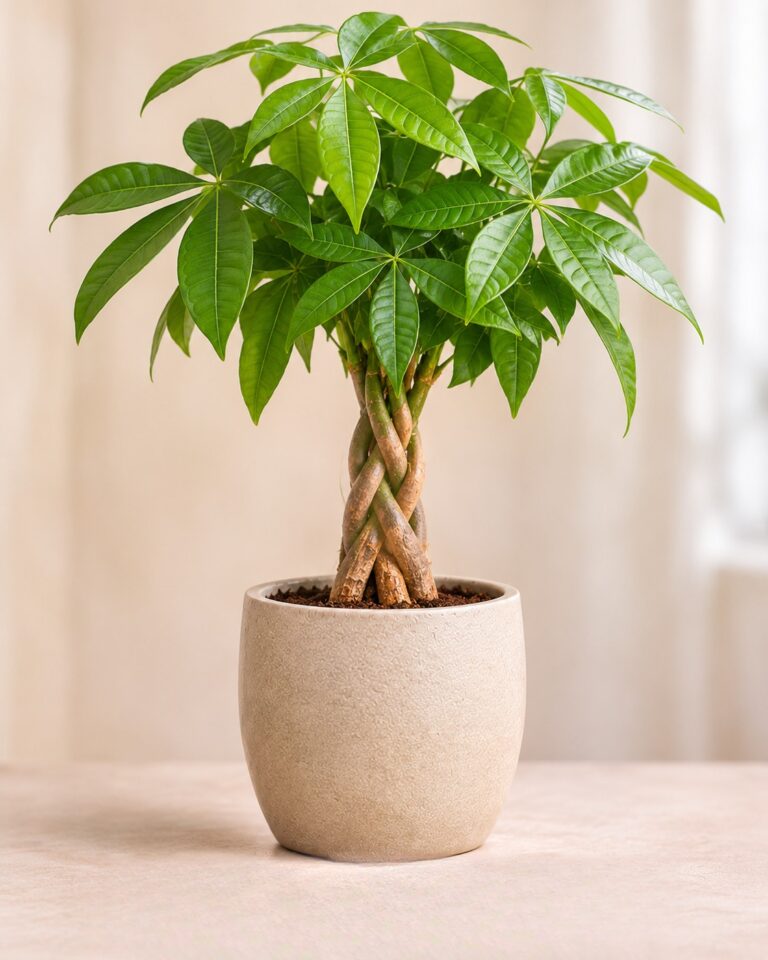
Money Tree
Pachira aquatica