

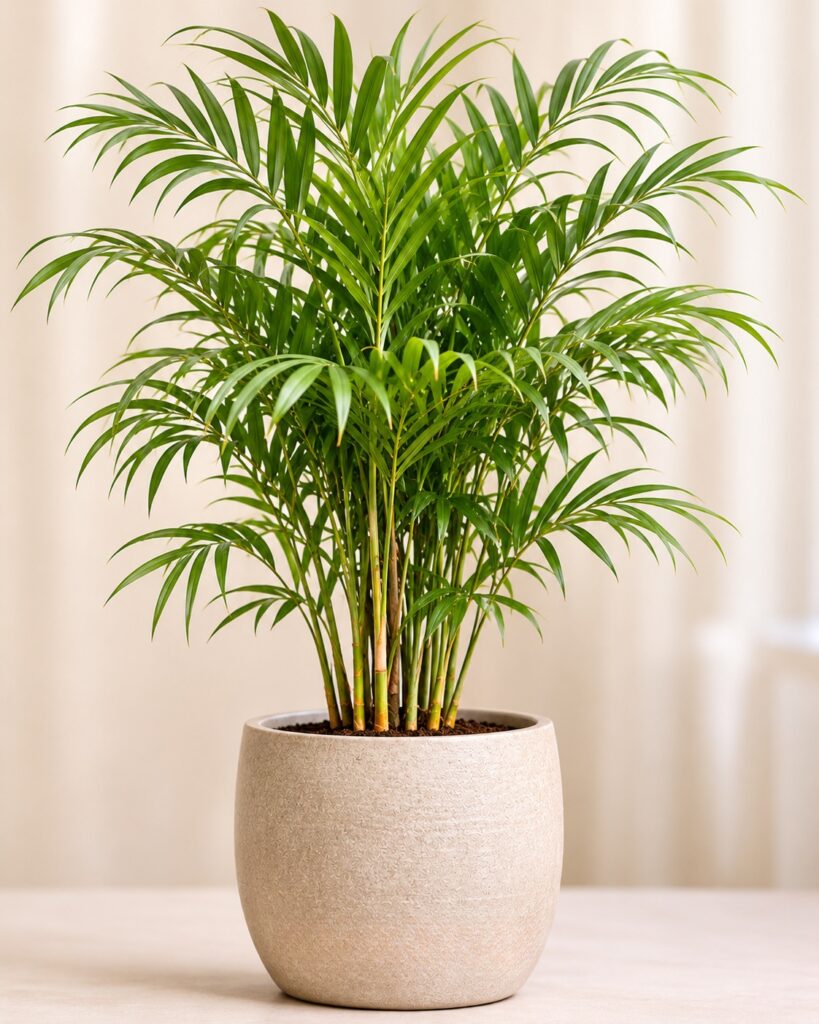
Bamboo Palm
Chamaedorea seifrizii
A dense clump of slender, bamboo-like canes topped with feathery fronds, the Bamboo Palm is a shade-tolerant, pet-safe favorite.
About Bamboo Palm
With its slim, jointed stems and soft, feathery fronds, the Bamboo Palm looks like a cross between a bamboo and a palm, and it earns its place in the home by being calm, graceful and happy in less-than-perfect light.
From the Rainforest Floor to Houseplant Favorite
The Bamboo Palm comes from the understory of the rainforests of southern Mexico and Central America, where it grows in dappled shade beneath taller trees. That shady upbringing explains its easy-going nature indoors. It has been a staple of offices, hotel lobbies and living rooms for generations because it tolerates the kinds of conditions that defeat fussier plants.
The Secret Behind Its Clustering Canes
Rather than a single trunk, the Bamboo Palm sends up many slender canes marked with ring-like nodes, just like true bamboo. New canes appear at the base, so the plant slowly fills out into a lush clump. Each cane carries arching fronds made of narrow, glossy leaflets, giving the whole plant a light, airy look that suits modern interiors as well as traditional ones.
A World of Beautiful Varieties
You may see it sold under several names, including Reed Palm and Clustering Chamaedorea. Related Chamaedorea palms, such as the Parlor Palm and the Cat Palm, share the same graceful style and similar care, so they make easy companions. Small pots suit a shelf or desk, while large floor plants make a quiet, leafy screen.
Bringing the Tropics Indoors
Choose a spot with medium to bright, indirect light, though it will cope with lower light too. Water when the top inch of soil is dry, and keep the plant out of sitting water, because soggy roots are its main enemy. Mist now and then or group it with other plants to keep the air humid, and feed lightly in spring and summer. A bright bathroom is ideal.
Calm, adaptable and safe around pets, the Bamboo Palm is a lovely choice for anyone who wants a leafy presence without a fuss.
Care Guide
Everything you need to know to keep your Bamboo Palm happy and healthy.
Happiest in bright, indirect light but tolerates lower light well. Keep it out of direct sun, which burns the fronds and bleaches their color.
Water when the top inch of soil is dry, then let excess drain away. Reduce watering in winter. Soggy soil causes root rot and yellowing fronds.
Use a light, peat-based potting mix with some perlite for drainage. Choose a pot with drainage holes, and do not pot up too quickly, as palms prefer snug roots.
Mist occasionally or group with other plants. Dry air leads to crispy tips, especially near radiators or air conditioning.
Keep it away from cold drafts and heating vents. Temperatures below 50°F (10°C) can damage the fronds.
Feed every 4–6 weeks in spring and summer with a half-strength balanced liquid fertilizer. Do not feed in autumn or winter.
Snip off fronds that have turned fully brown, close to the base. Leave green growth alone, and remove any dead canes at soil level.
Through the year
Spring
Feed lightly and repot if crowded.
Summer
Keep soil lightly moist and protect from direct sun.
Autumn
Slow down feeding and watering.
Winter
Water sparingly and keep away from cold windows and heaters.
Repotting
- Repot every
- 2–3 years
- Best time
- Spring
- Pot size step-up
- Go up 1–2 inches (2.5–5 cm) in pot diameter
- Soil mix
- Peat-based palm mix with perlite or sand
- Signs it needs repotting
- Roots circling at the surface or poking from drainage holes, or water running straight through.
Bamboo Palms grow slowly and like to be a little pot-bound. Repot only when roots are clearly crowded.
Propagation
- Methods
- Division, Seed
- Difficulty
- Tricky
- Best season
- Spring
- Time to root
- Several weeks
Divide in spring. Slide the plant from its pot and separate a clump of canes with roots attached, using a clean knife if needed. Pot into fresh mix, water, and keep warm and humid. Seed is very slow.
Common Problems
Brown frond tips
Symptoms: Crispy brown ends on leaflets
Likely cause: Dry air, or salts and fluoride in tap water
Use filtered water, raise humidity, and flush the soil occasionally. Trim brown tips with clean scissors.
Yellow fronds
Symptoms: Fronds yellow and droop
Likely cause: Overwatering or poor drainage
Let the top inch dry between waterings and check the pot drains freely. Remove badly affected fronds.
Spider mites or mealybugs
Symptoms: Webbing, stippling or white cottony patches
Likely cause: Dry air and stress
Wipe leaves with a damp cloth, rinse the plant, and treat with insecticidal soap, following the label.
Companion Plants
Plants that grow happily alongside this one.
Download Care Guide
A printable one-page Bamboo Palm care sheet: light, water, feeding and top tips.
You Might Also Like
View More Plants →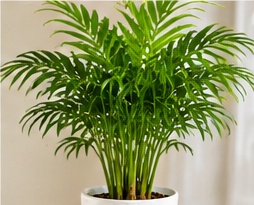
Parlor Palm
Chamaedorea elegans
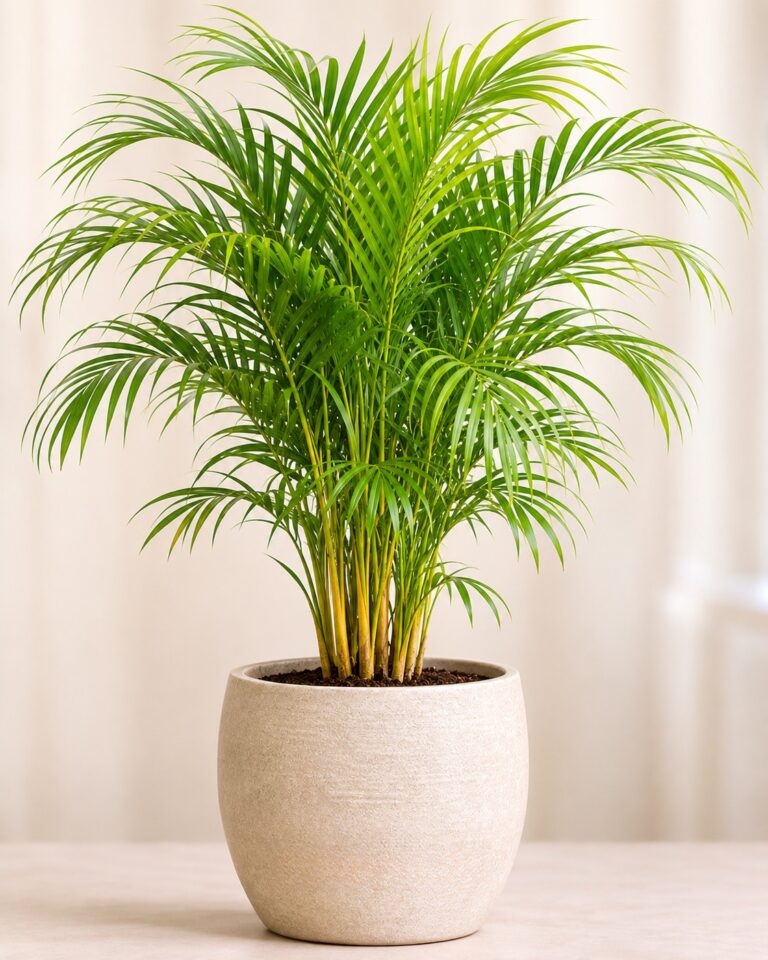
Areca Palm
Dypsis lutescens
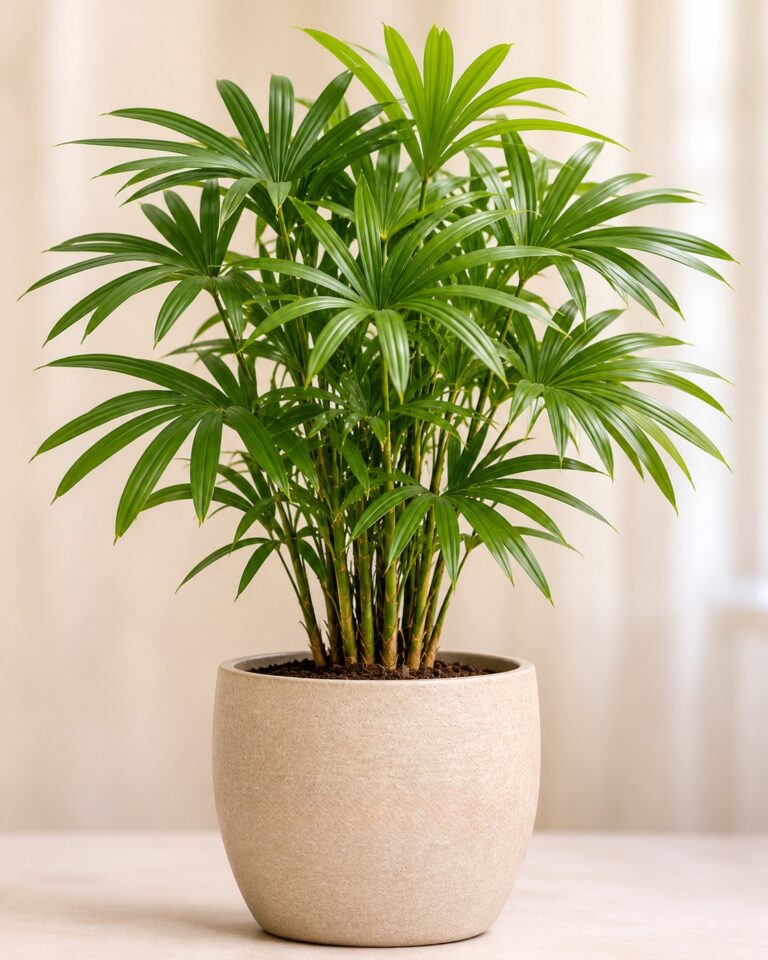
Lady Palm
Rhapis excelsa
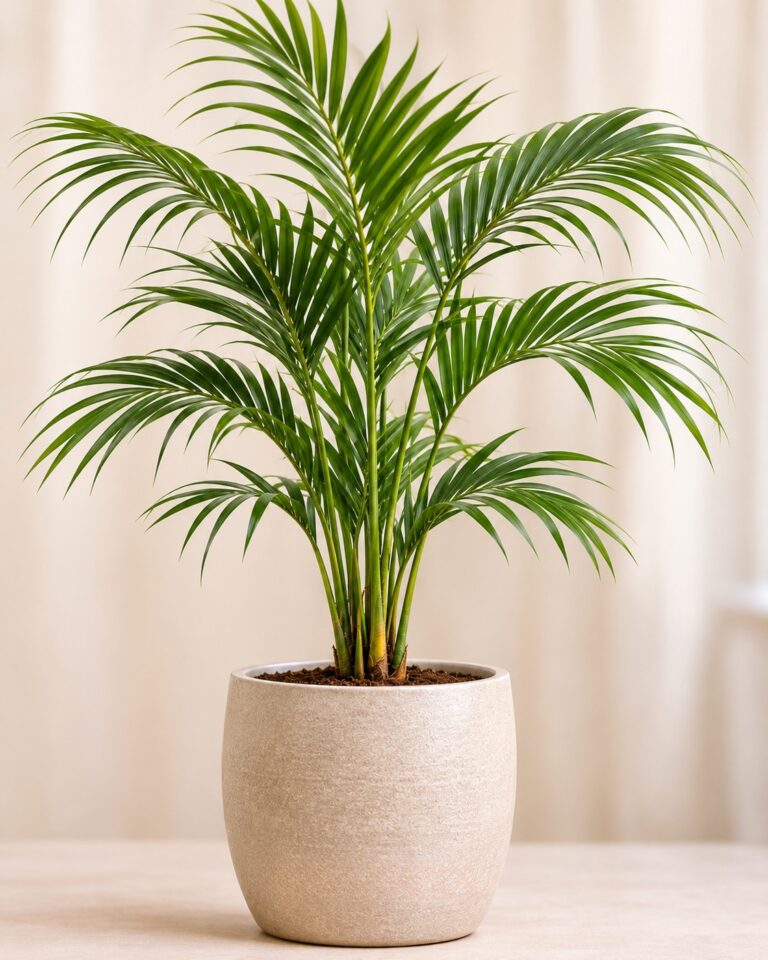
Kentia Palm
Howea forsteriana