
Fiddle Leaf Fig
Ficus lyrata
A tall, statement tree with huge violin-shaped leaves, rewarding for plant lovers who like routine.
About Fiddle Leaf Fig
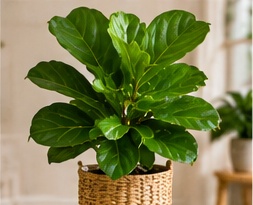
Big, bold and impossible to ignore, the Fiddle Leaf Fig is the indoor tree that turned houseplants into interior design. Its large, violin-shaped leaves are glossy, leathery and deeply veined, and a well-grown specimen makes a striking focal point in a bright room. It is a plant with a reputation for being fussy, but once you understand what it likes, it is surprisingly rewarding.
From West African Rainforest to Living Room Statement
Ficus lyrata is native to the lowland tropical rainforests of western Africa, from Cameroon to Sierra Leone. In the wild it often begins life perched on another tree and can grow to 40 feet (12 meters) or more, with leaves much larger than those of indoor plants. It belongs to the fig and mulberry family, Moraceae, and is a close relative of the rubber plant.
The Secret Behind Those Famous Leaves
The leaves can reach more than a foot in length and are named for their resemblance to a fiddle or violin, wide at the tip and narrower in the middle. They are thick and glossy because that surface lets them make the most of bright, dappled light. The trade-off is that they show every change: dust, drafts, a sudden move or inconsistent watering all show up as brown spots or fallen leaves.
A World of Beautiful Varieties
Alongside the classic tree-shaped plant there are more compact options. Bambino is a dwarf type with smaller leaves and a bushier shape, while others are bred to branch more readily or stay shorter. They share the same needs, so the compact types are a good choice if you have limited space.
Bringing West Africa Indoors
Fiddle Leaf Figs like bright, indirect light and plenty of it, with a few hours of gentle morning sun if possible. Water when the top couple of inches of soil have dried, then drain well, and avoid letting the plant sit in water. Pick a spot and leave it there: they dislike being moved and hate cold drafts. The milky sap can irritate skin, and the plant is mildly toxic to cats and dogs if eaten.
Dramatic, elegant and rewarding, the Fiddle Leaf Fig is a plant that loves a routine. Give it a bright spot, steady watering and a wipe of the leaves now and then, and it can grow into a showpiece that lasts for years.
Care Guide
Everything you need to know to keep your Fiddle Leaf Fig happy and healthy.
Place it near a south- or west-facing window with a sheer curtain, or an east window. Rotate it every couple of weeks so it grows evenly. Dim light causes leaf drop.
Water thoroughly and let the excess drain. Aim for consistency: both soggy soil and bone-dry soil cause brown spots and leaf loss.
Add perlite or bark to potting soil, and use a pot with drainage holes. Avoid heavy, compacted soil.
It copes with ordinary homes, but dry air from heaters can brown the leaf edges.
Keep it away from air-conditioning, open windows and heaters. Sudden temperature changes cause leaf drop.
Use a balanced fertilizer at half strength. Stop in winter.
Through the year
Spring
Best time to repot, prune and take cuttings.
Summer
Water more often and keep out of hot afternoon sun.
Autumn
Reduce watering, and avoid moving the plant.
Winter
Water less and keep well away from drafts and heaters.
Repotting
- Repot every
- 1–2 years
- Best time
- Spring
- Pot size step-up
- Go up 1–2 inches (2.5–5 cm) in pot diameter
- Soil mix
- Well-draining potting mix with perlite or bark
- Signs it needs repotting
- Roots coming from the drainage holes, soil that dries within days, or growth that has stalled during spring.
Fiddle Leaf Figs prefer being a little snug, so go up only one pot size. Replace the top few inches of soil each year if the pot is too large to repot.
Propagation
- Methods
- Stem cutting, Air layering
- Difficulty
- Moderate
- Best season
- Spring
- Time to root
- 4–8 weeks, can be slow
Take a 6-inch (15 cm) tip cutting with two or three leaves, wearing gloves, as the sap is irritating. Let the sap dry, dip the cut end in rooting hormone and pot it in a damp, airy mix, covering it loosely with a clear bag. Keep it bright and warm and expect roots in 4 to 8 weeks. Air layering is an option for large plants.
Common Problems
Leaf drop
Symptoms: Leaves turn brown or yellow and fall, often lower ones first
Likely cause: A move, a cold draft, low light or inconsistent watering
Choose a bright, stable spot, keep watering regular and avoid drafts. New leaves will replace lost ones once conditions are steady.
Brown spots
Symptoms: Dark brown patches in the middle of leaves or along the edges
Likely cause: Overwatering and root problems, or too-dry soil and low humidity
Check the roots and soil. Water more consistently, improve drainage and remove badly affected leaves.
Dull, dusty leaves
Symptoms: Leaves look flat and dull and the plant seems to grow slowly
Likely cause: Dust blocking light from the leaf surface
Wipe the leaves with a damp, soft cloth every month or two. Support the leaf with your other hand as you wipe.
Mealybugs and spider mites
Symptoms: White cottony clusters in the leaf joints, or fine webbing and pale speckling on the leaves
Likely cause: Sap-sucking insects, more common on stressed plants and in dry, warm rooms
Isolate the plant. Wipe visible bugs away with a cotton swab dipped in rubbing alcohol, then spray or wipe all leaf surfaces with insecticidal soap. Repeat weekly for at least a month, and rinse the plant in the shower first if the infestation is heavy.
Companion Plants
Plants that grow happily alongside this one.
Download Care Guide
A printable one-page Fiddle Leaf Fig care sheet: light, water, feeding and top tips.