

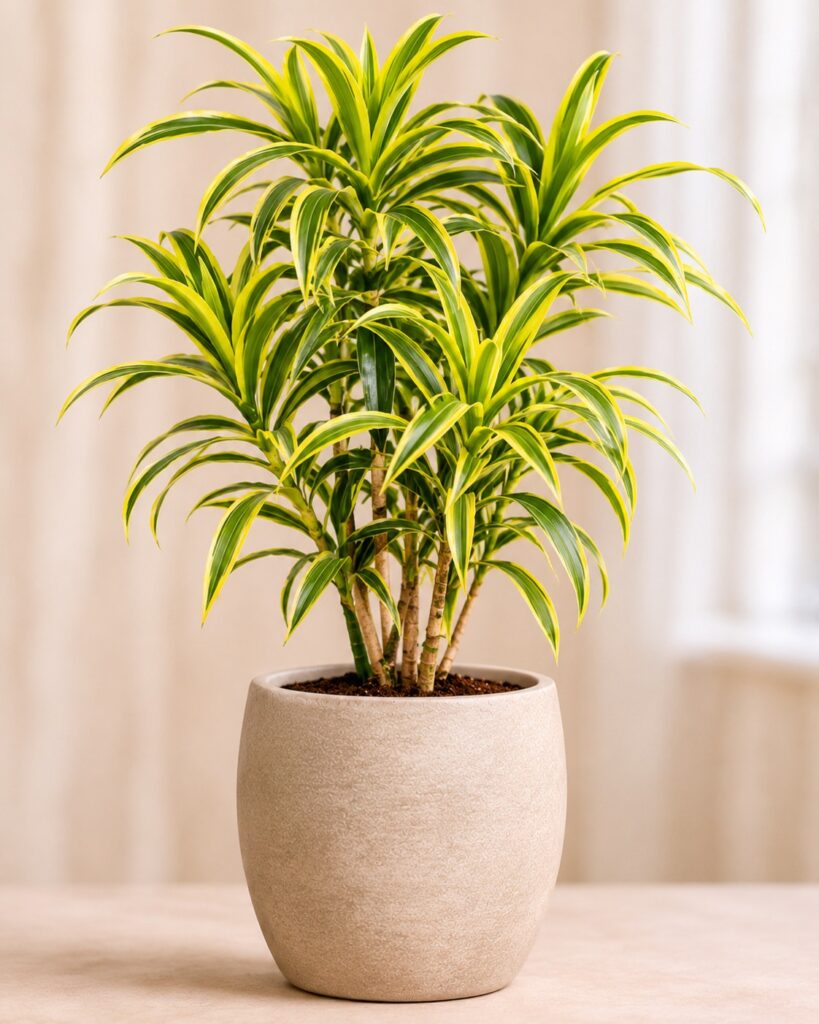
Song of India
Dracaena reflexa 'Song of India'
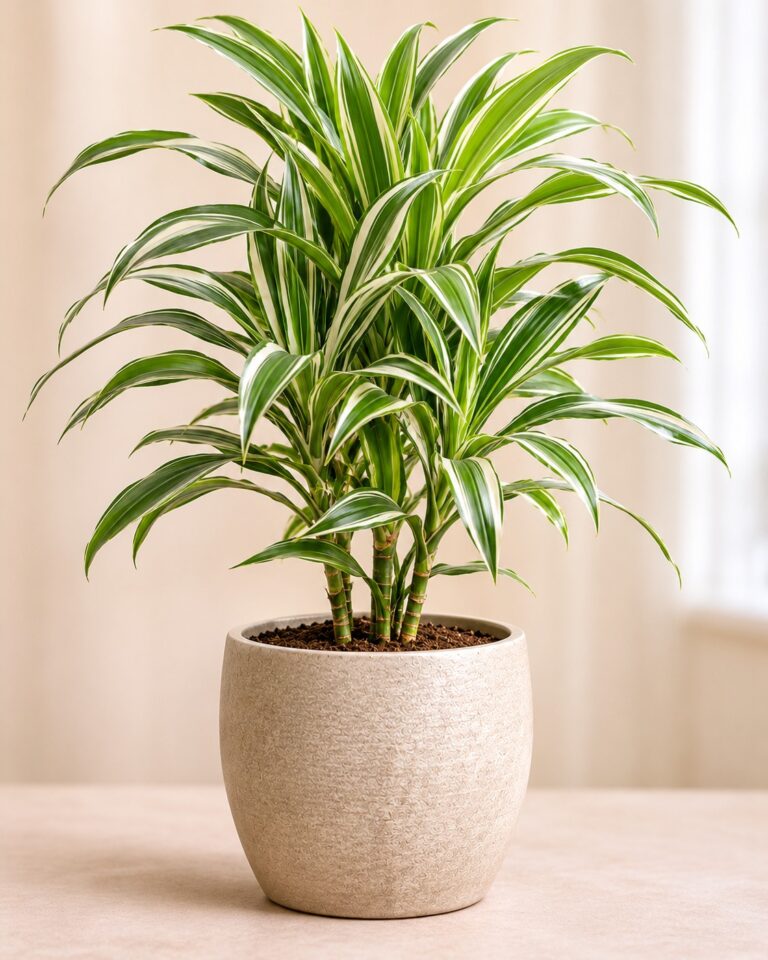
Narrow leaves striped in green and gold on crooked stems give Song of India a bright, sculptural look.
About Song of India
Song of India lights up a room without trying. Its narrow, arching leaves are striped in rich green and golden yellow, and they sprout in tufts along crooked stems that give the plant a relaxed, sculptural look.
From Madagascar and the Indian Ocean Islands to Houseplant Favorite
Dracaena reflexa grows wild on Madagascar, Mauritius and nearby islands, where it forms a branching shrub or small tree. The variegated forms were selected in cultivation and have become staples of the houseplant trade.
The Secret Behind Its Golden Stripes
Each leaf is slim and pointed, with a bright yellow-gold stripe along the edge and a dark-green center. In strong light, the colors are most vivid. The leaves grow in spiral rosettes at the ends of branching stems, giving the plant a layered, tufted effect. Older stems develop leaf scars and bend naturally, which gives mature plants a bonsai-like character.
A World of Beautiful Varieties
A close cousin, ‘Song of Jamaica’, has green leaves with a paler stripe, and ‘Song of India’ itself has the bold gold edge. Both are Dracaena reflexa and have the same needs. Variegated forms need brighter light to keep their stripes.
Bringing the Tropics Indoors
Song of India is happiest in bright, indirect light, which keeps the gold stripes vivid. Let the top inch or two of the soil dry between waterings, and water less in winter. Use filtered water if you can, as brown tips are a common complaint. Keep it away from curious pets, because the leaves are toxic if chewed.
Bright, graceful and easy-going, Song of India is a cheerful way to add a splash of gold to a living room.
Care Guide
Everything you need to know to keep your Song of India happy and healthy.
Bright, indirect light keeps the stripes vivid. It tolerates lower light but may lose some variegation. Direct sun scorches the leaves.
Let the top 1–2 inches (2.5–5 cm) of soil dry before watering. Overwatering is the main cause of problems.
Use a well-draining potting mix with extra perlite. Make sure the pot has drainage holes.
Tolerates average humidity but enjoys occasional misting. Dry air can cause brown tips.
Keep above 55°F (13°C) and away from cold drafts.
Feed every 6–8 weeks in spring and summer with a half-strength balanced fertilizer.
Cut leggy stems in spring just above a leaf scar, and new growth will sprout. Remove lower leaves that have yellowed.
Through the year
Spring
Resume feeding and repot if needed.
Summer
Water as the top soil dries; protect from direct sun.
Autumn
Reduce watering; stop feeding.
Winter
Water sparingly and keep away from cold drafts.
Repotting
- Repot every
- 2–3 years
- Best time
- Spring
- Pot size step-up
- Go up 1–2 inches (2.5–5 cm) in pot diameter
- Soil mix
- Free-draining potting mix with perlite
- Signs it needs repotting
- Roots at the drainage holes or the plant becoming top-heavy.
Slow growing and fine in a snug pot. Use a heavy pot for tall plants.
Propagation
- Methods
- Stem cutting
- Difficulty
- Easy
- Best season
- Spring to summer
- Time to root
- 4–8 weeks
Take a 4–6 inch (10–15 cm) stem cutting, or the leafy top. Root in moist potting mix or water, in warm, bright, indirect light.
Common Problems
Brown leaf tips
Symptoms: Crispy brown tips
Likely cause: Fluoride in water or dry air
Use filtered water and raise humidity.
Fading stripes
Symptoms: Gold stripes turn pale
Likely cause: Not enough light
Move to a brighter spot.
Yellowing leaves
Symptoms: Leaves turn yellow and fall
Likely cause: Overwatering
Let the soil dry and check drainage.
Companion Plants
Plants that grow happily alongside this one.



Download Care Guide
A printable one-page Song of India care sheet: light, water, feeding and top tips.
You Might Also Like
View More Plants →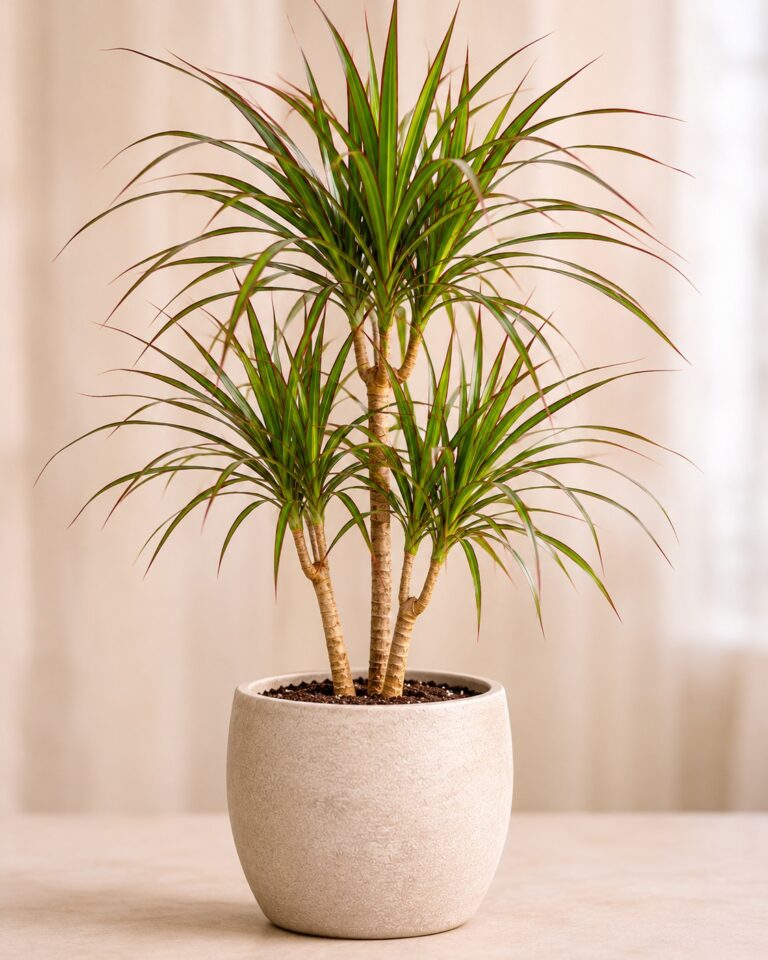
Dragon Tree
Dracaena marginata
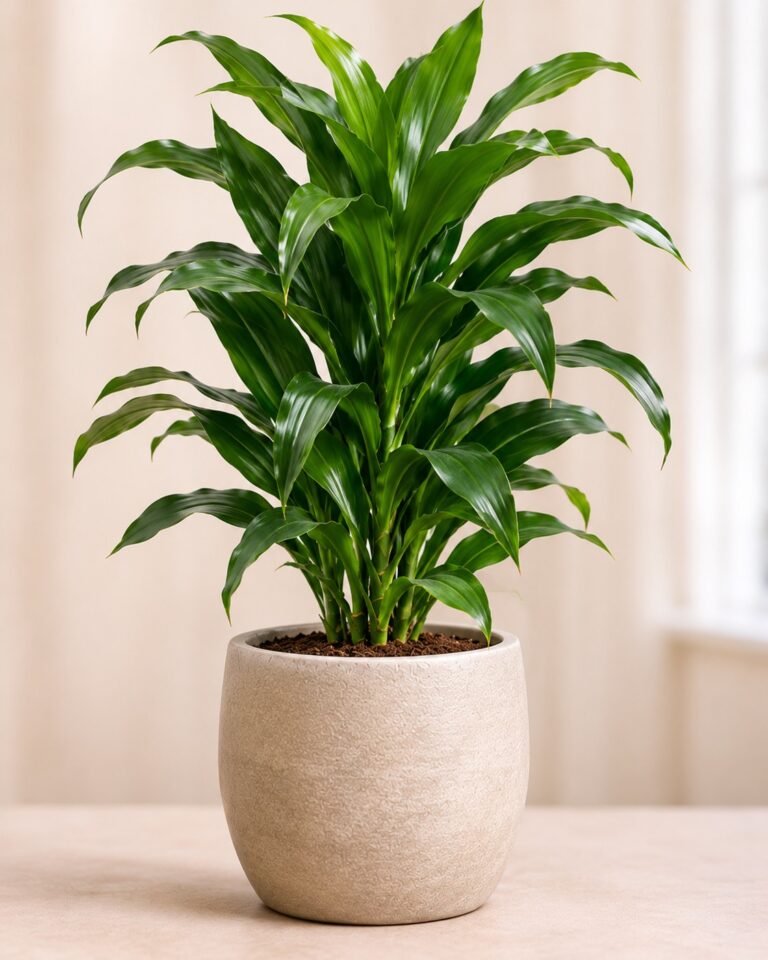
Janet Craig Dracaena
Dracaena fragrans 'Janet Craig'
Corn Plant
Dracaena fragrans
Warneckii Dracaena
Dracaena fragrans 'Warneckii'