

Janet Craig Dracaena
Dracaena fragrans 'Janet Craig'
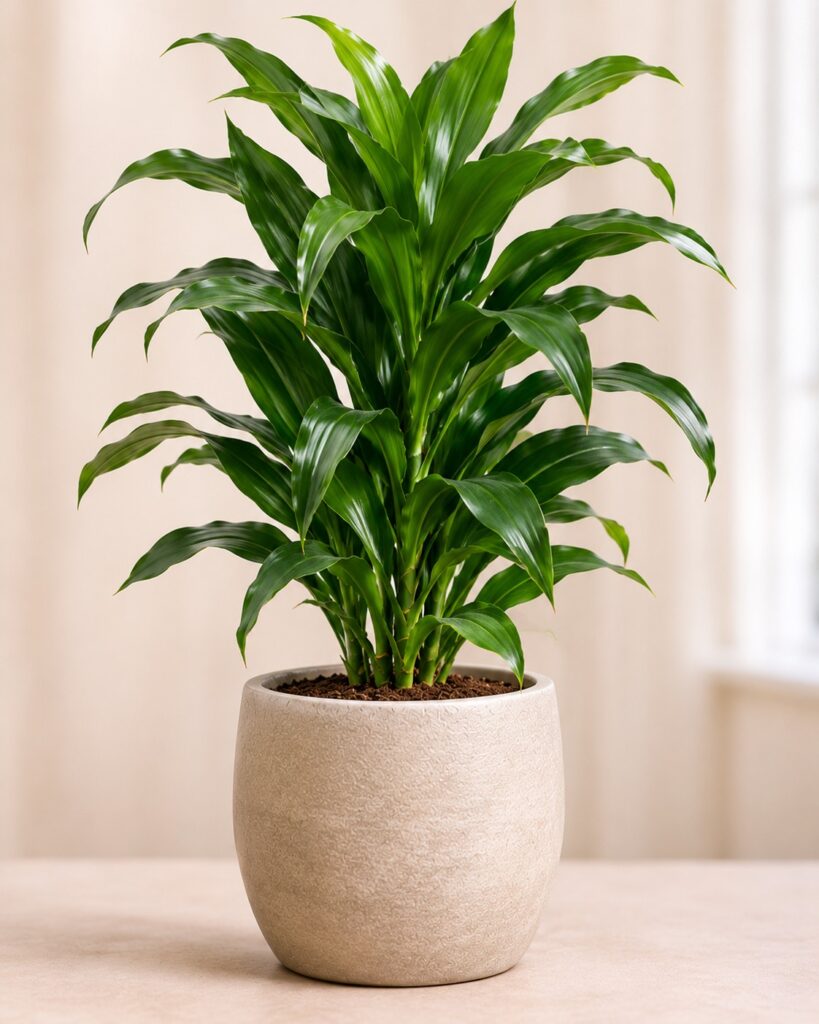
Deep green, glossy, arching leaves and almost bulletproof good nature make Janet Craig a classic for low-light rooms.
About Janet Craig Dracaena
Janet Craig is the dependable workhorse of the plant world. Its broad, deep-green leaves arch outward from a sturdy cane in glossy rosettes, and it keeps looking handsome in the kind of dim corners where most plants would sulk.
From Tropical Africa to Houseplant Favorite
The species Dracaena fragrans comes from tropical Africa, where it grows as a tall tree in forests. ‘Janet Craig’ was introduced in the 1930s and named after the daughter of a plant grower, and it has been a staple of interiors ever since because it tolerates low light, dry air and plenty of neglect.
The Secret Behind Its Glossy Rosettes
The leaves are wide, dark and strap-shaped, with a rich, polished green and no markings, which sets it apart from its striped relatives. They grow in tight rosettes at the top of a woody cane. As the plant ages, the lower leaves yellow and drop naturally, leaving an attractive trunk beneath a dense crown.
A World of Beautiful Varieties
Janet Craig is a solid green cultivar of Dracaena fragrans, and it is often compared with its relatives. ‘Warneckii’ has white stripes through the leaves, ‘Lemon Lime’ has yellow-green stripes, and ‘Massangeana’, the Corn Plant, has a bold yellow center stripe. All share the same easy care, though the striped forms need more light to keep their color.
Bringing the Tropics Indoors
Janet Craig will grow in low light but is happiest in medium, indirect light. Water when the top inch or two of soil is dry, and use filtered water if you can, because the leaf tips are sensitive to fluoride and salts. Wipe the leaves now and then to remove dust. Keep it away from pets, as the leaves are toxic if chewed.
Tough, elegant and almost impossible to dislike, Janet Craig is a smart choice for dim offices, hallways and bedrooms.
Care Guide
Everything you need to know to keep your Janet Craig Dracaena happy and healthy.
Tolerates low light better than almost any plant, but grows best in medium, indirect light. Avoid direct sun, which scorches the leaves.
Water when the top 1–2 inches (2.5–5 cm) of soil are dry, then drain well. It is very sensitive to overwatering, so keep it on the dry side in winter.
Use a well-draining potting mix with a little perlite. Make sure the pot has drainage holes.
It tolerates dry indoor air, though brown tips can develop if the air is very dry. Occasional misting helps.
Keep above 55°F (13°C) and away from cold drafts and heaters.
Feed every 6–8 weeks in spring and summer with a half-strength balanced fertilizer. Overfeeding causes brown tips.
Cut tall canes back in spring to reshape, and new leaf rosettes will sprout below the cut. Remove yellow lower leaves as they fade.
Through the year
Spring
Resume feeding and repot if needed.
Summer
Water as the top soil dries; protect from direct sun.
Autumn
Reduce watering and stop feeding.
Winter
Water sparingly and keep warm and away from drafts.
Repotting
- Repot every
- 2–3 years
- Best time
- Spring
- Pot size step-up
- Go up 1–2 inches (2.5–5 cm) in pot diameter
- Soil mix
- Free-draining potting mix with extra perlite
- Signs it needs repotting
- Roots coming through drainage holes or the plant becoming top-heavy.
Slow growing and happy to be a little root-bound, so repot only when necessary.
Propagation
- Methods
- Stem cutting
- Difficulty
- Easy
- Best season
- Spring to summer
- Time to root
- 4–8 weeks
Cut a section of cane 4–6 inches (10–15 cm) long, or take the top rosette. Root in moist potting mix or water, keeping it warm and in bright, indirect light.
Common Problems
Brown leaf tips
Symptoms: Crispy brown tips on leaves
Likely cause: Fluoride and salts in tap water, or dry air
Use filtered or rainwater and trim the tips.
Yellowing lower leaves
Symptoms: Lower leaves yellow and fall
Likely cause: Overwatering, or normal aging
If many leaves yellow, check the roots and let the soil dry.
Mealybugs and spider mites
Symptoms: White fluff or fine webbing
Likely cause: Dry air and stress
Wipe leaves with a cloth and insecticidal soap, repeating weekly.
Companion Plants
Plants that grow happily alongside this one.


Download Care Guide
A printable one-page Janet Craig Dracaena care sheet: light, water, feeding and top tips.
You Might Also Like
View More Plants →
Dragon Tree
Dracaena marginata
Corn Plant
Dracaena fragrans
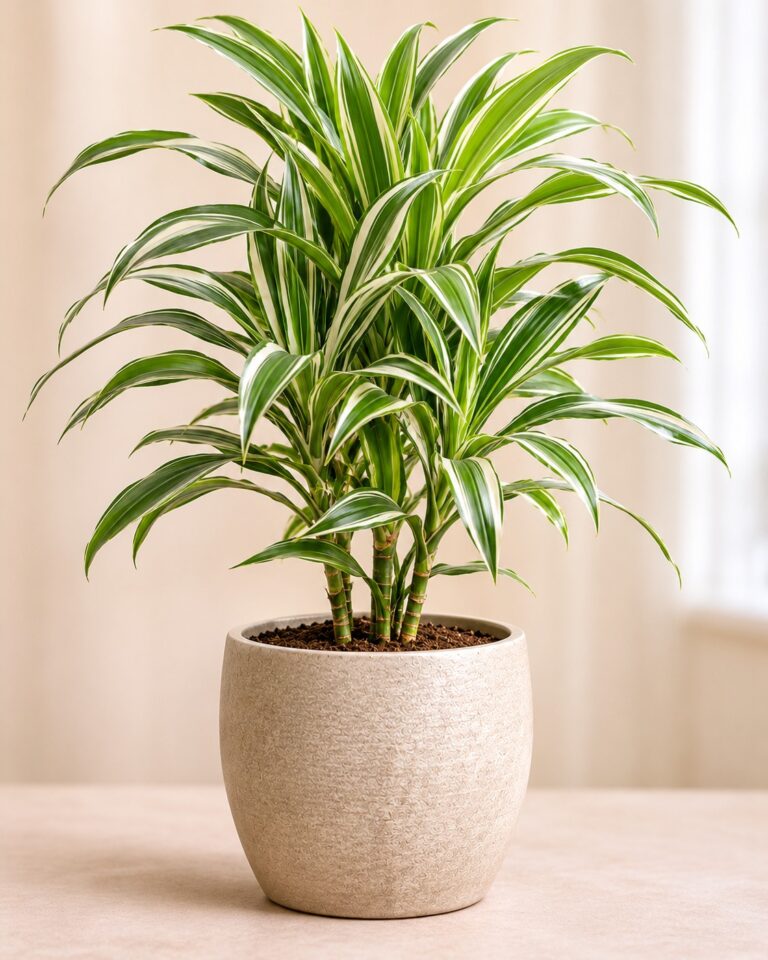
Warneckii Dracaena
Dracaena fragrans 'Warneckii'
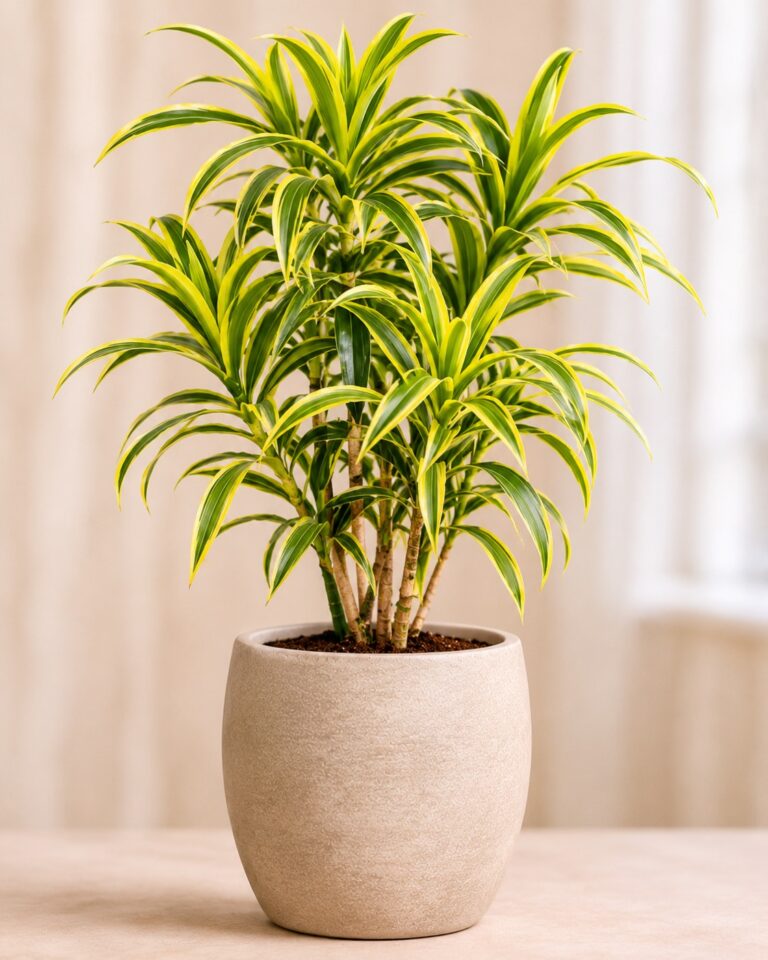
Song of India
Dracaena reflexa 'Song of India'