

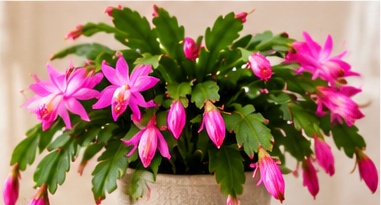
Christmas Cactus
Schlumbergera × buckleyi
A winter-flowering cactus with arching, jointed stems and bright pink blooms, a long-lived plant that blooms around the holidays.
About Christmas Cactus
Cheerful and long-lived, the Christmas Cactus is the plant that brightens the darkest part of the year. Its arching, jointed stems are covered in bright flowers in shades of pink, red, white, orange or purple at the end of autumn and into winter, just when little else is blooming. With some care, a single plant can live for decades.
From Brazilian Treetops to Winter Windowsill
Despite its name, the Christmas Cactus is not a desert plant. It is native to the cool, misty mountain forests of southeastern Brazil, where it grows on trees and rocks as an epiphyte, rooted in pockets of moss and leaf litter. It belongs to the cactus family, Cactaceae, and the leaf-like segments of its stems are flattened to catch light in the shady canopy.
The Secret Behind Those Winter Blooms
Christmas Cacti set their flower buds in response to the length of the day and the temperature. They need long nights of about 12 to 14 hours of uninterrupted darkness and cooler temperatures, around 50 to 60°F (10 to 16°C), for several weeks in autumn. Once buds form, keep the plant steady, as moving it or letting it dry out can cause the buds to drop.
A World of Beautiful Varieties
The plants sold as Christmas Cactus include several close relatives. True Christmas Cactus has rounded segment edges, the Thanksgiving Cactus has pointed, claw-like edges and blooms earlier, and the Easter Cactus blooms in spring. They are cared for in nearly the same way.
Bringing the Rainforest Indoors
Christmas Cacti like bright, indirect light, a free-draining mix and a pot with drainage. Water when the top inch of soil is dry, and do not let the roots sit in water. They prefer moderate humidity and cooler nights. Unlike desert cacti, they like more water in the growing season. They are non-toxic to cats and dogs.
Cheerful, forgiving and wonderfully generous, the Christmas Cactus is a plant to keep for life. Give it bright light, steady care and a cool, dark autumn, and it will bloom for you every holiday season.
Care Guide
Everything you need to know to keep your Christmas Cactus happy and healthy.
Direct sun scorches the segments, and low light means fewer flowers.
Water thoroughly and drain well. Drop the amount a little in autumn, but never let it dry out completely once buds form.
Use potting mix with perlite and bark. It is an epiphyte, so it dislikes heavy soil.
A pebble tray helps in dry heated rooms.
Cool nights of 50–60°F (10–16°C) for several weeks help trigger flowering.
Use a balanced fertilizer at half strength. Stop when buds form.
Through the year
Spring
Repot after flowering and begin feeding. Take cuttings.
Summer
Keep bright and moderately watered. Move outdoors to shade if you wish.
Autumn
From late September, give cool nights and long uninterrupted darkness to trigger buds.
Winter
Bloom season: keep steady, away from drafts and avoid moving the plant.
Repotting
- Repot every
- 2–3 years
- Best time
- After flowering
- Pot size step-up
- Go up 1–2 inches (2.5–5 cm) in pot diameter
- Soil mix
- Well-draining mix: potting soil with perlite and orchid bark
- Signs it needs repotting
- Roots coming from the drainage holes, or a plant that is top-heavy and sparse in the middle.
Christmas Cacti bloom best when slightly pot-bound, so repot only every few years.
Propagation
- Methods
- Stem cutting
- Difficulty
- Easy
- Best season
- Spring to summer
- Time to root
- 3–6 weeks
Twist off a Y-shaped section of two or three segments. Let it dry for a day, then push the cut end into moist, free-draining mix and keep it bright and lightly damp. Roots form in a few weeks. Put several cuttings in one pot for a fuller plant.
Common Problems
Buds dropping
Symptoms: Flower buds fall before opening
Likely cause: A move, a draft, sudden temperature change or dry soil
Keep the plant in one spot away from drafts and heat sources, and keep the soil lightly moist while buds form.
No flowers
Symptoms: Healthy stems but no blooms
Likely cause: Not enough dark hours or cool nights in autumn
From autumn, give 12–14 hours of dark and cool nights for several weeks.
Limp, wrinkled segments
Symptoms: Segments look soft or shriveled
Likely cause: Root rot from overwatering, or severe thirst
Check the roots and soil. Repot in fresh mix if the roots are brown and soft.
Mealybugs and spider mites
Symptoms: White cottony clusters in the leaf joints, or fine webbing and pale speckling on the leaves
Likely cause: Sap-sucking insects, more common on stressed plants and in dry, warm rooms
Isolate the plant. Wipe visible bugs away with a cotton swab dipped in rubbing alcohol, then spray or wipe all leaf surfaces with insecticidal soap. Repeat weekly for at least a month, and rinse the plant in the shower first if the infestation is heavy.
Companion Plants
Plants that grow happily alongside this one.



Download Care Guide
A printable one-page Christmas Cactus care sheet: light, water, feeding and top tips.
You Might Also Like
View More Plants →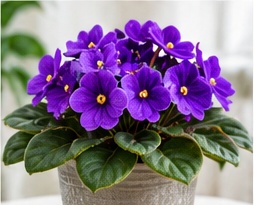
African Violet
Streptocarpus ionanthus
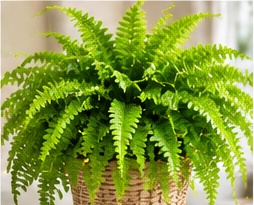
Boston Fern
Nephrolepis exaltata 'Bostoniensis'
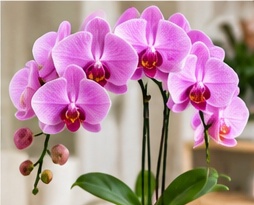
Moth Orchid
Phalaenopsis
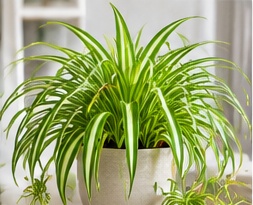
Spider Plant
Chlorophytum comosum