

Echeveria
Echeveria
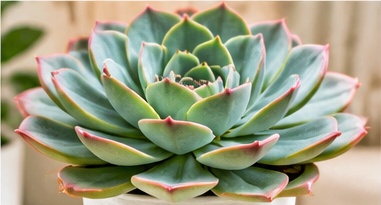
Perfect, rose-like rosettes in dusty blue, green or pink, a sun-loving succulent that is easy to propagate.
About Echeveria
Sculptural, colorful and quietly photogenic, Echeverias are the succulents that look like living flowers. Each plant forms a tight rosette of plump, powdery leaves in shades of blue-gray, green, lavender or rose, often edged in pink when it gets enough sun. They are easy to look after and easy to multiply, which is why they are among the most popular succulents of all.
From Mexican Highlands to Sunny Windowsills
Echeverias are native to Mexico, Central America and northwestern South America, where they grow on dry, rocky slopes and cliffs in full sun. They belong to the stonecrop family, Crassulaceae. The genus was named in honor of Atanasio Echeverría y Godoy, an 18th-century Mexican botanical artist who illustrated plants on a Spanish scientific expedition to New Spain.
The Secret Behind That Powdery Bloom
The pale, dusty coating on many Echeveria leaves is a natural waxy layer called farina, which helps to protect the plant from sun and reduce water loss. It rubs off if touched, and the marks do not grow back, so handle the plants by the base. Plants stressed by bright sun or cool nights can turn pink or red at the edges.
A World of Beautiful Varieties
There are hundreds of species and hybrids. Popular types include Echeveria elegans (Mexican Snowball), the large, silvery Perle von Nürnberg with lavender tones, Black Prince with dark purple leaves, and ruffled, frilly types like Topsy Turvy. They are all grown the same way.
Bringing the Desert Indoors
Echeverias need as much light as you can give them, ideally a few hours of direct sun each day. Water only when the soil has dried out completely, then soak and drain, and use a gritty cactus mix in a pot with drainage. Keep water out of the rosette, as it can cause rot. They are non-toxic to cats and dogs.
Neat, colorful and wonderfully easy to share, the Echeveria is a lovely choice for a sunny sill. Give it plenty of light and let it dry out between drinks, and it will give you a collection of perfect rosettes.
Care Guide
Everything you need to know to keep your Echeveria happy and healthy.
Echeverias need bright light to keep a tight rosette and color. In low light they stretch, a problem called etiolation.
Soak thoroughly and let it drain. Water the soil and avoid the rosette. Wrinkled lower leaves mean thirst.
Cactus mix with extra perlite or sand, in a pot with drainage holes.
Echeverias prefer dry air.
Keep above 40°F (4°C), and avoid frost.
Use a diluted cactus fertilizer.
Through the year
Spring
Repot, take leaf cuttings and begin watering more often.
Summer
Water every two weeks and give plenty of bright light.
Autumn
Water less as days shorten, and enjoy autumn color.
Winter
Water about once a month and keep cool and bright.
Repotting
- Repot every
- 1–2 years
- Best time
- Spring
- Pot size step-up
- A shallow pot only slightly wider than the rosette
- Soil mix
- Cactus or succulent mix with extra grit
- Signs it needs repotting
- Offsets crowding the pot, or the rosette outgrowing it and the bottom leaves dying back.
Use a shallow pot and handle the leaves carefully, as they rub off the farina.
Propagation
- Methods
- Leaf cutting, Offsets / pups
- Difficulty
- Easy
- Best season
- Spring to summer
- Time to root
- 2–6 weeks
Gently twist a healthy lower leaf off the stem, taking the whole leaf base. Let it dry for a few days, then lay it on top of dry cactus mix in bright, indirect light. Mist lightly every few days. Roots and a baby rosette appear in a few weeks, and the mother leaf will shrivel away. Offsets can be cut off and potted.
Common Problems
Root rot
Symptoms: Soft, mushy base or stems, a sour smell from the soil, and leaves that yellow and collapse
Likely cause: Soil that stays wet, often from overwatering or a pot with no drainage
Unpot the plant and cut away any brown, mushy roots with clean scissors. Repot in fresh, dry, free-draining mix in a pot with drainage holes and wait a week before watering. If most of the plant is soft, take healthy cuttings or offsets and start again. Soft, translucent lower leaves are the first sign.
Stretching rosette
Symptoms: The rosette becomes loose and tall
Likely cause: Too little light
Move to a brighter spot. You can behead the plant, let it callus and re-root the top.
Sunburn
Symptoms: Brown or bleached patches on leaves
Likely cause: Sudden strong sun
Acclimate gradually to bright sun.
Mealybugs
Symptoms: White, cottony clusters between leaves
Likely cause: Sap-sucking insects
Dab with alcohol on a cotton swab and repeat weekly.
Companion Plants
Plants that grow happily alongside this one.
Download Care Guide
A printable one-page Echeveria care sheet: light, water, feeding and top tips.
You Might Also Like
View More Plants →
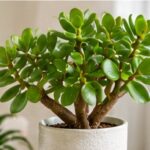
Jade Plant
Crassula ovata