
Chinese Money Plant
Pilea peperomioides
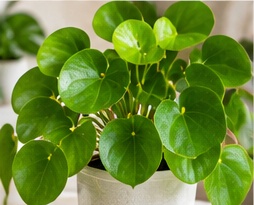
Perfectly round, coin-like leaves on slender stems, a friendly, easy plant that makes lots of babies.
About Chinese Money Plant
Cheerful, quirky and impossible not to love, the Chinese Money Plant is a houseplant with a personality. Its perfectly round, coin-like leaves sit on long, slender stalks, giving the whole plant a fun, modern shape. It is easy to look after, non-toxic to pets and generous with its babies, which is why it has spread from windowsill to windowsill around the world.
From a Chinese Mountainside to Windowsills Worldwide
Pilea peperomioides is native to the mountains of Yunnan and Sichuan in southwestern China, where it grows on moist, shady rocky slopes. It reached Europe in 1946, when a Norwegian missionary named Agnar Espegren brought a cutting home from Yunnan. It then spread mostly through friends sharing cuttings and babies, long before it was sold in shops, which earned it the nickname Pass-It-On Plant.
The Secret Behind Those Perfect Coins
Each rounded leaf is attached to its stalk near the center, like a little parasol or a lily pad, which is why it is also called the UFO Plant. The leaves turn toward the light, so it helps to rotate the pot regularly to keep the plant balanced. As it grows, the plant sends up small plantlets from its roots, and these can be separated and potted up as new plants.
A World of Beautiful Varieties
The Chinese Money Plant belongs to the nettle family, which also includes a range of Pilea relatives with interesting leaves. Moon Valley Pilea has deeply textured, quilted leaves, Silver Tree Pilea has metallic silver patterns, and Baby Tears is a tiny, trailing groundcover type. They share an enjoyment of bright, indirect light.
Bringing the Mountains Indoors
Chinese Money Plants like bright, indirect light and well-draining soil. Water when the top inch or two of soil is dry, and make sure the pot drains. Average room temperatures and humidity are fine. Rotate the plant every week or so so that it grows evenly rather than leaning. It is non-toxic to cats and dogs.
Fun, friendly and easy to share, the Chinese Money Plant is a lovely plant for beginners. Give it bright light, a steady drink and a quarter turn now and then, and it will fill your windowsill with round green coins and a crowd of babies.
Care Guide
Everything you need to know to keep your Chinese Money Plant happy and healthy.
A spot near an east or north window works well. Direct sun scorches the leaves, and too little light leads to leggy, stretched growth.
Water thoroughly and let the excess drain. Drooping, curling leaves can mean thirst, while yellowing and soft stems mean too much water.
Mix potting soil with a handful of perlite, in a pot with drainage holes.
It copes with ordinary rooms.
Avoid cold drafts and heaters.
Use a balanced fertilizer at half strength.
Through the year
Spring
Repot and separate plantlets. Growth speeds up.
Summer
Water more often and keep out of strong direct sun, which can scorch the leaves.
Autumn
Water less often as growth slows.
Winter
Water sparingly and keep away from cold windows.
Repotting
- Repot every
- 1–2 years
- Best time
- Spring
- Pot size step-up
- Go up 1–2 inches (2.5–5 cm) in pot diameter
- Soil mix
- Well-draining potting mix with perlite
- Signs it needs repotting
- Plantlets crowding the pot, roots coming through the drainage holes, or soil that dries out within a few days.
Chinese Money Plants are happy being slightly snug. Remove plantlets to keep the parent full.
Propagation
- Methods
- Stem cutting, Offsets / pups
- Difficulty
- Easy
- Best season
- Spring to summer
- Time to root
- 2–6 weeks
Look for small plantlets rising from the soil or the base of the stem. When one is about 2 inches (5 cm) tall and has its own roots, cut it away from the parent with a clean knife, taking some roots, and pot it in fresh mix. Keep it lightly moist and bright. Plantlets without roots can be rooted in water.
Common Problems
Leaning, uneven growth
Symptoms: The plant bends toward the window
Likely cause: Leaves grow toward the light
Rotate the pot a quarter turn each week.
Curling leaves
Symptoms: Leaves curl up or down
Likely cause: Thirst, cold or strong light
Check the soil and move away from cold drafts and harsh sun.
Brown spots
Symptoms: Dry brown patches or spots
Likely cause: Sun scorch or mineral buildup from tap water
Move out of direct sun and flush the soil now and then.
Yellowing leaves
Symptoms: Leaves turn yellow and soft, often the lower ones first; the soil stays wet
Likely cause: Overwatering or a pot without drainage
Let the top 2 inches (5 cm) of soil dry out between waterings and empty any saucer after watering. If the soil smells sour, slide the plant out and check the roots: healthy roots are firm and pale, rotten ones are brown and mushy. Trim the bad ones and repot in fresh, free-draining mix.
Companion Plants
Plants that grow happily alongside this one.
Download Care Guide
A printable one-page Chinese Money Plant care sheet: light, water, feeding and top tips.
You Might Also Like
View More Plants →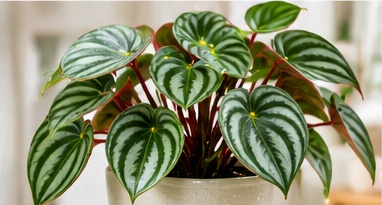
Peperomia
Peperomia
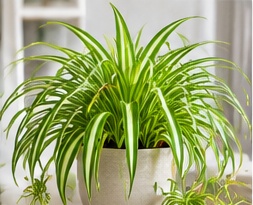
Spider Plant
Chlorophytum comosum