
Rubber Plant
Ficus elastica
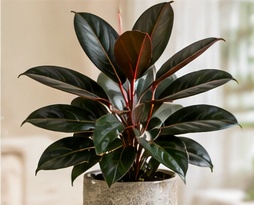
Thick, glossy leaves in deep green to burgundy, and an easier cousin of the fiddle leaf fig.
About Rubber Plant
Bold, glossy and surprisingly easygoing, the Rubber Plant is a houseplant classic that has never really gone out of style. Its thick, oval leaves are dark and polished, with a bright red sheath that unrolls at each growing tip. It grows into a tall, handsome plant that suits almost any room with decent light, and it is far more forgiving than its fussy cousin, the Fiddle Leaf Fig.
From Himalayan Foothills to Living Room Staple
Ficus elastica is native to northeastern India, Nepal, Bhutan and parts of Southeast Asia, where it grows into a huge tree, sometimes over 100 feet (30 meters) tall, with a sprawling set of aerial roots. It belongs to the fig and mulberry family, Moraceae. The name comes from the milky sap, which was once used to make rubber, although commercial rubber now comes from another tree.
The Secret Behind Those Polished Leaves
Each leaf is thick, leathery and shiny, which helps it hold water and shed dust. New leaves emerge from a rolled, red sheath that falls away as the leaf unfurls. Dark forms, such as Burgundy and Black Prince, have leaves so deeply pigmented that they look almost black. The glossy surface shows dust easily, so wipe the leaves now and then to keep the plant working well.
A World of Beautiful Varieties
Rubber Plants come in a range of colors. Tineke has creamy, pink-tinged variegation, Ruby has pink and cream splashes on deep green, Burgundy has near-black leaves, and Shivereana has a soft, marbled look. Variegated types need brighter light, while the dark forms are a little more forgiving.
Bringing the Foothills Indoors
Give a Rubber Plant bright, indirect light, though it tolerates medium light. Water when the top couple of inches of soil have dried, and let any excess drain away. It enjoys normal room temperatures and moderate humidity, and it grows best when it is left in one spot. The sap can irritate skin, and the plant is mildly toxic to cats and dogs if eaten.
Sturdy, striking and wonderfully adaptable, the Rubber Plant brings a touch of the rainforest into any room. Keep it bright, keep the watering steady and give it room to grow, and it will become a tall, glossy centerpiece.
Care Guide
Everything you need to know to keep your Rubber Plant happy and healthy.
Variegated forms need more light to hold their colors. Direct hot sun can scorch the leaves.
Water thoroughly and drain well. Overwatering causes yellow leaves and leaf drop, and the plant dislikes sitting in water.
Add perlite or bark to potting soil, and use a pot with drainage.
Wipe the leaves to keep them glossy and dust-free.
Keep it away from cold drafts and heaters.
Use a balanced fertilizer at half strength, and stop in winter.
Through the year
Spring
Prune, repot and take cuttings as growth begins.
Summer
Water more often and wipe the leaves; keep out of hot direct sun.
Autumn
Water less as light fades.
Winter
Water sparingly, keep away from drafts and do not feed.
Repotting
- Repot every
- 1–2 years
- Best time
- Spring
- Pot size step-up
- Go up 1–2 inches (2.5–5 cm) in pot diameter
- Soil mix
- Well-draining potting mix with perlite
- Signs it needs repotting
- Roots circling or coming through the drainage holes, or soil that dries out very quickly.
Rubber Plants tolerate being snug. Repot every two years and top-dress with fresh soil in between.
Propagation
- Methods
- Stem cutting, Air layering
- Difficulty
- Moderate
- Best season
- Spring to summer
- Time to root
- 4–8 weeks
Take a 6-inch (15 cm) cutting with a couple of leaves, wearing gloves, as the sap irritates skin. Let the sap stop flowing, dip the cut end in rooting hormone and place it in moist, airy mix with some warmth and bright light. Expect roots in 4 to 8 weeks. Air layering works for taller plants that have become bare at the base.
Common Problems
Dropping lower leaves
Symptoms: Leaves yellow and drop, starting from the bottom
Likely cause: Overwatering, low light or a draft
Let the soil dry, move to a brighter spot and keep conditions steady.
Leggy, bare stem
Symptoms: A tall, bare stem with leaves only at the top
Likely cause: Natural growth habit and low light
Prune the top in spring to encourage branching, and move the plant to a brighter spot.
Brown, crispy edges
Symptoms: Edges turn brown and dry
Likely cause: Dry air or inconsistent watering
Keep watering steady and move it away from heaters.
Dull, dusty leaves
Symptoms: Leaves look flat and dull and the plant seems to grow slowly
Likely cause: Dust blocking light from the leaf surface
Wipe the leaves with a damp, soft cloth every month or two. Support the leaf with your other hand as you wipe.
Mealybugs and spider mites
Symptoms: White cottony clusters in the leaf joints, or fine webbing and pale speckling on the leaves
Likely cause: Sap-sucking insects, more common on stressed plants and in dry, warm rooms
Isolate the plant. Wipe visible bugs away with a cotton swab dipped in rubbing alcohol, then spray or wipe all leaf surfaces with insecticidal soap. Repeat weekly for at least a month, and rinse the plant in the shower first if the infestation is heavy.
Companion Plants
Plants that grow happily alongside this one.
Download Care Guide
A printable one-page Rubber Plant care sheet: light, water, feeding and top tips.
You Might Also Like
View More Plants →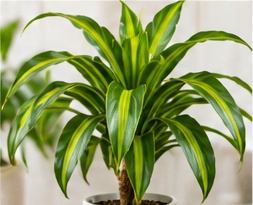
Corn Plant
Dracaena fragrans
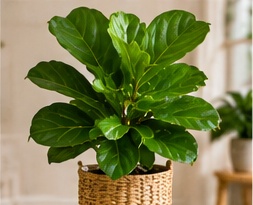
Fiddle Leaf Fig
Ficus lyrata