

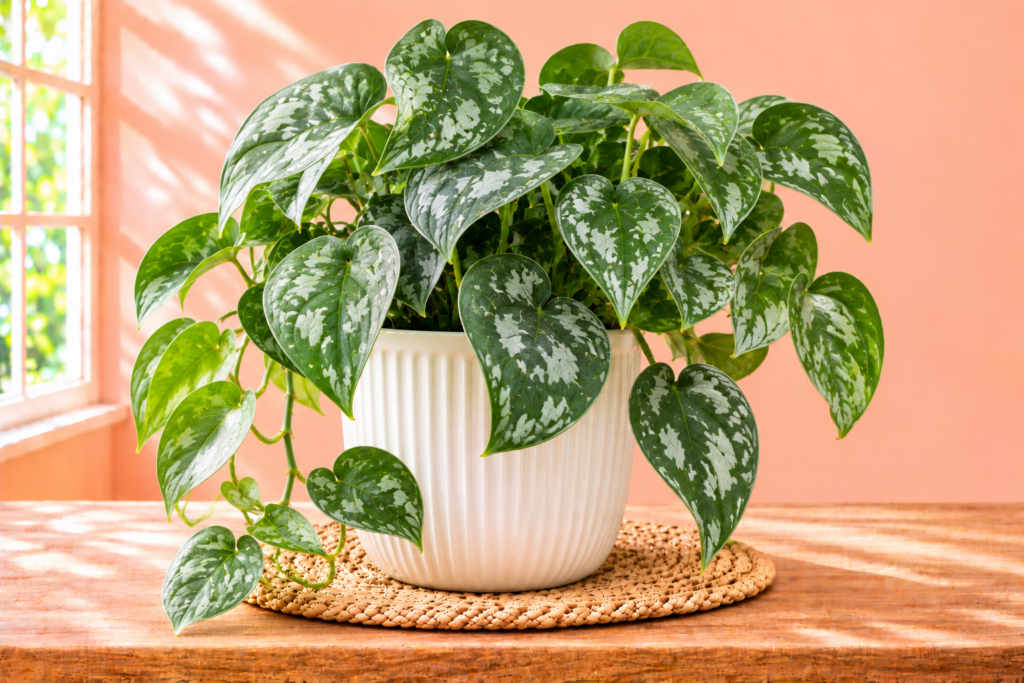
Satin Pothos
Scindapsus pictus 'Argyraeus'
A velvety, dark green trailing plant splashed with silver, easy and slow to sulk.
About Satin Pothos
Velvety, dark green and dusted with silver, the Satin Pothos is one of the most elegant trailing houseplants you can grow. Its soft-looking, matte leaves catch the light beautifully, and the plant tolerates the occasional missed watering far better than most. It is a favorite for shelves, hanging baskets and cozy corners.
From Southeast Asian Rainforest to Shelf Favorite
Despite its common name, Satin Pothos is not a true pothos. It is Scindapsus pictus ‘Argyraeus’, a close relative in the Araceae family from the rainforests of Southeast Asia, including parts of Thailand, Malaysia and Borneo. In the wild it climbs tree trunks by aerial roots. Indoors it trails from a shelf or basket and will happily climb a moss pole, where its leaves grow a little larger.
The Secret Behind That Silver Sheen
The leaves are heart-shaped, thick and slightly velvety, in deep green with irregular silver splashes scattered across the surface. They feel more substantial than a golden pothos, and they store water, which is why the plant forgives a late drink. Bright, indirect light keeps the silver bright, while in very low light the splashes fade and growth slows.
A World of Beautiful Varieties
Satin Pothos has several close relatives. Silver Satin, usually sold as ‘Exotica’, has larger leaves with bolder silver, and Silver Splash is another silver-marked form. Cebu Blue and Baltic Blue offer a different silvery look on narrower, climbing leaves. For something darker and more compact, try Treubii Moonlight and Treubii Dark Form, which share the same velvety character.
Bringing the Tropics Indoors
Satin Pothos grows best in bright to medium, indirect light and a coarse, well-draining potting mix. Let the top couple of inches of soil dry between waterings, since the thick leaves can rot if kept wet. Normal room temperatures and average household humidity suit it. If the leaves curl, it is usually asking for water. It is toxic to cats and dogs if chewed.
Easy, elegant and endlessly photogenic, the Satin Pothos is a great houseplant for beginners and collectors alike. With bright light and a light touch with water, it will build up into a lush cascade of velvety silver-green leaves.
Care Guide
Everything you need to know to keep your Satin Pothos happy and healthy.
Satin pothos grows well in bright, filtered light and tolerates medium light. In very low light the silver splashes fade and the plant slows. Avoid direct sun, which can leave pale scorched patches on the velvety leaves.
The thick, fleshy leaves store water, so Satin pothos tolerates a missed watering better than an overwatering. Water thoroughly, then wait until the top couple of inches are dry. Leaves that curl inward are a sign of thirst.
Use a peat- or coir-based potting mix with roughly a quarter perlite or orchid bark added so excess water leaves quickly. Choose a pot only slightly larger than the root ball; too much soil stays wet for too long. Scindapsus has thick, succulent-like leaves and roots, so chunky bark or perlite in the mix helps prevent rot.
Thick leaves cope well with ordinary indoor air. Crisp edges more often mean the soil dried out completely.
Keep the plant above 55°F (13°C) and away from cold drafts, open winter windows and air-conditioning vents. Sudden chills cause blackened, mushy leaves.
Use a balanced liquid houseplant fertilizer diluted to half the label strength every four weeks while the plant is actively growing, and skip it in winter. Water the soil first so the roots are not burned. Every few months, flush the pot with plain water to wash out salts.
Trim straggly vines just above a node to encourage branching. It trails nicely from a shelf and will climb a moss pole, where the leaves grow somewhat larger.
Through the year
Spring
Growth picks up as the days lengthen. Repot if the roots fill the pot, restart monthly feeding at half strength, and take cuttings.
Summer
Peak growing season: water most often, keep the plant out of hot direct sun, and trim long vines to keep it full.
Autumn
As the light drops, space watering further apart and stop feeding in about October (or April in the southern hemisphere).
Winter
Growth slows. Water roughly half as often, do not feed, and keep the plant away from cold windows, drafts and radiators.
Repotting
- Repot every
- 1–2 years
- Best time
- Spring, as new growth starts
- Pot size step-up
- Go up 1–2 inches (2.5–5 cm) in pot diameter
- Soil mix
- Well-draining mix: potting soil with about a quarter perlite or orchid bark
- Signs it needs repotting
- Roots circling at the surface or coming through the drainage holes.
Propagation
- Methods
- Stem cutting, Water propagation
- Difficulty
- Easy
- Best season
- Spring to early summer
- Time to root
- 3–5 weeks in water
Take a cutting with a node and two or three leaves, strip the lowest leaf, and stand it in water or damp perlite on a bright shelf. Roots usually appear in 3 to 5 weeks. Pot the rooted cutting in a free-draining mix and keep it lightly moist while it settles in. Satin pothos can be slower to root than golden pothos, so be patient.
Common Problems
Yellowing leaves
Symptoms: Leaves turn yellow and soft, often the lower ones first; the soil stays wet
Likely cause: Overwatering or a pot without drainage
Let the top 2 inches (5 cm) of soil dry out between waterings and empty any saucer after watering. If the soil smells sour, slide the plant out and check the roots: healthy roots are firm and pale, rotten ones are brown and mushy. Trim the bad ones and repot in fresh, free-draining mix. Thick-leaved scindapsus is particularly prone to rot if kept wet.
Curling leaves
Symptoms: Leaves fold or curl inward lengthwise
Likely cause: Thirst or very dry soil
Give a thorough drink and the leaves relax within a day or two. Do not wait for the plant to wilt every time.
Long, bare stems and fading color
Symptoms: Long gaps between leaves, small new leaves, and the silver splashes fading toward plain green
Likely cause: Too little light
Move the plant closer to a bright window with filtered light. Trim leggy vines back just above a node to encourage branching; the cuttings can be rooted to fill out the pot.
Mealybugs and spider mites
Symptoms: White cottony clusters in the leaf joints, or fine webbing and pale speckling on the leaves
Likely cause: Sap-sucking insects, more common on stressed plants and in dry, warm rooms
Isolate the plant. Wipe visible bugs away with a cotton swab dipped in rubbing alcohol, then spray or wipe all leaf surfaces with insecticidal soap. Repeat weekly for at least a month, and rinse the plant in the shower first if the infestation is heavy.
Companion Plants
Plants that grow happily alongside this one.
Download Care Guide
A printable one-page Satin Pothos care sheet: light, water, feeding and top tips.
You Might Also Like
View More Plants →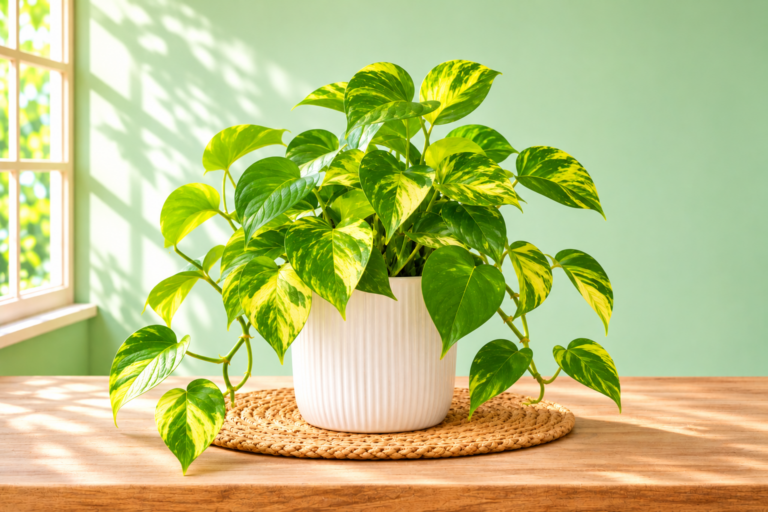
Golden Pothos
Epipremnum aureum
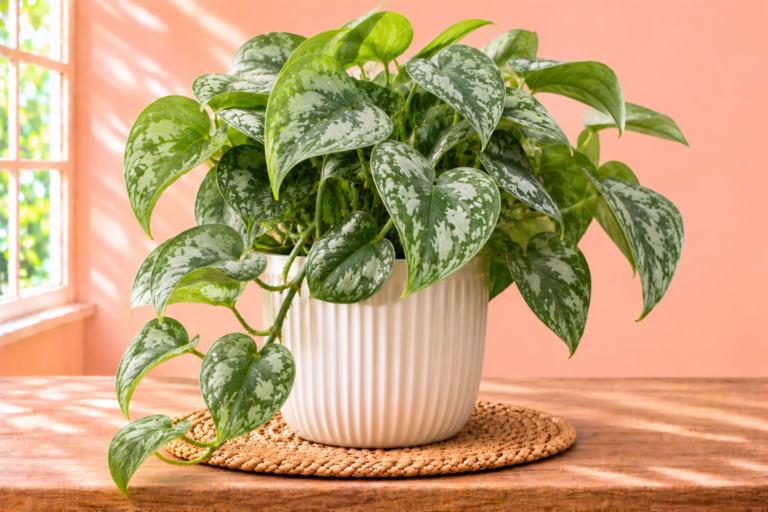
Silver Satin Pothos
Scindapsus pictus 'Exotica'
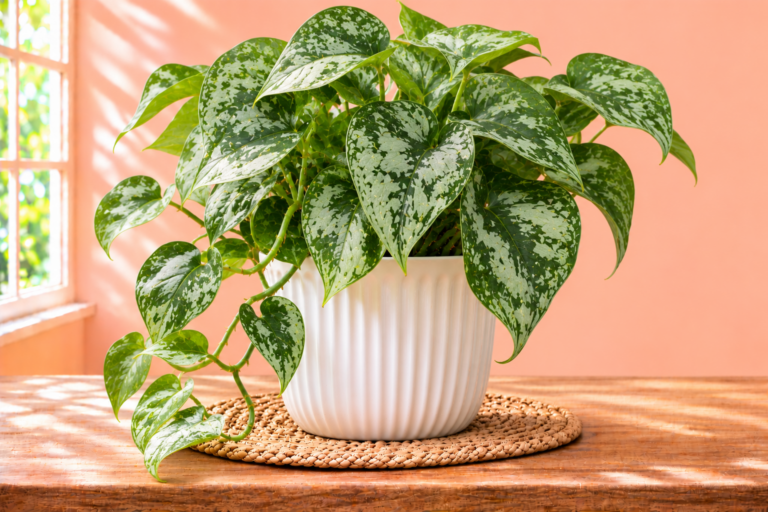
Silver Splash Pothos
Scindapsus pictus 'Silver Splash'
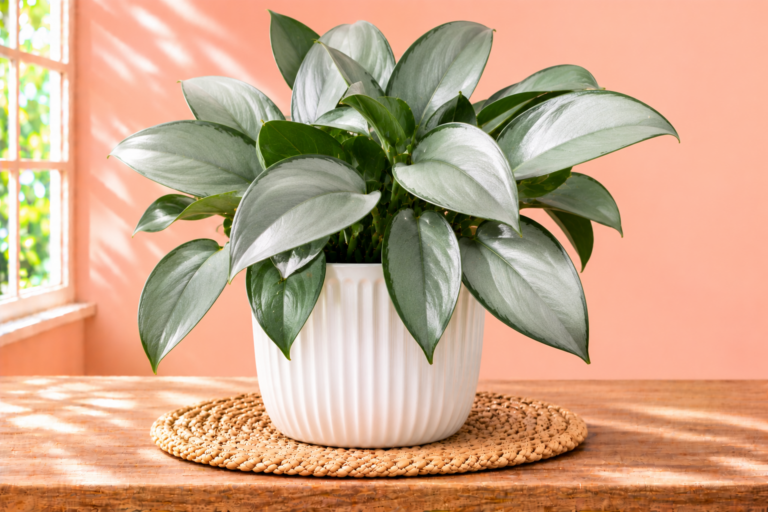
Treubii Moonlight
Scindapsus treubii 'Moonlight'