

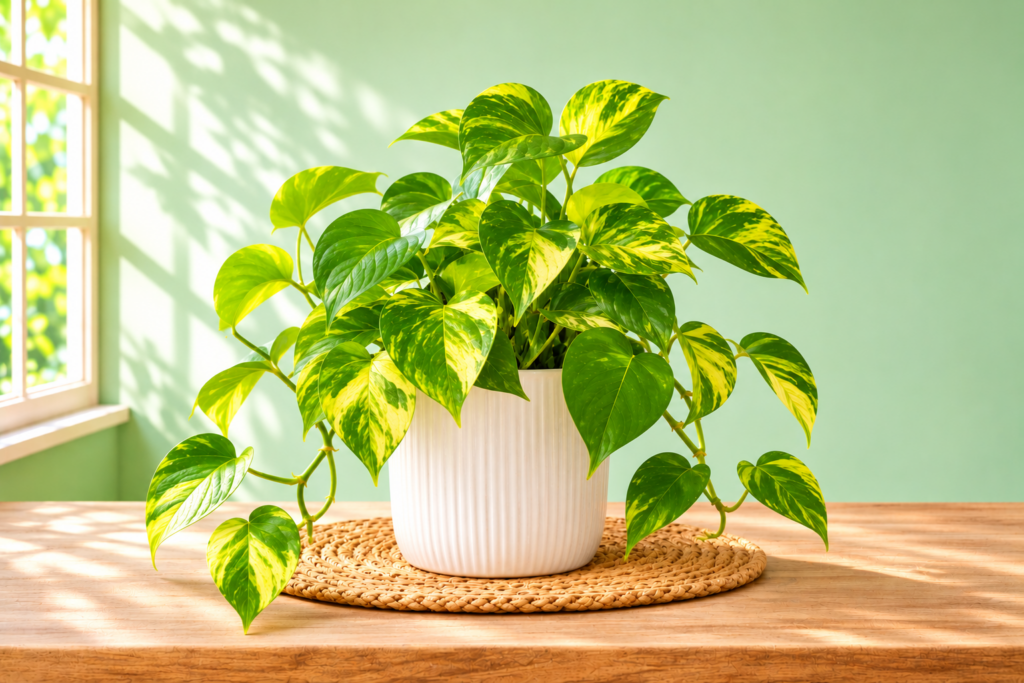
Golden Pothos
Epipremnum aureum
The classic trailing houseplant: heart-shaped leaves marbled with gold, and almost impossible to kill.
About Golden Pothos
Cascading, glossy and splashed with gold, the Golden Pothos is one of the most popular and forgiving houseplants in the world. Often called Devil’s Ivy because it is so hard to kill, this tropical vine brings easy, trailing greenery to shelves, bookcases and hanging baskets. Its quick growth, cheerful coloring and relaxed care requirements have made it a firm favorite with complete beginners and seasoned plant lovers alike.
From Pacific Island Vine to Household Favorite
Native to the island of Mo’orea in the Society Islands of French Polynesia, Epipremnum aureum is a climbing evergreen vine belonging to the Araceae family. In the wild it scrambles up tree trunks, gripping the bark with aerial roots as it reaches for the light, and it has since naturalized in tropical regions around the world. Indoors, the same instinct means it will happily trail from a shelf or climb a moss pole, wall hook or trellis.
The Secret Behind That Golden Glow
The plant’s signature feature is its foliage: waxy, heart-shaped leaves in deep green, marbled and streaked with golden yellow. The gold comes from patches of leaf tissue with less chlorophyll, and it is most vivid in bright, filtered light. In a darker spot the leaves turn greener and the vines stretch, leaving longer gaps between leaves. Give the plant something to climb and the leaves will usually grow noticeably larger than they do on a trailing stem.
A World of Beautiful Varieties
Golden Pothos is the parent form of a whole family of cultivars. Marble Queen has creamy-white marbling, Neon is a vivid chartreuse, and Jade is a solid, dark green. Compact, slower-growing varieties such as N’Joy and Pearls and Jade have smaller, more crisply patterned leaves, while Manjula has broad, wavy leaves marbled in cream and silver. All share the same easygoing care, so they mix well in a single display.
Bringing the Tropics Indoors
Golden Pothos is remarkably adaptable. It grows best in bright, indirect light but tolerates low light, prefers a well-draining potting mix, and should be watered once the top couple of inches of soil have dried. Average room temperatures and ordinary household humidity suit it well. All parts of the plant are toxic to cats and dogs if chewed, so keep it out of reach of pets.
Easy to grow, easy to propagate and endlessly adaptable, the Golden Pothos is a rewarding plant for almost any home. Given a little light and the occasional drink, it will keep growing for years, and a single cutting can quickly turn into a whole shelf of greenery to share with friends.
Care Guide
Everything you need to know to keep your Golden Pothos happy and healthy.
Golden pothos survives in dim rooms, but the gold marbling fades and the vines stretch. A spot a few feet from an east or north window, or set back from a sunny one, keeps the color bright. Direct afternoon sun can scorch the leaves.
Water thoroughly until it runs from the bottom, then wait until the top couple of inches have dried before watering again. Drooping, slightly soft leaves are the plant’s way of asking for a drink; it perks up within hours. Cut back in winter.
Use a peat- or coir-based potting mix with roughly a quarter perlite or orchid bark added so excess water leaves quickly. Choose a pot only slightly larger than the root ball; too much soil stays wet for too long.
Pothos cope with typical indoor air. Brown, crisp tips usually mean dry soil or air blasted by a heater rather than a need for a humidifier.
Keep the plant above 55°F (13°C) and away from cold drafts, open winter windows and air-conditioning vents. Sudden chills cause blackened, mushy leaves.
Use a balanced liquid houseplant fertilizer diluted to half the label strength every four weeks while the plant is actively growing, and skip it in winter. Water the soil first so the roots are not burned. Every few months, flush the pot with plain water to wash out salts.
Pinch or snip any long, bare vines back to a node; new growth branches from there. Let the vines trail from a shelf or basket, or tie them to a moss pole or trellis, where they usually produce larger leaves.
Through the year
Spring
Growth picks up as the days lengthen. Repot if the roots fill the pot, restart monthly feeding at half strength, and take cuttings.
Summer
Peak growing season: water most often, keep the plant out of hot direct sun, and trim long vines to keep it full.
Autumn
As the light drops, space watering further apart and stop feeding in about October (or April in the southern hemisphere).
Winter
Growth slows. Water roughly half as often, do not feed, and keep the plant away from cold windows, drafts and radiators.
Repotting
- Repot every
- 1–2 years
- Best time
- Spring, as new growth starts
- Pot size step-up
- Go up 1–2 inches (2.5–5 cm) in pot diameter
- Soil mix
- Well-draining mix: potting soil with about a quarter perlite or orchid bark
- Signs it needs repotting
- Roots poking out of the drainage holes, water running straight through the pot, or growth that has stalled in spring.
Golden pothos is happy slightly root-bound, so repotting every year or two is plenty.
Propagation
- Methods
- Stem cutting, Water propagation
- Difficulty
- Easy
- Best season
- Spring to early summer
- Time to root
- 2–4 weeks in water
Cut a vine just below a node (the small bump where a leaf and aerial root meet) so each cutting has two or three leaves. Stand it in a jar of room-temperature water on a bright shelf and change the water weekly. When the roots are about 2 inches (5 cm) long, usually in 3 to 4 weeks, pot the cutting in moist, free-draining mix and keep it evenly damp for the first couple of weeks. Several cuttings in one pot gives a fuller plant.
Common Problems
Yellowing leaves
Symptoms: Leaves turn yellow and soft, often the lower ones first; the soil stays wet
Likely cause: Overwatering or a pot without drainage
Let the top 2 inches (5 cm) of soil dry out between waterings and empty any saucer after watering. If the soil smells sour, slide the plant out and check the roots: healthy roots are firm and pale, rotten ones are brown and mushy. Trim the bad ones and repot in fresh, free-draining mix.
Brown, crispy leaf tips
Symptoms: Leaf tips and edges turn brown and dry
Likely cause: Underwatering, very dry air near a heater, or fertilizer and mineral build-up in the soil
Water thoroughly when the soil has dried, keep the plant away from radiators and vents, and flush the pot with plain water every few months. Trim brown tips with clean scissors. They will not turn green again.
Long, bare stems and fading color
Symptoms: Long gaps between leaves, small new leaves, and the gold marbling fading toward plain green
Likely cause: Too little light
Move the plant closer to a bright window with filtered light. Trim leggy vines back just above a node to encourage branching; the cuttings can be rooted to fill out the pot.
Mealybugs and spider mites
Symptoms: White cottony clusters in the leaf joints, or fine webbing and pale speckling on the leaves
Likely cause: Sap-sucking insects, more common on stressed plants and in dry, warm rooms
Isolate the plant. Wipe visible bugs away with a cotton swab dipped in rubbing alcohol, then spray or wipe all leaf surfaces with insecticidal soap. Repeat weekly for at least a month, and rinse the plant in the shower first if the infestation is heavy.
Companion Plants
Plants that grow happily alongside this one.
Download Care Guide
A printable one-page Golden Pothos care sheet: light, water, feeding and top tips.
You Might Also Like
View More Plants →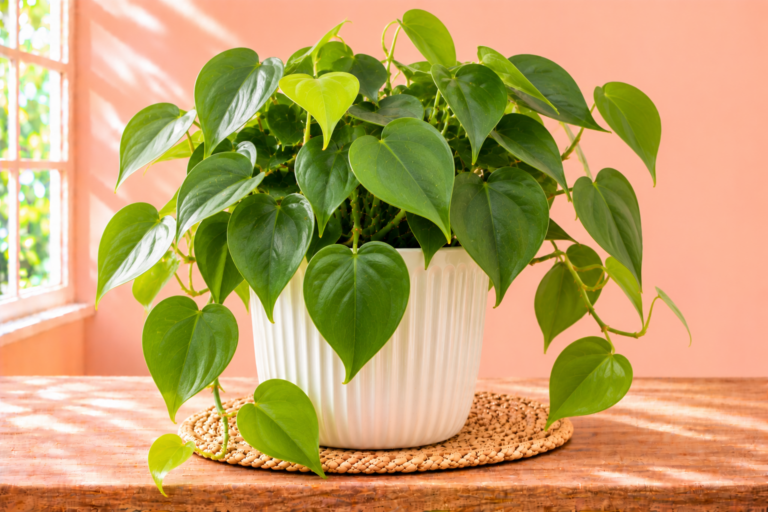
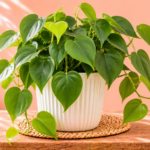
Heartleaf Philodendron
Philodendron hederaceum
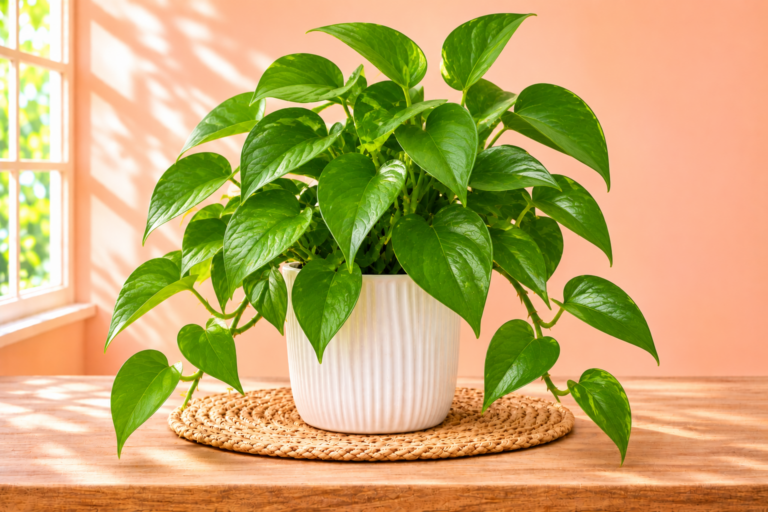
Jade Pothos
Epipremnum aureum 'Jade'
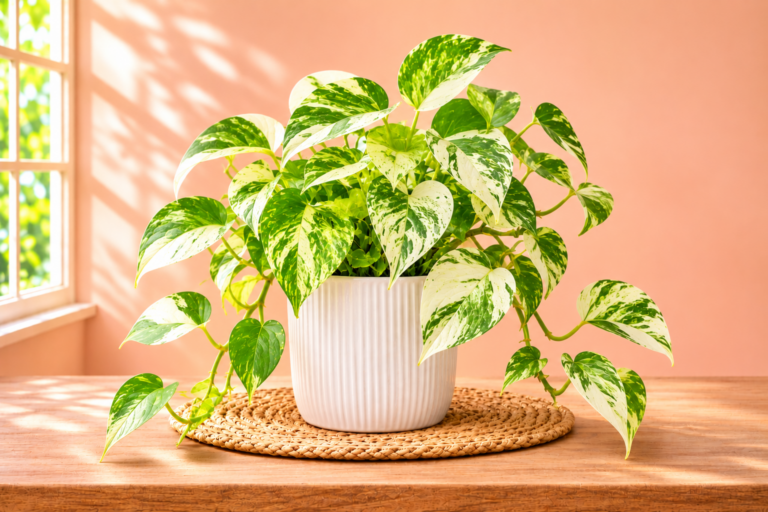
Marble Queen Pothos
Epipremnum aureum 'Marble Queen'
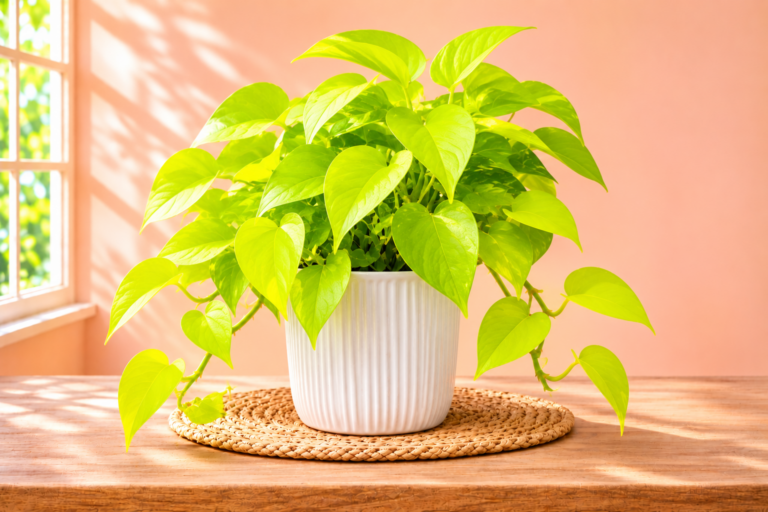
Neon Pothos
Epipremnum aureum 'Neon'