

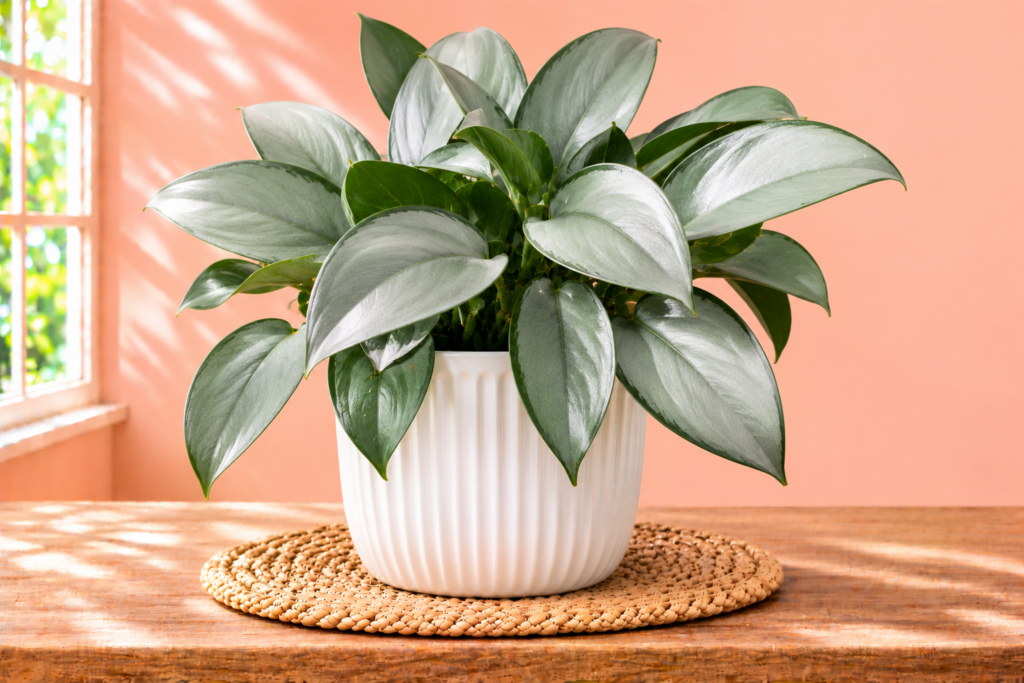
Treubii Moonlight
Scindapsus treubii 'Moonlight'
A compact, slow-growing Scindapsus with narrow, silvery blue-green velvet leaves.
About Treubii Moonlight
Soft, silvery and compact, Treubii Moonlight is a small Scindapsus with narrow, velvety leaves in a cool blue-green. Instead of trailing in long vines, it grows into a neat, dense clump, which makes it a lovely choice for desks, shelves and small spaces. It is slow-growing and a touch more particular than its trailing cousins, but it is easy to love.
From Southeast Asian Rainforest to Collector’s Shelf
Scindapsus treubii is a member of the Araceae family from the rainforests of Southeast Asia, where Scindapsus species climb trees with aerial roots. ‘Moonlight’ is the paler, silvery form. Indoors, it grows as a small, upright-to-arching plant and takes its time to put out new leaves.
The Secret Behind That Moonlit Glow
The narrow, elongated leaves have a soft, velvety texture and a silvery blue-green color that seems to shimmer in bright light. The leaves are thick and fleshy, which is part of the reason this plant is sensitive to overwatering. Bright, indirect light keeps the color crisp, while in dim light growth slows to a crawl.
A World of Beautiful Varieties
Treubii Dark Form is the deeper green sibling of Moonlight, with the same shape and habit. Together they make an attractive pair. Satin Pothos and Silver Satin are easier, trailing cousins in the same genus, and Cebu Blue and Baltic Blue offer a similar silvery look on climbing vines. All of them like bright, indirect light.
Bringing the Tropics Indoors
Treubii Moonlight does best in bright, indirect light and a chunky, free-draining mix with extra perlite or bark. Water only when the top couple of inches of soil have dried, and be careful in winter, when the plant uses very little. A little extra humidity is welcome, but average room conditions are fine. It is toxic to cats and dogs if chewed.
Quiet, compact and quietly beautiful, Treubii Moonlight is a plant that repays patience. Get the watering right, give it bright light, and it will grow into a lovely, silvery little clump.
Care Guide
Everything you need to know to keep your Treubii Moonlight happy and healthy.
Treubii Moonlight does best in bright, filtered light. It tolerates medium light but grows slowly there, and direct sun can scorch the velvety leaves.
The thick, succulent-like leaves and roots store water, and this plant is easily overwatered. Water thoroughly, let the soil dry at least two inches down, then water again. Water even less in winter.
Use a peat- or coir-based potting mix with roughly a quarter perlite or orchid bark added so excess water leaves quickly. Choose a pot only slightly larger than the root ball; too much soil stays wet for too long. A chunky mix with extra perlite or bark keeps the roots airy.
It copes with normal room air but looks its best with a little extra humidity. Grouping it with other plants or keeping it away from radiators helps keep the leaf edges neat.
Keep the plant above 55°F (13°C) and away from cold drafts, open winter windows and air-conditioning vents. Sudden chills cause blackened, mushy leaves.
Use a balanced liquid houseplant fertilizer diluted to half the label strength every four weeks while the plant is actively growing, and skip it in winter. Water the soil first so the roots are not burned. Every few months, flush the pot with plain water to wash out salts. This is a slow grower, so avoid heavy feeding.
Unlike most pothos, treubii grows into a dense, bushy plant rather than long trails. Trim leggy stems just above a node to keep it full, and give older stems a small stake if they flop.
Through the year
Spring
Growth picks up as the days lengthen. Repot if the roots fill the pot, restart monthly feeding at half strength, and take cuttings.
Summer
Peak growing season: water most often, keep the plant out of hot direct sun, and trim long vines to keep it full.
Autumn
As the light drops, space watering further apart and stop feeding in about October (or April in the southern hemisphere).
Winter
Growth slows. Water roughly half as often, do not feed, and keep the plant away from cold windows, drafts and radiators.
Repotting
- Repot every
- 2–3 years
- Best time
- Spring, as new growth starts
- Pot size step-up
- Go up 1–2 inches (2.5–5 cm) in pot diameter
- Soil mix
- Chunky, airy mix: potting soil with about a third perlite and some orchid bark
- Signs it needs repotting
- Roots coming through the drainage holes or circling at the surface. This is a slow plant, so this takes a while.
Propagation
- Methods
- Stem cutting, Water propagation
- Difficulty
- Moderate
- Best season
- Spring to early summer
- Time to root
- 4–8 weeks
Take a cutting with at least one node and a leaf or two, and root it in damp perlite or sphagnum moss, or in water, in a warm, bright spot. Rooting is slower than for most pothos, often 4 to 8 weeks, so be patient and keep the cutting just damp. Pot it in a chunky, free-draining mix once the roots are an inch or two long.
Common Problems
Yellowing leaves
Symptoms: Leaves turn yellow and soft, often the lower ones first; the soil stays wet
Likely cause: Overwatering or a pot without drainage
Let the top 2 inches (5 cm) of soil dry out between waterings and empty any saucer after watering. If the soil smells sour, slide the plant out and check the roots: healthy roots are firm and pale, rotten ones are brown and mushy. Trim the bad ones and repot in fresh, free-draining mix. Treubii is especially prone to rot; err on the dry side.
Brown, crispy edges
Symptoms: Edges of the leaves turn brown and dry
Likely cause: Very dry air or a root system that has been allowed to dry out too far
Water a little more evenly and keep away from heaters. Trim damaged edges.
Slow growth
Symptoms: Few new leaves over months
Likely cause: Low light, cool temperatures or a naturally slow plant
Check the light first. Slow growth is normal for treubii.
Mealybugs and spider mites
Symptoms: White cottony clusters in the leaf joints, or fine webbing and pale speckling on the leaves
Likely cause: Sap-sucking insects, more common on stressed plants and in dry, warm rooms
Isolate the plant. Wipe visible bugs away with a cotton swab dipped in rubbing alcohol, then spray or wipe all leaf surfaces with insecticidal soap. Repeat weekly for at least a month, and rinse the plant in the shower first if the infestation is heavy.
Companion Plants
Plants that grow happily alongside this one.

Download Care Guide
A printable one-page Treubii Moonlight care sheet: light, water, feeding and top tips.
You Might Also Like
View More Plants →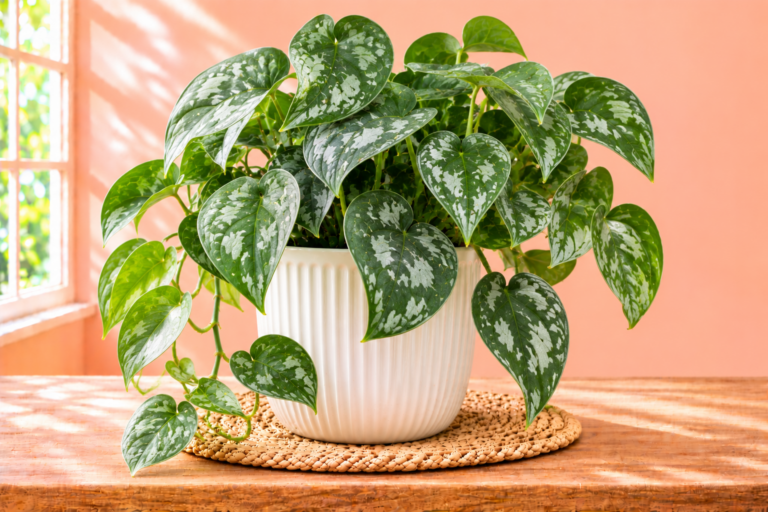
Satin Pothos
Scindapsus pictus 'Argyraeus'
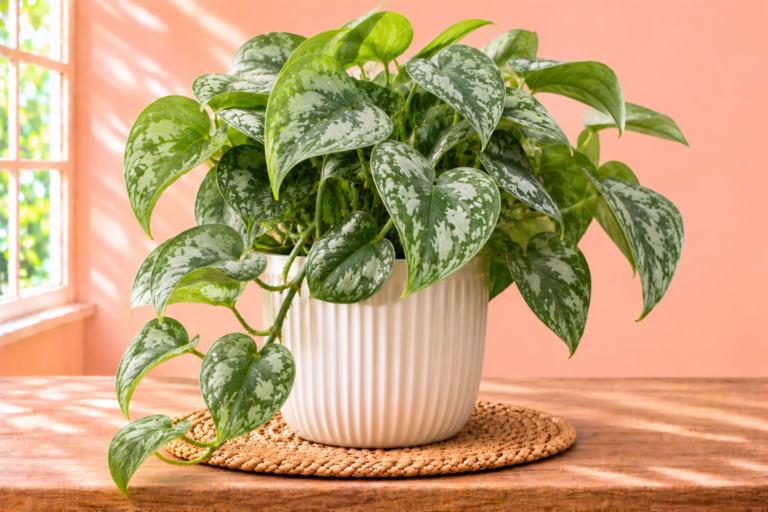
Silver Satin Pothos
Scindapsus pictus 'Exotica'
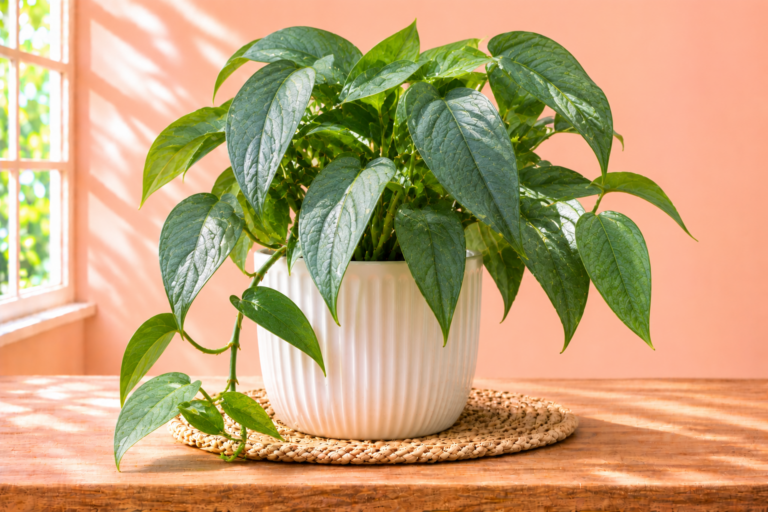
Cebu Blue Pothos
Epipremnum pinnatum 'Cebu Blue'
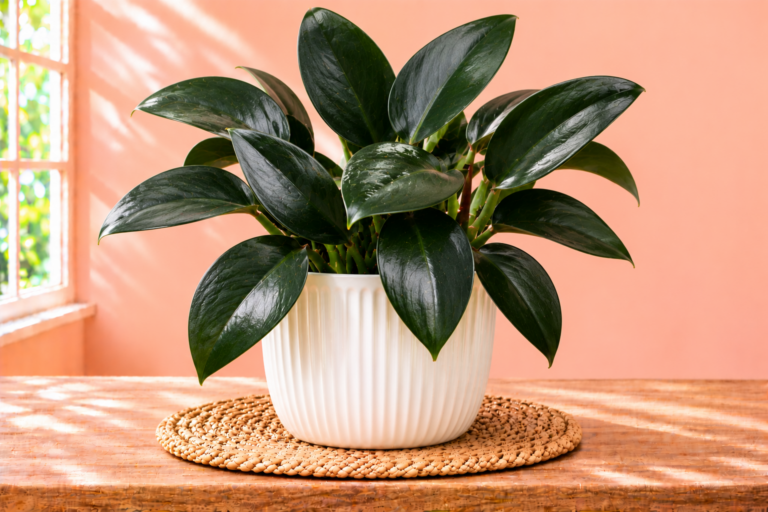
Treubii Dark Form
Scindapsus treubii 'Dark Form'