

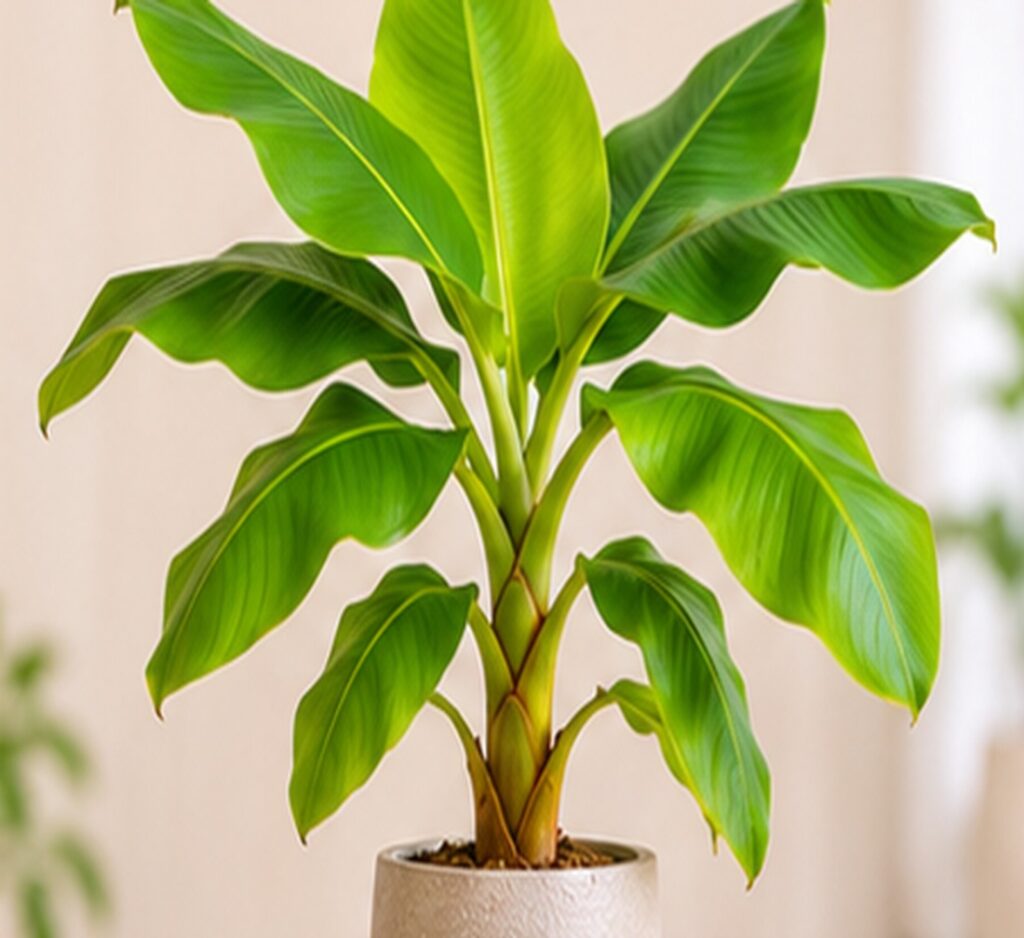
Dwarf Banana
Musa acuminata 'Dwarf Cavendish'
Big, paddle-shaped leaves and quick growth make the Dwarf Banana an instant tropical statement for sunny rooms.
About Dwarf Banana
If you want your living room to feel like the tropics, a Dwarf Banana does it in one season. Its huge, paddle-shaped leaves unfurl from a pale green stem at a remarkable pace, and in the right spot it can add a new leaf every week or two.
From South East Asia to Houseplant Favorite
Bananas are native to the tropical forests of South East Asia and have been cultivated for thousands of years. The Dwarf Cavendish is a compact selection, bred for its shorter stature, and it is the form most often sold as a houseplant. Outdoors in warm climates it grows to around 8 to 10 feet (2.4 to 3 m), but indoors it usually stays at 4 to 6 feet (1.2 to 1.8 m).
The Secret Behind Its Giant Leaves
What looks like a trunk is actually a pseudostem, made of tightly rolled leaf bases. Each new leaf emerges from the center as a tight, rolled spear and opens into a smooth, glossy blade that can be a foot or more wide. The leaves are thin and tear easily in drafts, which gives mature plants a ragged, windblown look that many people find part of their charm.
A World of Beautiful Varieties
Dwarf Cavendish is the best-known indoor banana, but you may also meet ornamental types such as Musa ‘Siam Ruby’, with red-tinted leaves, or the very compact Musa ‘Truly Tiny’. Most are sold simply as dwarf banana plants, and their care is very similar.
Bringing the Tropics Indoors
Bananas want sunshine, warmth and water. Give your plant the brightest spot you have, ideally with some direct sun, and keep the soil evenly moist but never soggy. Humidity helps prevent crispy edges, so mist or group with other plants. Feed regularly in spring and summer, as bananas are hungry plants, and turn the pot occasionally so the plant grows evenly.
Fast, bold and endlessly cheerful, the Dwarf Banana is a joyful plant for anyone with a sunny window and a love of big leaves.
Care Guide
Everything you need to know to keep your Dwarf Banana happy and healthy.
Give it as much bright light as possible, with some direct sun each day. Low light leads to weak, stretched growth and small leaves.
Water often during the growing season so the top inch of soil stays damp. Bananas drink heavily but hate sitting in water, so empty the saucer after watering.
Use a rich, well-draining mix with plenty of organic matter and some perlite. Choose a large, heavy pot with drainage holes to keep tall plants steady.
Mist the leaves, use a humidifier or group with other plants. Dry air causes brown, crispy leaf edges.
Keep it warm and away from cold drafts. Growth slows sharply below 60°F (16°C), and cold damages the leaves.
Feed every two weeks in spring and summer with a balanced or high-potassium liquid fertilizer. Reduce to monthly in autumn, and stop in winter.
Cut off brown or damaged leaves at the base with clean scissors. Remove spare suckers if you want a single stem, or let them grow for a fuller clump.
Through the year
Spring
Repot and start feeding as growth takes off.
Summer
Peak growth: water and feed generously and give plenty of sun.
Autumn
Cut back on feeding as light and growth fall.
Winter
Water less and keep warm; growth may stall.
Repotting
- Repot every
- Every year
- Best time
- Spring
- Pot size step-up
- Go up 2–4 inches (5–10 cm) in pot diameter
- Soil mix
- Rich, free-draining potting mix with extra perlite
- Signs it needs repotting
- Roots circling the pot, water draining straight through, or the plant drying out within a day or two.
Bananas grow quickly and often outgrow their pot within a year. Choose a heavy container for stability.
Propagation
- Methods
- Offsets / pups
- Difficulty
- Easy
- Best season
- Spring to summer
- Time to root
- 3–6 weeks to establish
Banana plants make suckers (pups) at the base. When a pup is at least 8 inches (20 cm) tall with its own roots, separate it with a clean knife and pot it into fresh mix. Keep it warm, humid and well watered while it settles.
Common Problems
Brown, crispy leaf edges
Symptoms: Brown edges and tips on the leaves
Likely cause: Dry air or underwatering
Raise humidity, water more consistently and avoid drafts.
Yellowing leaves
Symptoms: Lower leaves yellow and collapse
Likely cause: Overwatering, poor drainage or low light
Check that the soil is draining and not waterlogged, and give more light. Remove yellowed leaves.
Spider mites
Symptoms: Fine webbing and speckled leaves
Likely cause: Hot, dry conditions
Wipe leaves with a damp cloth, rinse the plant, and raise humidity. Repeat weekly until clear.
Companion Plants
Plants that grow happily alongside this one.

Download Care Guide
A printable one-page Dwarf Banana care sheet: light, water, feeding and top tips.
You Might Also Like
View More Plants →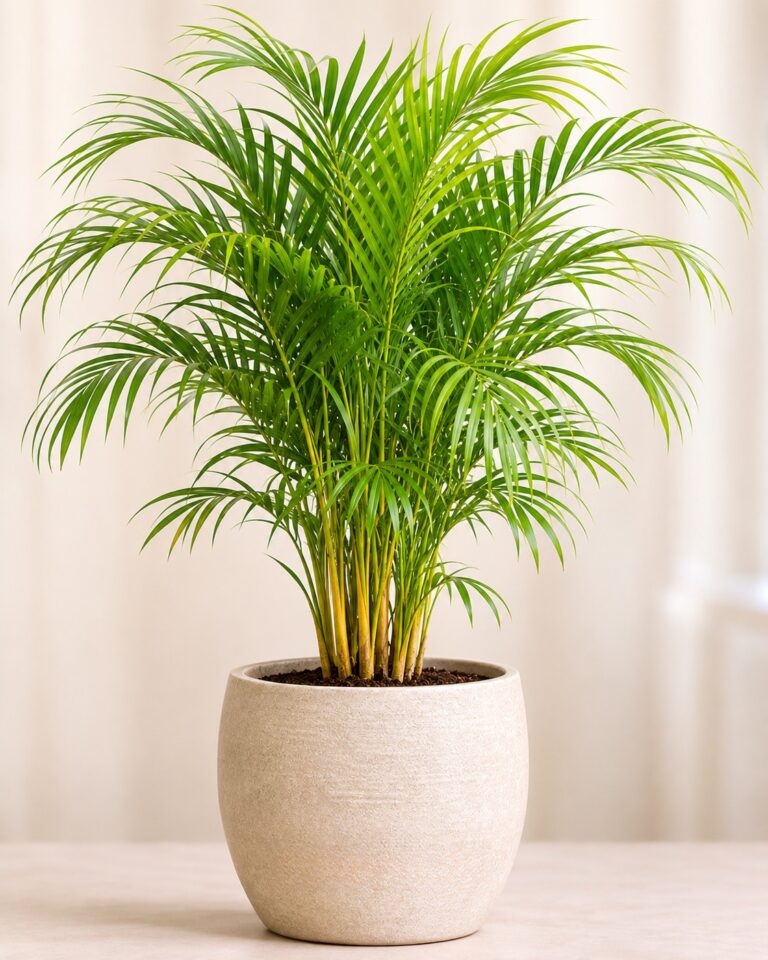
Areca Palm
Dypsis lutescens
Rubber Plant
Ficus elastica
Pygmy Date Palm
Phoenix roebelenii
Umbrella Tree
Schefflera actinophylla