

Peperomia
Peperomia
A huge group of compact, patterned or glossy plants that are easy, pet-safe and endlessly collectable.
About Peperomia
Compact, characterful and almost endlessly varied, the Peperomias are one of the most collectable families of houseplants. They range from rippled and glossy to velvety, striped and trailing, and nearly all of them stay small, making them ideal for shelves, desks and windowsills. They are friendly plants that tolerate a little neglect, and they are safe for cats and dogs.
From Tropical Forest Floors to Shelf Favorite
Peperomias are native to the tropical and subtropical regions of the Americas and also to parts of Africa, where many grow on the forest floor, on rocks or on tree trunks. The group belongs to the pepper family, Piperaceae, and includes more than a thousand species, making it one of the largest groups of tropical plants. Their small size and shallow roots make them perfect for pots.
The Secret Behind Those Interesting Leaves
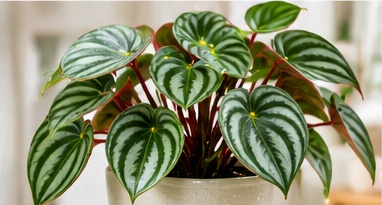
Many Peperomias have thick, fleshy leaves that store water, which is why they tolerate dry spells and prefer to be watered sparingly. The leaf shapes and patterns are spectacular, from the watermelon-like stripes of the plant in the picture to deeply ridged leaves, silvery flecks or tiny round pearls. Their flower spikes look like thin, curling mouse tails.
A World of Beautiful Varieties
Popular types include Watermelon Peperomia, with silver-striped leaves, the ruffled and deeply textured Ripple Peperomia, the glossy Baby Rubber Plant, the trailing Peperomia Hope and the tiny Raindrop Peperomia with rounded leaves. Care is closely related, but a few, such as the trailing ones, need a little more water.
Bringing the Rainforest Floor Indoors
Most Peperomias prefer bright, indirect light and a free-draining mix. Water only when the top inch or two of soil has dried, as their small root systems rot easily. Normal room temperatures and humidity suit them. All are non-toxic to cats and dogs, which makes them a safe choice for plant-loving households.
Small, stylish and surprisingly tough, Peperomias are a joy to collect. Give them bright light, a gritty mix and a light touch with the watering can, and you will soon have a shelf full of interesting leaves.
Care Guide
Everything you need to know to keep your Peperomia happy and healthy.
Patterned types keep their colors best in bright light. Direct sun scorches the leaves.
Water lightly and let the soil dry. Wrinkled leaves mean thirst, while yellowing and soft stems mean too much water.
Mix potting soil with perlite or orchid bark, and use a pot with drainage.
They tolerate dry indoor air, but a little extra humidity helps the thin-leaved types.
Keep it away from cold drafts.
Peperomias are light feeders.
Through the year
Spring
Repot if needed and take cuttings.
Summer
Water a little more often. Keep out of hot direct sun.
Autumn
Water less as light fades.
Winter
Water sparingly and keep warm, away from cold drafts.
Repotting
- Repot every
- 2–3 years
- Best time
- Spring
- Pot size step-up
- Same size or one size up; they like a snug pot
- Soil mix
- Light, well-draining mix with perlite or orchid bark
- Signs it needs repotting
- Roots coming from the drainage holes, or a plant that has outgrown its pot and is topple-prone.
Peperomias have small roots, so use a pot only slightly larger than the root ball.
Propagation
- Methods
- Stem cutting, Leaf cutting, Division
- Difficulty
- Easy
- Best season
- Spring to summer
- Time to root
- 3–6 weeks
Cut a leaf with 1 inch (2.5 cm) of stalk or take a stem cutting with two or three leaves. Place the cutting in a small pot of light, damp mix or in water, and keep it warm and bright. Roots appear in a few weeks. Some types can also be divided at repotting.
Common Problems
Drooping or yellow leaves
Symptoms: Leaves droop or turn yellow, stems feel soft
Likely cause: Overwatering
Let the soil dry, empty the saucer and check the roots. Repot in fresh, airy mix if the roots are mushy.
Wrinkled leaves
Symptoms: Leaves look puckered and thin
Likely cause: Underwatering
Water thoroughly and the leaves should plump within days.
Leaf drop in cold
Symptoms: Leaves fall after a cold night
Likely cause: Cold drafts or temperatures under 50°F (10°C)
Move to a warmer spot, and keep it steady.
Mealybugs and spider mites
Symptoms: White cottony clusters in the leaf joints, or fine webbing and pale speckling on the leaves
Likely cause: Sap-sucking insects, more common on stressed plants and in dry, warm rooms
Isolate the plant. Wipe visible bugs away with a cotton swab dipped in rubbing alcohol, then spray or wipe all leaf surfaces with insecticidal soap. Repeat weekly for at least a month, and rinse the plant in the shower first if the infestation is heavy.
Companion Plants
Plants that grow happily alongside this one.
Download Care Guide
A printable one-page Peperomia care sheet: light, water, feeding and top tips.
You Might Also Like
View More Plants →
African Violet
Streptocarpus ionanthus
Chinese Money Plant
Pilea peperomioides