

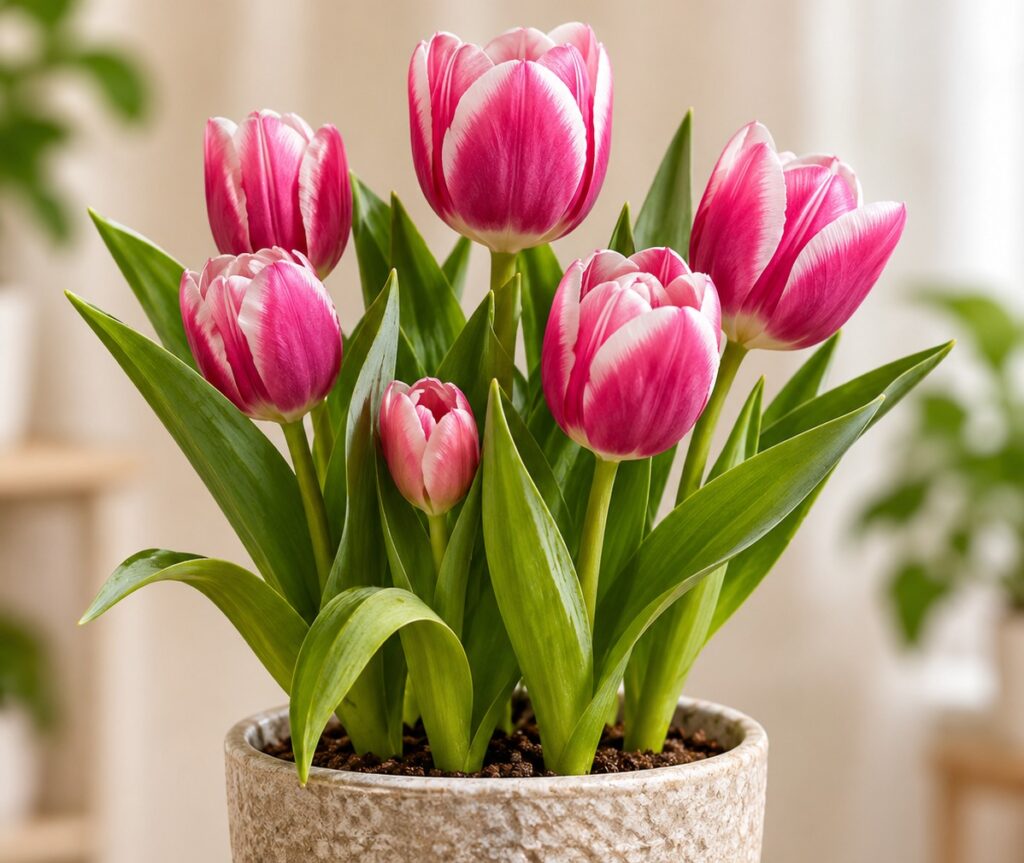
Tulip
Tulipa gesneriana
Cup-shaped spring flowers in almost every color make tulips a cheerful seasonal houseplant and a garden classic.
About Tulip
Few flowers say spring quite like a tulip. Its smooth, cup-shaped blooms open in almost every color imaginable, and a pot of them on a sunny windowsill can brighten the grayest end of winter.
From the Mountains of Central Asia to Houseplant Favorite
Tulips are native to the mountains and steppes of Central Asia, and they were cultivated by the Ottoman Turks long before they reached Europe. In the 17th century, they arrived in the Netherlands, where they sparked the famous Tulip Mania, when single bulbs sold for the price of a house. The Netherlands is still the center of tulip growing today.
The Secret Behind Its Bulb
Everything the tulip needs for its spring display is stored in the bulb, which holds the flower bud and food reserves. This is why the bulb needs a cold period of 12 to 16 weeks to flower, as it mimics the winter of its mountain home. Bulbs sold for indoor use are often pre-chilled, so you can plant them and enjoy the blooms within weeks.
A World of Beautiful Varieties
There are thousands of cultivars, divided into groups including Single Early, Double Late, Parrot, Fringed, Triumph and Darwin Hybrid. They range from pure white and sunny yellow to deep purple that looks almost black. Short, early forms suit pots indoors, while tall ones are best for cutting.
Bringing Spring Indoors
Plant pre-chilled bulbs pointed end up in a pot with drainage, with the tips just showing. Water well, then keep in a cool, bright spot, around 60 to 65°F (16 to 18°C), so the flowers last longer. Water when the surface is dry, and avoid overwatering, which rots bulbs. Keep tulips away from pets, as the bulbs are toxic, and from ripening fruit, which gives off gas that can harm the flower buds.
Cheerful, colorful and fleeting, tulips are the perfect way to welcome spring into your home, as long as you keep them away from pets.
Care Guide
Everything you need to know to keep your Tulip happy and healthy.
Give it bright light and a cool room. Direct sun is fine in winter and spring, but heat shortens the flowering time.
Water thoroughly when the surface of the soil feels dry, and never let the bulb sit in water. After flowering, reduce watering as the leaves fade.
Use a free-draining mix with some grit or sand. The pot must have drainage holes to avoid bulb rot.
Normal household humidity suits tulips. Cooler rooms also help the flowers last.
Cool rooms prolong flowering. Warm, heated rooms make blooms fade fast.
Feed lightly with a balanced fertilizer once leaves appear and after flowering, if you plan to keep the bulb for the garden.
Remove spent flowers, but leave the leaves until they turn yellow so the bulb can recharge.
Through the year
Spring
Flowering season: enjoy the blooms in a cool, bright place.
Summer
The leaves fade and the bulb goes dormant.
Autumn
Plant bulbs and give them a cold period.
Winter
Cold rooting period; keep the pot cool and slightly moist.
Repotting
- Best time
- Autumn
- Pot size step-up
- Pot size is not critical; bulbs can be set close together
- Soil mix
- Free-draining potting mix with grit
- Signs it needs repotting
- Bulbs need replanting each year after flowering.
Indoor forced bulbs rarely rebloom, so most people plant them in the garden after flowering.
Propagation
- Methods
- Offsets / pups, Seed
- Difficulty
- Moderate
- Best season
- Autumn
- Time to root
- 1–3 years
Tulips make small offset bulbs, which can be separated in summer and replanted in autumn. They take a few years to reach flowering size. Seed takes even longer.
Common Problems
Bulb rot
Symptoms: Soft, mushy bulb
Likely cause: Overwatering or poor drainage
Use a free-draining mix and water only when the surface is dry.
Short-lived flowers
Symptoms: Blooms fade within days
Likely cause: Warm room
Move to a cooler spot.
No flowers
Symptoms: Leaves but no blooms
Likely cause: Bulb did not get a cold period
Use pre-chilled bulbs or chill them yourself for 12–16 weeks.
Companion Plants
Plants that grow happily alongside this one.

Download Care Guide
A printable one-page Tulip care sheet: light, water, feeding and top tips.
You Might Also Like
View More Plants →
Peace Lily
Spathiphyllum wallisii