
Rabbit’s Foot Fern
Davallia fejeensis
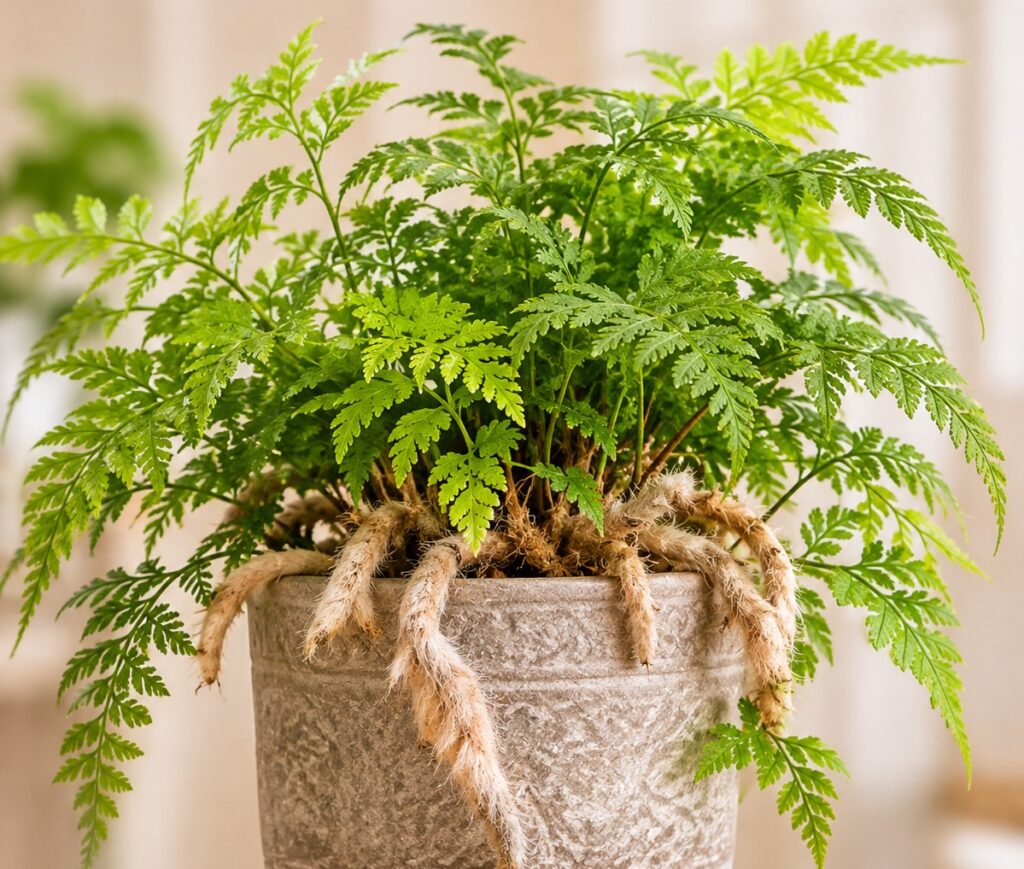
Fuzzy, creeping rhizomes that look like rabbits' feet spill over the pot below lacy fronds on this quirky pet-safe fern.
About Rabbit’s Foot Fern
Rabbit’s Foot Fern has a feature no other houseplant can match. Furry, pale-brown rhizomes creep over the edge of the pot like little rabbit feet, while delicate, lacy fronds rise above them, making it a charming hanging basket plant.
From Fiji to Houseplant Favorite
Despite its name Davallia fejeensis, the plant is native to the Pacific islands, including Fiji, where it grows on trees and rocks as an epiphyte. Its furry rhizomes cling to bark and moss, and absorb moisture from humid air. It became popular as a houseplant in the Victorian era, when fern collecting was a craze, and it has stayed so since.
The Secret Behind Its Furry Rhizomes
The rhizomes are thick, creeping stems covered in soft, pale-brown scales, and they really do look like rabbit’s feet. They travel across the surface of the soil and over the edge of the pot, sending up new fronds as they go. This is why the plant looks best in a hanging basket or a wide, shallow pot where the rhizomes can show.
A World of Beautiful Varieties
Several relatives share the same fuzzy feet, including the Deer’s Foot Fern (Davallia canariensis), the Squirrel’s Foot Fern (Davallia trichomanoides) and the Bear’s Foot Fern. They all have the same care needs, with slight differences in frond shape and rhizome color.
Bringing the Tropics Indoors
Give your fern bright, indirect light and keep the soil lightly moist. The most important rule is never to bury the furry rhizomes: let them rest on top of the soil, where they can breathe. Humidity helps keep the lacy fronds fresh, so mist now and then or keep it in a bathroom. In winter, it may go dormant and drop some fronds, which is normal.
Quirky, delicate and safe for pets, Rabbit’s Foot Fern is a lovely conversation starter for a bright bathroom or hanging basket.
Care Guide
Everything you need to know to keep your Rabbit’s Foot Fern happy and healthy.
Give it bright, indirect light. Direct sun scorches the delicate fronds, while deep shade leads to sparse growth.
Water when the top inch of soil is slightly dry, and avoid waterlogging. Water from below if you can, to keep the rhizomes dry.
Use a light, airy mix with peat, perlite and bark. A shallow pot or hanging basket with drainage holes works well.
Mist the fronds, use a pebble tray, or place it in a humid bathroom. Dry air causes fronds to crisp.
Keep away from cold drafts and heaters. Temperatures below 55°F (13°C) cause damage.
Feed monthly in spring and summer with a quarter- to half-strength balanced liquid fertilizer.
Cut off fronds that have turned brown, close to the rhizome. Never cut the rhizomes.
Through the year
Spring
Repot and divide if needed; feed lightly.
Summer
Keep soil moist and humidity high.
Autumn
Reduce feeding and watering.
Winter
Water sparingly; some fronds may drop as it rests.
Repotting
- Best time
- Spring
- Pot size step-up
- Go up 1–2 inches (2.5–5 cm) in pot diameter
- Soil mix
- Light, airy mix with peat, perlite and bark
- Signs it needs repotting
- Rhizomes covering the pot surface and roots filling the pot.
Do not bury the rhizomes: keep them on top of the soil. Choose a shallow, wide pot.
Propagation
- Methods
- Division
- Difficulty
- Easy
- Best season
- Spring
- Time to root
- 4–8 weeks
Cut a rhizome section with a few fronds and pin it on top of moist soil, without burying it. Keep warm and humid until new roots grow.
Common Problems
Brown, crispy fronds
Symptoms: Fronds dry and brown
Likely cause: Low humidity or dry soil
Raise humidity and water more evenly.
Rotting rhizomes
Symptoms: Rhizomes turn dark and soft
Likely cause: Overwatering or burying the rhizomes
Keep rhizomes on top of the soil and let it dry slightly.
Scale and mealybugs
Symptoms: Sticky leaves or white fluff
Likely cause: Stress
Wipe with a damp cloth and treat with insecticidal soap.
Companion Plants
Plants that grow happily alongside this one.



Download Care Guide
A printable one-page Rabbit’s Foot Fern care sheet: light, water, feeding and top tips.