
Nerve Plant
Fittonia albivenis
Delicate veined leaves in pink, red or white make the Nerve Plant a tiny jewel for terrariums and shaded shelves.
About Nerve Plant
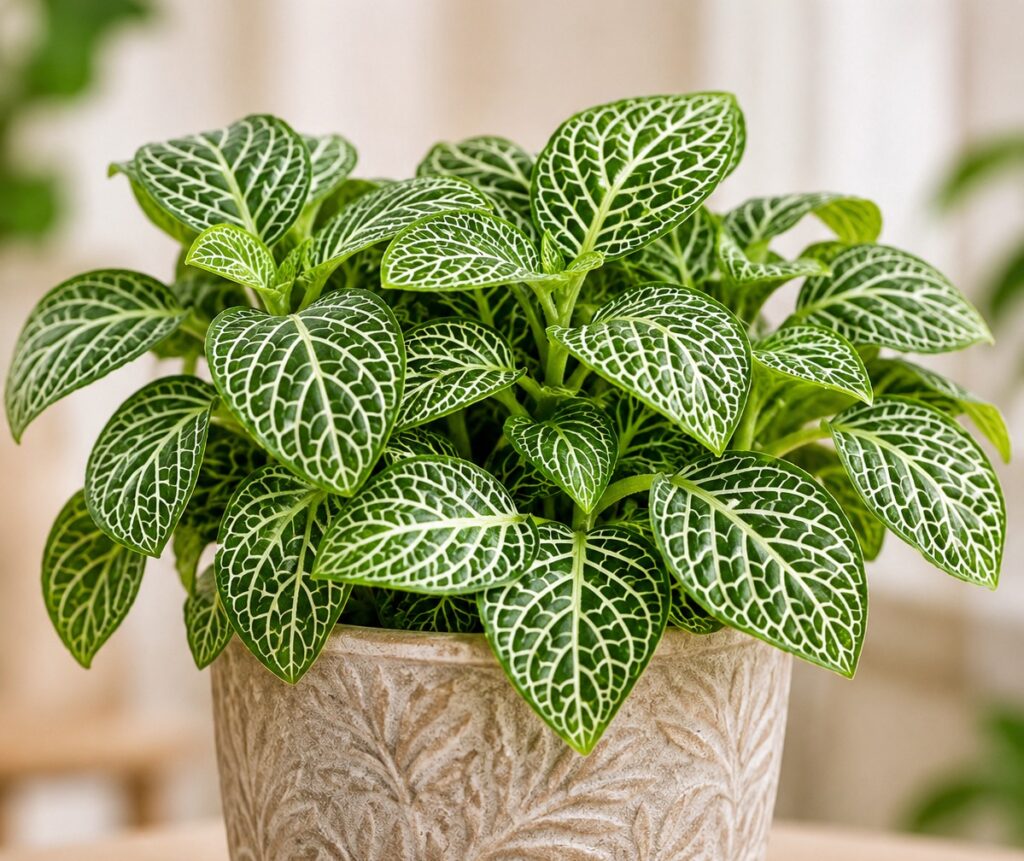
The Nerve Plant is a small plant with a big personality. Each oval leaf is netted with fine veins in pink, red or white, like a map drawn in neon, and the low, spreading mound looks wonderful in a terrarium, a bathroom or a shady shelf.
From the Rainforest Floor of South America to Houseplant Favorite
Fittonia comes from the rainforests of Peru and surrounding areas, where it creeps across the damp, shady forest floor. That origin explains its needs: warm, humid air, constant moisture and gentle light. It became popular as a houseplant in the 20th century, especially for terrariums, where its love of humidity is easy to satisfy.
The Secret Behind Its Veined Leaves
The leaves are oval, soft and thin, with a contrasting network of veins that gives the plant its name. The veins can be white, pink or red against a green background, and some modern cultivars have almost solid color. The stems trail along the ground and root as they go, so the plant forms a spreading carpet.
A World of Beautiful Varieties
Several cultivars are available, including pink-veined ‘Pink Star’, red-veined ‘Red Anne’, and white-veined ‘Skeleton’. Compact ‘mini’ forms are popular for terrariums and small bowls. Colors can fade in strong light, so choose a shaded spot to keep the pattern bold.
Bringing the Tropics Indoors
The Nerve Plant is dramatic about thirst: it can collapse completely if the soil dries out, then recover within an hour of a good watering. Keep the soil lightly moist at all times, and give it high humidity. A terrarium, a closed glass container or a steamy bathroom suits it well. Keep it out of direct sun, which scorches the delicate leaves.
Small, colorful and gently dramatic, the Nerve Plant is a lovely addition to a humid shelf, a terrarium or a bathroom windowsill.
Care Guide
Everything you need to know to keep your Nerve Plant happy and healthy.
Place in medium to bright, indirect light. Direct sun scorches the leaves, while deep shade fades the vein color.
Water when the top of the soil begins to dry, and never let it dry out completely. It wilts quickly when thirsty but recovers after watering.
Use a light, peat-based potting mix that holds moisture but drains. Choose a shallow pot with drainage holes.
Grow in a terrarium, a humid bathroom or on a pebble tray. Dry air causes crispy leaf edges.
Keep warm and away from cold drafts. Temperatures below 60°F (16°C) can damage the leaves.
Feed every 4 weeks in spring and summer with a quarter-strength balanced liquid fertilizer.
Pinch back the stem tips regularly to prevent leggy growth. Remove any leaves that turn brown.
Through the year
Spring
Repot and pinch back as growth restarts.
Summer
Keep soil moist and humidity high.
Autumn
Reduce feeding and water slightly less.
Winter
Keep warm and humid, away from cold windows.
Repotting
- Repot every
- Every year
- Best time
- Spring
- Pot size step-up
- Go up 1 inch (2.5 cm) in pot diameter
- Soil mix
- Light peat-based mix with perlite
- Signs it needs repotting
- Roots at the surface or the plant becoming leggy.
Choose a wide, shallow pot, as the plant spreads sideways.
Propagation
- Methods
- Stem cutting, Division
- Difficulty
- Easy
- Best season
- Spring to summer
- Time to root
- 2–4 weeks
Take a 3-inch (8 cm) stem cutting with a few leaves and place it in water or moist mix. Keep it warm and humid, and it roots quickly. Division also works when repotting.
Common Problems
Wilting
Symptoms: Whole plant flops dramatically
Likely cause: Underwatering
Water thoroughly and it will recover within hours.
Brown, crispy edges
Symptoms: Dry brown leaf edges
Likely cause: Low humidity
Raise humidity with a terrarium or pebble tray.
Mealybugs and aphids
Symptoms: White fluff or tiny insects
Likely cause: Stress
Wipe with a damp cloth and treat with insecticidal soap.
Companion Plants
Plants that grow happily alongside this one.

Download Care Guide
A printable one-page Nerve Plant care sheet: light, water, feeding and top tips.
You Might Also Like
View More Plants →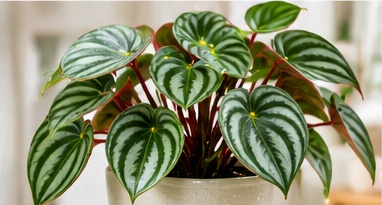
Peperomia
Peperomia
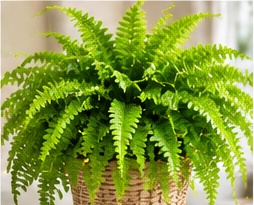
Boston Fern
Nephrolepis exaltata 'Bostoniensis'
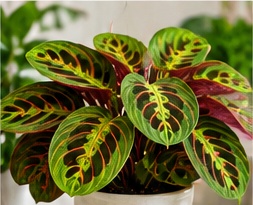
Prayer Plant
Maranta leuconeura
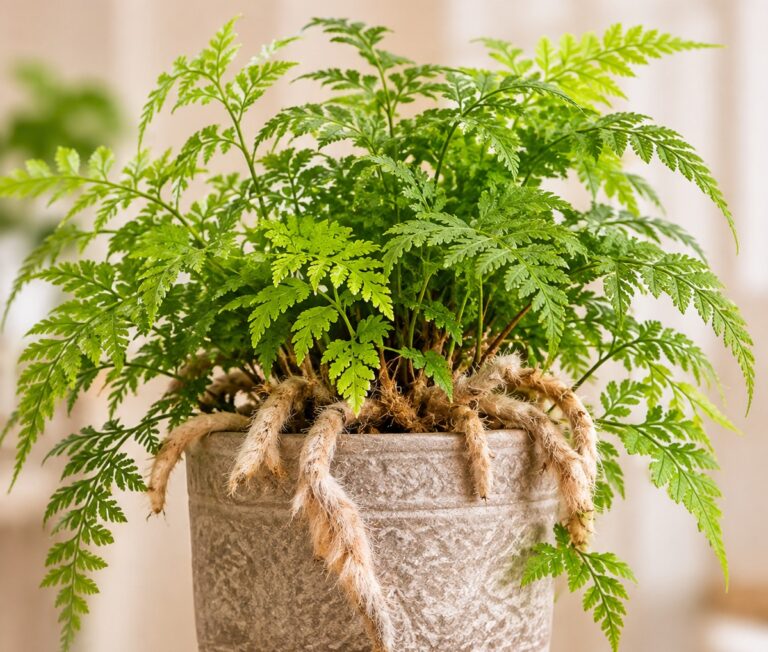
Rabbit’s Foot Fern
Davallia fejeensis